Attachment theory
Attachment theory is a psychological, evolutionary and ethological theory concerning relationships between humans. The most important tenet of attachment theory is that a young child needs to develop a relationship with at least one primary caregiver for social and emotional development to occur normally. Attachment theory explains how the parent-child relationship emerges and influences subsequent development.
History[edit]
Attachment theory originated with the work of John Bowlby, a British psychiatrist and psychoanalyst who in the mid-20th century brought attention to the importance of the child-caregiver relationship for the child's emotional and social development.
Types of Attachment[edit]
There are four main types of attachment identified in children: secure attachment, anxious-resistant insecure attachment, anxious-avoidant insecure attachment, and disorganized attachment.
Secure Attachment[edit]
Children with a secure attachment see their parent as a secure base from which they can venture out and independently explore the world.
Anxious-Resistant Insecure Attachment[edit]
Children with an anxious-resistant insecure attachment tend to be anxious and are not explorative.
Anxious-Avoidant Insecure Attachment[edit]
Children with an anxious-avoidant insecure attachment tend to avoid parents or caregivers.
Disorganized Attachment[edit]
Children with a disorganized attachment often display a confusing mix of behavior and may seem disoriented, dazed, or confused.
Attachment in Adults[edit]
Adult attachment models include secure, anxious-preoccupied, dismissive-avoidant, and fearful-avoidant.
Criticisms[edit]
Attachment theory has been criticized for focusing too much on the mother-child bond and not enough on the relationships children form with other caregivers or peers.
See Also[edit]

This WikiMD article can only be edited by registered and verified editors. You can log in or register.
Attachment theory[edit]
-
 Eskimo family
 -
 Children in Mozambique
 -
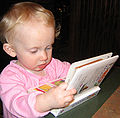 Child reading a book
 -
 Prayer time in the nursery
 -
 Moose imprinting
 -
 Evacuation of schoolchildren in Japan


Medical Disclaimer: WikiMD is for informational purposes only and is not a substitute for professional medical advice. Content may be inaccurate or outdated and should not be used for diagnosis or treatment. Always consult your healthcare provider for medical decisions. Verify information with trusted sources such as CDC.gov and NIH.gov. By using this site, you agree that WikiMD is not liable for any outcomes related to its content. See full disclaimer.
Credits:Most images are courtesy of Wikimedia commons, and templates, categories Wikipedia, licensed under CC BY SA or similar.
Translate page: - East Asian
中文,
日本,
한국어,
South Asian
हिन्दी,
தமிழ்,
తెలుగు,
Urdu,
ಕನ್ನಡ,
Southeast Asian
Indonesian,
Vietnamese,
Thai,
မြန်မာဘာသာ,
বাংলা
European
español,
Deutsch,
français,
Greek,
português do Brasil,
polski,
română,
русский,
Nederlands,
norsk,
svenska,
suomi,
Italian
Middle Eastern & African
عربى,
Turkish,
Persian,
Hebrew,
Afrikaans,
isiZulu,
Kiswahili,
Other
Bulgarian,
Hungarian,
Czech,
Swedish,
മലയാളം,
मराठी,
ਪੰਜਾਬੀ,
ગુજરાતી,
Portuguese,
Ukrainian

