Animal testing
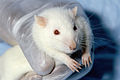
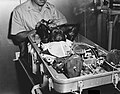
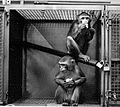
Animal testing, also known as animal experimentation, animal research, and in vivo testing, is the use of non-human animals in experiments that seek to control the variables that affect the behavior or biological system under study. This approach can be contrasted with field studies in which animals are observed in their natural environments or habitats.
History[edit]
The history of animal testing goes back to the writings of the Ancient Greeks in the 4th and 3rd centuries BCE, with Aristotle (384–322 BCE) and Erasistratus (304–258 BCE) among the first to perform experiments on living animals.
Types of animal testing[edit]
There are several types of animal testing used in the world today. These include:
- Toxicity testing: This is used to examine the effects of various substances on different types of animals to determine their toxicity levels.
- Pharmacological testing: This involves testing new drugs on animals to determine their efficacy and safety before they are approved for human use.
- Genetic modification: This involves altering the genes of animals to create models of human diseases.
Ethical considerations[edit]
The ethical considerations of animal testing are a subject of intense debate. Critics argue that it is cruel and inhumane, while proponents argue that it is necessary for the advancement of medical and scientific research.
Alternatives to animal testing[edit]
There are several alternatives to animal testing, including in vitro testing, computer modeling, and human patient simulators. These alternatives are often less expensive and more accurate than animal testing.
See also[edit]
- Animal rights
- Animal welfare
- Cruelty to animals
- In vitro testing
- Computer modeling
- Human patient simulators
References[edit]
<references />
| Animal testing |
|---|
 |
| Main articles |
| Testing on |
| Issues |
| Cases |
| Companies |
| Groups/campaigns |
|
| Writers/activists |
| Categories |
 | This article about ethics is a stub. You can help WikiMD by expanding the page. |
 | This science article is a stub. You can help WikiMD by expanding the page. |
-
 Animal_testing
 -
 Animal_testing
 -
 Animal_testing
 -
 Animal_testing
 -
 Animal_testing
 -
 Animal_testing
 -
 Animal_testing
 -
 Animal_testing
 -
 Animal_testing
 -
 Animal_testing
 -
 Animal_testing
 -
 Animal_testing


.jpg)


.JPG)

Medical Disclaimer: WikiMD is for informational purposes only and is not a substitute for professional medical advice. Content may be inaccurate or outdated and should not be used for diagnosis or treatment. Always consult your healthcare provider for medical decisions. Verify information with trusted sources such as CDC.gov and NIH.gov. By using this site, you agree that WikiMD is not liable for any outcomes related to its content. See full disclaimer.
Credits:Most images are courtesy of Wikimedia commons, and templates, categories Wikipedia, licensed under CC BY SA or similar.
Translate this page: - East Asian
中文,
日本,
한국어,
South Asian
हिन्दी,
தமிழ்,
తెలుగు,
Urdu,
ಕನ್ನಡ,
Southeast Asian
Indonesian,
Vietnamese,
Thai,
မြန်မာဘာသာ,
বাংলা
European
español,
Deutsch,
français,
Greek,
português do Brasil,
polski,
română,
русский,
Nederlands,
norsk,
svenska,
suomi,
Italian
Middle Eastern & African
عربى,
Turkish,
Persian,
Hebrew,
Afrikaans,
isiZulu,
Kiswahili,
Other
Bulgarian,
Hungarian,
Czech,
Swedish,
മലയാളം,
मराठी,
ਪੰਜਾਬੀ,
ગુજરાતી,
Portuguese,
Ukrainian
