Alpha-2-Macroglobulin
Alpha-2-Macroglobulin (A2M) is a large plasma protein found in the blood. It is produced by the liver and is a major component of the immune system. A2M is known for its ability to inhibit a wide range of proteases, which are enzymes that break down proteins. This protein is a crucial part of the body's defense mechanism against pathogens and is involved in various physiological processes, including fibrinolysis, the breakdown of fibrin in blood clots.
Structure[edit]
Alpha-2-Macroglobulin is a tetrameric protein, meaning it is composed of four identical subunits. Each subunit contains a bait region that can trap proteases. When a protease cleaves the bait region, A2M undergoes a conformational change that entraps the protease, rendering it inactive. This mechanism allows A2M to inhibit a broad spectrum of proteases, including serine proteases, cysteine proteases, and metalloproteases.
Function[edit]
Protease Inhibition[edit]
A2M acts as a "molecular trap" for proteases. It is a non-specific inhibitor, meaning it can inhibit a wide variety of proteases. This is important in regulating protease activity in the body, preventing excessive tissue damage and inflammation.
Role in Fibrinolysis[edit]
In the process of fibrinolysis, A2M plays a role by inhibiting proteases that degrade fibrin, a protein involved in blood clotting. This regulation is crucial for maintaining the balance between clot formation and dissolution, preventing excessive bleeding or thrombosis.
Clinical Significance[edit]
Alpha-2-Macroglobulin levels can be measured in the blood and are used as a marker for various diseases. Elevated levels of A2M are associated with liver disease, nephrotic syndrome, and diabetes mellitus. Conversely, decreased levels may indicate acute pancreatitis or prostate cancer.
Related Pages[edit]
Alpha-2-Macroglobulin[edit]
-
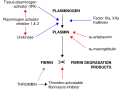 Fibrinolysis

Sponsored Health Resource

W8MD Weight Loss, Sleep & MedSpa
Looking for physician-supervised weight loss, semaglutide, tirzepatide, or GLP-1 receptor agonist options? W8MD helps eligible patients in New York City, Brooklyn, New Jersey, Connecticut, Pennsylvania, Delaware, and greater Philadelphia with medical weight loss, sleep medicine, and long-term maintenance support.
GLP-1 specials: Affordable GLP-1 injections NYC and Philadelphia starting from $29.99/week and up for semaglutide with insurance accepted for qualifying visits, and $45/week and up for tirzepatide with insurance accepted for qualifying visits. Self-pay options start from $59.99/week and up for semaglutide and $69.99/week and up for tirzepatide.
- Medical weight loss NYC
- Affordable GLP-1 injections NYC
- Budget GLP-1 weight loss shots Philadelphia
- New Jersey medical weight loss
- NYC medical weight loss blog
- Philadelphia weight loss blog
- Sleep medicine and sleep apnea services
- W8MD MedSpa and wellness
Book a W8MD appointment · View GLP-1 specials
Paid promotional message. Eligibility, pricing, insurance coverage, medication availability, and results vary. Medical evaluation required.

Medical Disclaimer: WikiMD is for informational purposes only and is not a substitute for professional medical advice. Content may be inaccurate or outdated and should not be used for diagnosis or treatment. Always consult your healthcare provider for medical decisions. Verify information with trusted sources such as CDC.gov and NIH.gov. By using this site, you agree that WikiMD is not liable for any outcomes related to its content. See full disclaimer.
Credits:Most images are courtesy of Wikimedia commons, and templates, categories Wikipedia, licensed under CC BY SA or similar.
Translate page: - East Asian
中文,
日本,
한국어,
South Asian
हिन्दी,
தமிழ்,
తెలుగు,
Urdu,
ಕನ್ನಡ,
Southeast Asian
Indonesian,
Vietnamese,
Thai,
မြန်မာဘာသာ,
বাংলা
European
español,
Deutsch,
français,
Greek,
português do Brasil,
polski,
română,
русский,
Nederlands,
norsk,
svenska,
suomi,
Italian
Middle Eastern & African
عربى,
Turkish,
Persian,
Hebrew,
Afrikaans,
isiZulu,
Kiswahili,
Other
Bulgarian,
Hungarian,
Czech,
Swedish,
മലയാളം,
मराठी,
ਪੰਜਾਬੀ,
ગુજરાતી,
Portuguese,
Ukrainian

