COVID-19 pandemic in Africa
COVID-19 Pandemic in Africa[edit]
The COVID-19 pandemic has had a significant impact on the African continent. This article provides a detailed overview of the pandemic's effects, response measures, and challenges faced by African countries.
Spread of the Virus[edit]
The first confirmed case of COVID-19 in Africa was reported in Egypt on February 14, 2020. Since then, the virus has rapidly spread across the continent. As of [insert date], there have been [insert number] confirmed cases and [insert number] deaths in Africa.
Response Measures[edit]
African countries have implemented various response measures to contain the spread of the virus. These measures include:
- Social distancing: Governments have encouraged or enforced social distancing measures to reduce person-to-person transmission.
- Quarantine and Isolation: Infected individuals and those who have come into contact with them are placed in quarantine or isolation to prevent further spread.
- Travel restrictions: Many countries have imposed travel restrictions, including border closures and flight suspensions, to limit the importation of cases.
- Testing and contact tracing: African countries have ramped up testing capacity and contact tracing efforts to identify and isolate infected individuals.
- Public awareness campaigns: Governments and health organizations have launched public awareness campaigns to educate the public about the virus and preventive measures.
Challenges Faced[edit]
The COVID-19 pandemic has presented several challenges for African countries. These challenges include:
- Healthcare system capacity: Many African countries have limited healthcare infrastructure and resources, making it difficult to handle a surge in cases.
- Economic impact: The pandemic has had a severe impact on African economies, with disruptions in trade, tourism, and other sectors leading to job losses and economic downturn.
- Vaccine distribution: Access to COVID-19 vaccines has been a challenge for African countries, with limited supply and distribution challenges hindering vaccination efforts.
- Misinformation: The spread of misinformation and conspiracy theories has posed challenges in public health messaging and adherence to preventive measures.
International Support[edit]
International organizations and countries have provided support to African countries in their fight against COVID-19. This support includes:
- World Health Organization (WHO): The WHO has provided technical guidance, expertise, and resources to African countries to strengthen their response.
- COVAX Initiative: The COVAX initiative, led by the WHO, Gavi, and CEPI, aims to ensure equitable access to COVID-19 vaccines, including for African countries.
- Bilateral assistance: Several countries, including China, the United States, and European nations, have provided financial aid, medical supplies, and technical assistance to African countries.
Conclusion[edit]
The COVID-19 pandemic continues to pose significant challenges for Africa. However, African countries have shown resilience and determination in their response efforts. With international support and collective efforts, it is hoped that the continent will overcome the pandemic and build a more resilient healthcare system for the future.
-
 Woman washing hands in DRC - Covid-19
 -
 Café in Cairo with graffiti for mask awareness
 -
 The United States Delivers COVID-19 Vaccine Doses to Ethiopia
 -
 Personnel from Rafamall Inc undertaking health education
 -
 Lo'o Paa'pai
 -
 COVID-19 Equipment to Mauritius
 -
 Tour 1
 -
 COVID-19 Safety
 -
 Ouakam Military Hospital, Senegal - MEDREX 21-4
 -
 Somalian shop owner takes the COVID-19 jab
 -
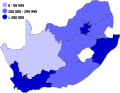 Covid-19 cases in South Africa
 -
 Za-covid-actives
 -
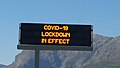 COVID-19 sign N1 on highway Western Cape


.jpg)


_(50345745557).jpg)


.jpg)
.jpg)


Ad. Transform your health with W8MD Weight Loss, Sleep & MedSpa

Tired of being overweight?
Special offer:
Budget GLP-1 weight loss medications
- Semaglutide starting from $29.99/week and up with insurance for visit of $59.99 and up per week self pay.
- Tirzepatide starting from $45.00/week and up (dose dependent) or $69.99/week and up self pay
✔ Same-week appointments, evenings & weekends
Learn more:
- GLP-1 weight loss clinic NYC
- W8MD's NYC medical weight loss
- W8MD Philadelphia GLP-1 shots
- Philadelphia GLP-1 injections
- Affordable GLP-1 shots NYC
|
WikiMD Medical Encyclopedia |
Medical Disclaimer: WikiMD is for informational purposes only and is not a substitute for professional medical advice. Content may be inaccurate or outdated and should not be used for diagnosis or treatment. Always consult your healthcare provider for medical decisions. Verify information with trusted sources such as CDC.gov and NIH.gov. By using this site, you agree that WikiMD is not liable for any outcomes related to its content. See full disclaimer.
Credits:Most images are courtesy of Wikimedia commons, and templates, categories Wikipedia, licensed under CC BY SA or similar.
Translate this page: - East Asian
中文,
日本,
한국어,
South Asian
हिन्दी,
தமிழ்,
తెలుగు,
Urdu,
ಕನ್ನಡ,
Southeast Asian
Indonesian,
Vietnamese,
Thai,
မြန်မာဘာသာ,
বাংলা
European
español,
Deutsch,
français,
Greek,
português do Brasil,
polski,
română,
русский,
Nederlands,
norsk,
svenska,
suomi,
Italian
Middle Eastern & African
عربى,
Turkish,
Persian,
Hebrew,
Afrikaans,
isiZulu,
Kiswahili,
Other
Bulgarian,
Hungarian,
Czech,
Swedish,
മലയാളം,
मराठी,
ਪੰਜਾਬੀ,
ગુજરાતી,
Portuguese,
Ukrainian
