Utopia
Utopia is a term used to describe an imagined community or society that possesses highly desirable or nearly perfect qualities for its citizens. The concept of utopia is often used to explore the possibilities of a perfect society and to critique existing social structures. The term was coined by Thomas More in his 1516 book Utopia, which depicted a fictional island society in the New World.
Etymology[edit]
The word "utopia" is derived from the Greek words "ou" (οὐ), meaning "not," and "topos" (τόπος), meaning "place." Thus, "utopia" literally means "no place," indicating that such a perfect society does not exist. More's use of the term was a play on words, as it also resembles "eutopia," meaning "good place."
Historical Context[edit]
.jpg)
The concept of utopia has been present in human thought for centuries, often reflecting the aspirations and ideals of different cultures. In ancient times, philosophers like Plato described ideal societies in works such as The Republic. During the Renaissance, the idea of utopia gained prominence as thinkers began to question the social and political structures of their time.
Characteristics of Utopian Societies[edit]
Utopian societies are often characterized by:
- Equality among citizens
- Absence of poverty and crime
- Harmony with nature
- Advanced technology and education
- Democratic governance
These characteristics are often depicted in literature and art, serving as a critique of contemporary society and a vision of what could be achieved.
Utopian Literature[edit]

Utopian literature explores the creation and functioning of ideal societies. Notable works include:
These works often serve as social commentary, highlighting the flaws of existing societies and proposing alternative ways of living.
Utopian Communities[edit]
Throughout history, various groups have attempted to create utopian communities. These include:
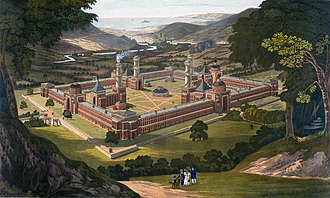
New Harmony, Indiana - New Harmony, Indiana, founded by Robert Owen

Sointula, British Columbia - Sointula, British Columbia, established by Finnish settlers

.jpg)
These communities often emphasize communal living, shared resources, and egalitarian principles.
Criticism and Challenges[edit]
While utopian visions are inspiring, they also face criticism and challenges. Critics argue that:
- Utopias are unrealistic and unattainable
- They may lead to totalitarianism if enforced
- Human nature is too complex for a perfect society
Related Concepts[edit]
- Dystopia: A society characterized by human misery and oppression
- Eutopia: A "good place," often used interchangeably with utopia
- Arcadia: A vision of pastoral harmony and simplicity
Related Pages[edit]
Ad. Transform your health with W8MD Weight Loss, Sleep & MedSpa

Tired of being overweight?
Special offer:
Budget GLP-1 weight loss medications
- Semaglutide starting from $29.99/week and up with insurance for visit of $59.99 and up per week self pay.
- Tirzepatide starting from $45.00/week and up (dose dependent) or $69.99/week and up self pay
✔ Same-week appointments, evenings & weekends ✔ Tele visits available with certain limitations Learn more:
- GLP-1 weight loss clinic NYC
- W8MD's NYC medical weight loss
- W8MD Philadelphia GLP-1 shots
- Philadelphia GLP-1 injections
- Affordable GLP-1 shots NYC
- Budget GLP-1 shots
|
WikiMD Medical Encyclopedia |
Medical Disclaimer: WikiMD is for informational purposes only and is not a substitute for professional medical advice. Content may be inaccurate or outdated and should not be used for diagnosis or treatment. Always consult your healthcare provider for medical decisions. Verify information with trusted sources such as CDC.gov and NIH.gov. By using this site, you agree that WikiMD is not liable for any outcomes related to its content. See full disclaimer.
Credits:Most images are courtesy of Wikimedia commons, and templates, categories Wikipedia, licensed under CC BY SA or similar.
Translate this page: - East Asian
中文,
日本,
한국어,
South Asian
हिन्दी,
தமிழ்,
తెలుగు,
Urdu,
ಕನ್ನಡ,
Southeast Asian
Indonesian,
Vietnamese,
Thai,
မြန်မာဘာသာ,
বাংলা
European
español,
Deutsch,
français,
Greek,
português do Brasil,
polski,
română,
русский,
Nederlands,
norsk,
svenska,
suomi,
Italian
Middle Eastern & African
عربى,
Turkish,
Persian,
Hebrew,
Afrikaans,
isiZulu,
Kiswahili,
Other
Bulgarian,
Hungarian,
Czech,
Swedish,
മലയാളം,
मराठी,
ਪੰਜਾਬੀ,
ગુજરાતી,
Portuguese,
Ukrainian
