Group 11 element

Group 11 element refers to the 11th group in the Periodic Table of elements, consisting of copper, silver, and gold, and the recently discovered element roentgenium. These elements are known for their high electrical conductivity, malleability, and resistance to corrosion, making them highly valuable in various industrial, technological, and ornamental applications.
Properties[edit]
Group 11 elements share several key physical and chemical properties due to their similar electron configurations. Each element in this group has an electron configuration ending in d^10 s^1 in their most stable forms, which contributes to their excellent conductivity and malleability. These elements are also less reactive than their neighboring groups, which is why gold and silver are often found in their native form in nature.
Copper[edit]
Copper is a reddish-brown metal with excellent thermal and electrical conductivity. It is widely used in electrical wiring, plumbing, and as a constituent of various metal alloys such as bronze and brass.
Silver[edit]
Silver is a soft, white, lustrous metal with the highest electrical and thermal conductivity of any metal. It is used in jewelry, silverware, and as an industrial catalyst. Silver also has antimicrobial properties, making it valuable in medical applications.
Gold[edit]
Gold is a bright yellow metal known for its malleability and resistance to corrosion. It is highly valued for use in jewelry, electronics, and as a standard for monetary systems in many countries. Gold's chemical inertness makes it a reliable metal for dental and medical implants.
Roentgenium[edit]
Roentgenium is a synthetic element that is highly radioactive and has only been produced in minute amounts in particle accelerators. Due to its instability and rarity, roentgenium has no commercial applications, and little is known about its physical and chemical properties.
Applications[edit]
The applications of Group 11 elements are extensive and varied. Copper and silver are indispensable in electrical applications due to their superior conductivity. Gold's non-reactivity and aesthetic appeal make it a preferred material for jewelry and coinage. Additionally, these metals play a crucial role in various chemical and industrial processes.
Occurrence and Production[edit]
Copper and silver are relatively abundant compared to gold, which is rarer and found in smaller quantities in the earth's crust. These metals are typically extracted through mining and are refined through various processes to achieve the desired level of purity.
Economic and Cultural Significance[edit]
Group 11 elements have significant economic value due to their practical and decorative uses. Gold and silver have been used as currency and symbols of wealth and status for thousands of years. Copper's utility in infrastructure and technology also makes it economically important.
See Also[edit]
- Group 11 element
-
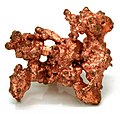 Native Copper
 -
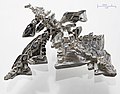 Silver Crystal
 -
 Gold Crystals


Ad. Transform your health with W8MD Weight Loss, Sleep & MedSpa

Tired of being overweight?
Special offer:
Budget GLP-1 weight loss medications
- Semaglutide starting from $29.99/week and up with insurance for visit of $59.99 and up per week self pay.
- Tirzepatide starting from $45.00/week and up (dose dependent) or $69.99/week and up self pay
✔ Same-week appointments, evenings & weekends
Learn more:
- GLP-1 weight loss clinic NYC
- W8MD's NYC medical weight loss
- W8MD Philadelphia GLP-1 shots
- Philadelphia GLP-1 injections
- Affordable GLP-1 shots NYC
|
WikiMD Medical Encyclopedia |
Medical Disclaimer: WikiMD is for informational purposes only and is not a substitute for professional medical advice. Content may be inaccurate or outdated and should not be used for diagnosis or treatment. Always consult your healthcare provider for medical decisions. Verify information with trusted sources such as CDC.gov and NIH.gov. By using this site, you agree that WikiMD is not liable for any outcomes related to its content. See full disclaimer.
Credits:Most images are courtesy of Wikimedia commons, and templates, categories Wikipedia, licensed under CC BY SA or similar.
Translate this page: - East Asian
中文,
日本,
한국어,
South Asian
हिन्दी,
தமிழ்,
తెలుగు,
Urdu,
ಕನ್ನಡ,
Southeast Asian
Indonesian,
Vietnamese,
Thai,
မြန်မာဘာသာ,
বাংলা
European
español,
Deutsch,
français,
Greek,
português do Brasil,
polski,
română,
русский,
Nederlands,
norsk,
svenska,
suomi,
Italian
Middle Eastern & African
عربى,
Turkish,
Persian,
Hebrew,
Afrikaans,
isiZulu,
Kiswahili,
Other
Bulgarian,
Hungarian,
Czech,
Swedish,
മലയാളം,
मराठी,
ਪੰਜਾਬੀ,
ગુજરાતી,
Portuguese,
Ukrainian
