Brettanomyces bruxellensis
Brettanomyces bruxellensis[edit]
Brettanomyces bruxellensis
Brettanomyces bruxellensis is a species of yeast commonly found in the brewing and winemaking industries. It belongs to the genus Brettanomyces within the family Saccharomycetaceae. This yeast species is known for its ability to produce unique flavors and aromas, often described as "funky" or "barnyard-like."
Description[edit]
Brettanomyces bruxellensis is a unicellular fungus that typically appears as oval-shaped cells under a microscope. It is a facultative anaerobe, meaning it can survive in both aerobic and anaerobic environments. This yeast species is capable of fermenting various sugars, including glucose, fructose, and maltose, producing ethanol and carbon dioxide as byproducts.
Role in Brewing and Winemaking[edit]
Brettanomyces bruxellensis is considered both a spoilage organism and a desirable component in certain beer and wine styles. In low concentrations, it can contribute complex flavors and aromas, adding depth and character to the final product. However, if allowed to proliferate unchecked, it can lead to off-flavors and off-odors, often described as "sweaty," "horse-like," or "band-aid-like."
In the brewing industry, Brettanomyces bruxellensis is commonly associated with the production of Belgian-style beers, such as Lambics and Gueuze. These beers are often aged for an extended period, allowing the yeast to develop its characteristic flavors and aromas. However, its presence in other beer styles, particularly those that aim for a clean and consistent flavor profile, is generally considered a defect.
Similarly, in winemaking, Brettanomyces bruxellensis can have both positive and negative effects. In certain wine styles, such as some red wines and certain traditional-method sparkling wines, a controlled presence of Brettanomyces can contribute to the complexity and depth of the wine. However, excessive growth of this yeast can result in wine spoilage, leading to undesirable sensory characteristics.
Control and Prevention[edit]
Controlling Brettanomyces bruxellensis in the brewing and winemaking industries can be challenging. It is a resilient yeast species that can survive in various environments, including wooden barrels and other porous materials. Proper sanitation practices, including thorough cleaning and sterilization of equipment, are crucial in preventing contamination.
In addition to sanitation, winemakers and brewers often employ various techniques to limit the growth of Brettanomyces. These may include the use of sulfites, temperature control, and the addition of antimicrobial agents. However, it is important to note that complete eradication of Brettanomyces is often difficult, and its presence may still be detected in trace amounts.
References[edit]

-
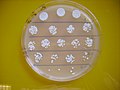 Aspect of Brettanomyces bruxellensis on YPD agar
Ad. Transform your health with W8MD Weight Loss, Sleep & MedSpa
Tired of being overweight?
Get started with evidence based, physician-supervised
affordable GLP-1 weight loss injections
Now available in New York City and Philadelphia:
- Semaglutide starting from $59.99/week and up
- Tirzepatide starting from $69.99/week and up (dose dependent)
✔ Evidence-based medical weight loss ✔ Insurance-friendly visits available ✔ Same-week appointments, evenings & weekends
Learn more:
Start your transformation today with W8MD weight loss centers.
|
WikiMD Medical Encyclopedia |
Medical Disclaimer: WikiMD is for informational purposes only and is not a substitute for professional medical advice. Content may be inaccurate or outdated and should not be used for diagnosis or treatment. Always consult your healthcare provider for medical decisions. Verify information with trusted sources such as CDC.gov and NIH.gov. By using this site, you agree that WikiMD is not liable for any outcomes related to its content. See full disclaimer.
Credits:Most images are courtesy of Wikimedia commons, and templates, categories Wikipedia, licensed under CC BY SA or similar.
Translate this page: - East Asian
中文,
日本,
한국어,
South Asian
हिन्दी,
தமிழ்,
తెలుగు,
Urdu,
ಕನ್ನಡ,
Southeast Asian
Indonesian,
Vietnamese,
Thai,
မြန်မာဘာသာ,
বাংলা
European
español,
Deutsch,
français,
Greek,
português do Brasil,
polski,
română,
русский,
Nederlands,
norsk,
svenska,
suomi,
Italian
Middle Eastern & African
عربى,
Turkish,
Persian,
Hebrew,
Afrikaans,
isiZulu,
Kiswahili,
Other
Bulgarian,
Hungarian,
Czech,
Swedish,
മലയാളം,
मराठी,
ਪੰਜਾਬੀ,
ગુજરાતી,
Portuguese,
Ukrainian
