Anti-fascism
| Politics |
|---|
|
|
Anti-fascism is a political and social movement that opposes fascism and other forms of extreme right-wing ideology. It seeks to combat the ideologies, groups, and individuals that promote fascist principles and practices. Anti-fascism does not align with a single political ideology but rather encompasses a broad spectrum of movements that oppose authoritarian, nationalist, and white supremacist ideologies.
Origins and History[edit]
The roots of anti-fascism can be traced back to the early 20th century, particularly in Europe, where groups and individuals mobilized against the rise of fascist regimes, such as those led by Benito Mussolini in Italy and Adolf Hitler in Germany. The term "antifascist" was first used to describe the broad coalition that opposed Mussolini's Blackshirts, including anarchists, communists, socialists, and liberal forces.
During the 1920s and 1930s, anti-fascist movements gained momentum as fascist ideologies spread across Europe. Notable anti-fascist groups included the Arditi del Popolo in Italy and the International Brigades who fought against Franco's forces in the Spanish Civil War.
Post-World War II[edit]
After World War II, anti-fascism continued to play a significant role in politics, particularly in countries that had experienced fascist rule. During the Cold War, anti-fascism was often associated with the left, particularly in the context of opposing neo-fascist or neo-Nazi groups that emerged in Europe and the United States.
In recent decades, anti-fascism has seen a resurgence in response to the rise of neo-fascist and far-right movements around the world. Modern anti-fascist groups, often called "Antifa," use both nonviolent and violent means to counteract the activities of these groups. They have been involved in various actions, from organizing counter-protests to engaging in direct confrontations.
Philosophy and Tactics[edit]
Anti-fascism is diverse in its ideologies and tactics. It includes a wide range of political beliefs, from anarchism and communism to liberalism and socialism. What unites these diverse movements is a shared opposition to fascist ideologies, racism, and xenophobia.
Tactically, anti-fascism includes public demonstrations, propaganda, direct action, and, at times, violent confrontation. Anti-fascists often argue that the violent nature of fascist ideology justifies a violent response, though this is a point of contention both within anti-fascist movements and in the broader public discourse.
Criticism and Controversy[edit]
Anti-fascism has been criticized from various angles. Critics argue that some anti-fascist tactics, particularly violent ones, are counterproductive and undermine democratic norms. Others contend that labeling opponents as fascists can be an oversimplification that hinders genuine political debate.
Despite these criticisms, supporters of anti-fascism maintain that the movement is crucial in combating the rise of fascism and protecting democratic values and human rights.
See Also[edit]

-
 An Italian partisan in Florence, 14 August 1944
 -
 Fascist symbol
 -
 101st with members of Dutch resistance
 -
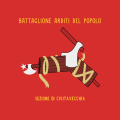 Flag of the Arditi del Popolo Battalion
 -
 Concentrazione di azione antifascista
 -
 Flag of Giustizia e Libertà
 -
 Berlin, Pfingstreffen der Rot-Front-Kämpfer
 -
 3 arrows Anti-fascist
 -
 Barcelone 19 juillet 1936
 -
 Strijdlustige vrouw - Woman ready to fight


.jpg)
Ad. Transform your life with W8MD's
GLP-1 weight loss injections special from $29.99 with insurance
|
WikiMD Medical Encyclopedia |
Medical Disclaimer: WikiMD is for informational purposes only and is not a substitute for professional medical advice. Content may be inaccurate or outdated and should not be used for diagnosis or treatment. Always consult your healthcare provider for medical decisions. Verify information with trusted sources such as CDC.gov and NIH.gov. By using this site, you agree that WikiMD is not liable for any outcomes related to its content. See full disclaimer.
Credits:Most images are courtesy of Wikimedia commons, and templates, categories Wikipedia, licensed under CC BY SA or similar.
Translate this page: - East Asian
中文,
日本,
한국어,
South Asian
हिन्दी,
தமிழ்,
తెలుగు,
Urdu,
ಕನ್ನಡ,
Southeast Asian
Indonesian,
Vietnamese,
Thai,
မြန်မာဘာသာ,
বাংলা
European
español,
Deutsch,
français,
Greek,
português do Brasil,
polski,
română,
русский,
Nederlands,
norsk,
svenska,
suomi,
Italian
Middle Eastern & African
عربى,
Turkish,
Persian,
Hebrew,
Afrikaans,
isiZulu,
Kiswahili,
Other
Bulgarian,
Hungarian,
Czech,
Swedish,
മലയാളം,
मराठी,
ਪੰਜਾਬੀ,
ગુજરાતી,
Portuguese,
Ukrainian
