Fasciation
Fasciation (from the Latin root fascia, meaning "band" or "stripe"), is a rare condition of plant growth where the apical meristem (growing tip), which normally is concentrated around a single point and would typically produce a cylindrical stem, becomes elongated perpendicularly to the direction of growth. This results in flattened, ribbon-like, crested, or elaborately contorted tissue. Fasciation can affect almost any part of a plant, including stems, flower heads, and fruit.
Causes[edit]
The exact cause of fasciation is not fully understood, but it is believed to be the result of a mutation in the meristematic cells, which are undifferentiated cells responsible for the growth of plants. This mutation can be induced by a variety of factors, including bacterial infection, particularly by the bacterium Corynebacterium fascians; viral infections; fungal infections; exposure to chemicals or radiation; and genetic factors. In some cases, fasciation may also result from physical damage to the plant's growing tip.
Symptoms and Identification[edit]
Fasciation is characterized by several distinct symptoms, including:
- The development of unusually shaped stems or flowers that may be flattened, elongated, or otherwise deformed.
- The presence of multiple, abnormally shaped flowers or flower heads on a single stem.
- The growth of stems that appear to be composed of fused twin stems or have a "crested" appearance.
Identification of fasciation is primarily based on these visual characteristics. The condition can occur in a wide range of plant species, including both herbaceous plants and woody shrubs and trees.
Effects on Plants[edit]
While fasciation is often considered a cosmetic issue, it can have more significant impacts on a plant's health and development. The abnormal growth patterns can lead to increased susceptibility to disease and pests, as well as potential problems with nutrient uptake and photosynthesis. However, in many cases, plants with fasciation continue to grow and function normally.
Management[edit]
There is no known cure for fasciation. If the condition is undesirable, affected parts of the plant can be pruned away. This may improve the plant's appearance and, in some cases, prevent the spread of the condition to new growth. However, because fasciation can be caused by genetic factors, it may reoccur in subsequent growth. In cases where fasciation is caused by bacterial, viral, or fungal infections, controlling the spread of the pathogen can help manage the condition.
Cultural and Horticultural Significance[edit]
Fasciation has been observed and documented for centuries, and while it is generally considered an anomaly, it has also been embraced by some horticulturists and gardeners for its unique and ornamental appearance. Certain plants that exhibit fasciation are specifically propagated for their distinctive forms.
See Also[edit]

-
 Mules Ear Fasciated
 -
 Crested Saguaro Cactus
 -
 Echinopsis pachanoi
 -
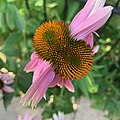 Fasciation on a Coneflower
 -
 Double Dandelion
 -
 Digitalis Fasciation Detail Stem
 -
 Fasciated Flowering Cherry Branch
 -
 Asparagus Fasciation
 -
 Fasciated Dandelion
 -
 Fasciated Lilac


.jpg)


Ad. Transform your health with W8MD Weight Loss, Sleep & MedSpa

Tired of being overweight?
Special offer:
Budget GLP-1 weight loss medications
- Semaglutide starting from $29.99/week and up with insurance for visit of $59.99 and up per week self pay.
- Tirzepatide starting from $45.00/week and up (dose dependent) or $69.99/week and up self pay
✔ Same-week appointments, evenings & weekends
Learn more:
- GLP-1 weight loss clinic NYC
- W8MD's NYC medical weight loss
- W8MD Philadelphia GLP-1 shots
- Philadelphia GLP-1 injections
- Affordable GLP-1 shots NYC
|
WikiMD Medical Encyclopedia |
Medical Disclaimer: WikiMD is for informational purposes only and is not a substitute for professional medical advice. Content may be inaccurate or outdated and should not be used for diagnosis or treatment. Always consult your healthcare provider for medical decisions. Verify information with trusted sources such as CDC.gov and NIH.gov. By using this site, you agree that WikiMD is not liable for any outcomes related to its content. See full disclaimer.
Credits:Most images are courtesy of Wikimedia commons, and templates, categories Wikipedia, licensed under CC BY SA or similar.
Translate this page: - East Asian
中文,
日本,
한국어,
South Asian
हिन्दी,
தமிழ்,
తెలుగు,
Urdu,
ಕನ್ನಡ,
Southeast Asian
Indonesian,
Vietnamese,
Thai,
မြန်မာဘာသာ,
বাংলা
European
español,
Deutsch,
français,
Greek,
português do Brasil,
polski,
română,
русский,
Nederlands,
norsk,
svenska,
suomi,
Italian
Middle Eastern & African
عربى,
Turkish,
Persian,
Hebrew,
Afrikaans,
isiZulu,
Kiswahili,
Other
Bulgarian,
Hungarian,
Czech,
Swedish,
മലയാളം,
मराठी,
ਪੰਜਾਬੀ,
ગુજરાતી,
Portuguese,
Ukrainian
