Ligamentum venosum
Ligamentum venosum is a fibrous remnant of the ductus venosus, a blood vessel found in the fetal circulation. It is located in the liver and is part of the anatomy of the human body.
Anatomy
The ligamentum venosum is a small ligament that is situated in the left lobe of the liver. It is a remnant of the ductus venosus of the fetal circulation, which shunts a portion of the left umbilical vein blood flow directly to the inferior vena cava. Thus, it allows oxygenated blood from the placenta to bypass the liver. In the fetus, the ductus venosus closes functionally within a few minutes of birth, and structurally within a few days of birth, at which point it becomes the ligamentum venosum.
Function
In the fetus, the ductus venosus plays a crucial role in delivering oxygenated blood from the placenta to the heart, bypassing the liver. After birth, the ductus venosus closes and becomes the ligamentum venosum. The ligamentum venosum does not have a known function in the adult human body.
Clinical significance
The ligamentum venosum is not typically visible in imaging studies of the liver, but it can be seen in certain conditions. For example, it may be visible in cases of portal hypertension, a condition characterized by increased blood pressure within the portal venous system, which can occur as a result of liver disease.
See also
References

Ligamentum venosum gallery
-
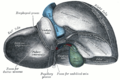 Gray1087-liver
 -
 Gray502


Ad. Transform your health with W8MD Weight Loss, Sleep & MedSpa

Tired of being overweight?
Special offer:
Budget GLP-1 weight loss medications
- Semaglutide starting from $29.99/week and up with insurance for visit of $59.99 and up per week self pay.
- Tirzepatide starting from $45.00/week and up (dose dependent) or $69.99/week and up self pay
✔ Same-week appointments, evenings & weekends
Learn more:
- GLP-1 weight loss clinic NYC
- W8MD's NYC medical weight loss
- W8MD Philadelphia GLP-1 shots
- Philadelphia GLP-1 injections
- Affordable GLP-1 shots NYC
|
WikiMD Medical Encyclopedia |
Medical Disclaimer: WikiMD is for informational purposes only and is not a substitute for professional medical advice. Content may be inaccurate or outdated and should not be used for diagnosis or treatment. Always consult your healthcare provider for medical decisions. Verify information with trusted sources such as CDC.gov and NIH.gov. By using this site, you agree that WikiMD is not liable for any outcomes related to its content. See full disclaimer.
Credits:Most images are courtesy of Wikimedia commons, and templates, categories Wikipedia, licensed under CC BY SA or similar.
Translate this page: - East Asian
中文,
日本,
한국어,
South Asian
हिन्दी,
தமிழ்,
తెలుగు,
Urdu,
ಕನ್ನಡ,
Southeast Asian
Indonesian,
Vietnamese,
Thai,
မြန်မာဘာသာ,
বাংলা
European
español,
Deutsch,
français,
Greek,
português do Brasil,
polski,
română,
русский,
Nederlands,
norsk,
svenska,
suomi,
Italian
Middle Eastern & African
عربى,
Turkish,
Persian,
Hebrew,
Afrikaans,
isiZulu,
Kiswahili,
Other
Bulgarian,
Hungarian,
Czech,
Swedish,
മലയാളം,
मराठी,
ਪੰਜਾਬੀ,
ગુજરાતી,
Portuguese,
Ukrainian
