Rock shelter
Rock Shelter
A rock shelter is a shallow cave-like opening at the base of a bluff or cliff. Unlike deeper caves, rock shelters are formed primarily by the differential erosion of softer rock layers beneath harder, more resistant layers. These natural formations have been used by humans for thousands of years as temporary or permanent dwellings, providing protection from the elements and a strategic vantage point.
Formation[edit]
Rock shelters are typically formed in sedimentary rock, such as sandstone, limestone, or shale. The process begins with the erosion of softer rock layers by wind, water, or ice, which gradually undercuts the harder rock above. Over time, this erosion creates a hollow space that can vary in size from a small niche to a large cavernous opening.
Archaeological Significance[edit]
Rock shelters have been of great interest to archaeologists because they often contain well-preserved evidence of past human activity. Artifacts such as tools, pottery, and remnants of food can be found in these sites, providing valuable insights into the lives of ancient peoples. Some rock shelters also feature rock art, including paintings and carvings that offer clues about the cultural and spiritual practices of their creators.
Notable Rock Shelters[edit]
- Bhimbetka rock shelters: Located in India, these shelters are a UNESCO World Heritage Site and contain some of the earliest traces of human life in the Indian subcontinent. - Abri de la Madeleine: Situated in France, this site is famous for its Magdalenian artifacts and is the type site for the Magdalenian culture. - Cueva de las Manos: Found in Argentina, this rock shelter is renowned for its stenciled handprints and other prehistoric art.
Ecological and Environmental Importance[edit]
Rock shelters can also serve as important ecological niches. They provide habitats for various species of plants and animals, offering shelter from harsh weather conditions and predators. The microclimate within a rock shelter can support unique flora and fauna that are not found in the surrounding environment.
Modern Uses[edit]
In contemporary times, rock shelters continue to be used for recreational purposes, such as hiking and camping. They are also studied for their geological and environmental significance, contributing to our understanding of natural processes and climate change.
Also see[edit]
- Cave - Archaeology - Rock art - Sedimentary rock - Erosion
- Rock shelter
-
 Rockhouse Cliffs Rockshelter
 -
 Rock shelter Papula
 -
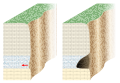 Rock shelter formation by frost weathering
 -
 Rock shelter formation by karst gallery cutting
 -
 Rock shelter formation by river erosion
 -
 Shepherds' rock shelter, Lahaul
 -
 Excavation at Paleolithic site of Bawa Yawan, Zagros, Iran 2017
 -
 Turtlehead Cave


Ad. Transform your health with W8MD Weight Loss, Sleep & MedSpa

Tired of being overweight?
Special offer:
Budget GLP-1 weight loss medications
- Semaglutide starting from $29.99/week and up with insurance for visit of $59.99 and up per week self pay.
- Tirzepatide starting from $45.00/week and up (dose dependent) or $69.99/week and up self pay
✔ Same-week appointments, evenings & weekends
Learn more:
- GLP-1 weight loss clinic NYC
- W8MD's NYC medical weight loss
- W8MD Philadelphia GLP-1 shots
- Philadelphia GLP-1 injections
- Affordable GLP-1 shots NYC
|
WikiMD Medical Encyclopedia |
Medical Disclaimer: WikiMD is for informational purposes only and is not a substitute for professional medical advice. Content may be inaccurate or outdated and should not be used for diagnosis or treatment. Always consult your healthcare provider for medical decisions. Verify information with trusted sources such as CDC.gov and NIH.gov. By using this site, you agree that WikiMD is not liable for any outcomes related to its content. See full disclaimer.
Credits:Most images are courtesy of Wikimedia commons, and templates, categories Wikipedia, licensed under CC BY SA or similar.
Translate this page: - East Asian
中文,
日本,
한국어,
South Asian
हिन्दी,
தமிழ்,
తెలుగు,
Urdu,
ಕನ್ನಡ,
Southeast Asian
Indonesian,
Vietnamese,
Thai,
မြန်မာဘာသာ,
বাংলা
European
español,
Deutsch,
français,
Greek,
português do Brasil,
polski,
română,
русский,
Nederlands,
norsk,
svenska,
suomi,
Italian
Middle Eastern & African
عربى,
Turkish,
Persian,
Hebrew,
Afrikaans,
isiZulu,
Kiswahili,
Other
Bulgarian,
Hungarian,
Czech,
Swedish,
മലയാളം,
मराठी,
ਪੰਜਾਬੀ,
ગુજરાતી,
Portuguese,
Ukrainian
