Presidency of Theodore Roosevelt
The presidency of Theodore Roosevelt began on September 14, 1901, following the assassination of William McKinley. Roosevelt, a Republican, became the youngest person to assume the U.S. presidency at the age of 42. His presidency ended on March 4, 1909. Roosevelt is known for his domestic policies, foreign policy, and his role in the Progressive Era.
Domestic Policies[edit]
Roosevelt's domestic policies were characterized by his "Square Deal" program, which aimed to help middle-class citizens and involved attacking plutocracy and bad trusts while protecting business from the most extreme demands of organized labor. His policies included the Hepburn Act, which gave the Interstate Commerce Commission the power to set maximum railroad rates, and the Pure Food and Drug Act, which led to the creation of the Food and Drug Administration.
Conservation[edit]
Roosevelt was a prominent advocate for the conservation of natural resources. He established the United States Forest Service and signed into law the creation of five national parks. He also signed the Antiquities Act, which he used to proclaim 18 new national monuments.
Foreign Policy[edit]
Roosevelt's foreign policy was characterized by his motto, "Speak softly and carry a big stick". He was instrumental in negotiating the end of the Russo-Japanese War, for which he won the Nobel Peace Prize. He also oversaw the construction of the Panama Canal, which was a significant engineering feat and strategic asset for the United States.
Roosevelt Corollary[edit]
In 1904, Roosevelt articulated the Roosevelt Corollary to the Monroe Doctrine, asserting the right of the United States to intervene in Latin America to stabilize the economic affairs of small states if they were unable to pay their international debts.
Legacy[edit]
Roosevelt's presidency is considered a turning point in American history, as he expanded the influence and power of the executive office. His efforts in conservation, trust-busting, and foreign policy have left a lasting impact on the nation.
See also[edit]
References[edit]
-
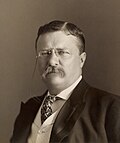 Theodore Roosevelt by the Pach Bros
 -
 TR Inauguration sketch
 -
 Theodore Roosevelt outgoing cabinet
 -
 TR Enviro
 -
 Coal Barons
 -
 TR Farewell
 -
 American Colonies
 -
 Big Stick
 -
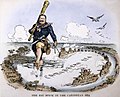 Tr bigstick cartoon
 -
 Panama Canal under construction, 1907


Ad. Transform your health with W8MD Weight Loss, Sleep & MedSpa

Tired of being overweight?
Special offer:
Budget GLP-1 weight loss medications
- Semaglutide starting from $29.99/week and up with insurance for visit of $59.99 and up per week self pay.
- Tirzepatide starting from $45.00/week and up (dose dependent) or $69.99/week and up self pay
✔ Same-week appointments, evenings & weekends
Learn more:
- GLP-1 weight loss clinic NYC
- W8MD's NYC medical weight loss
- W8MD Philadelphia GLP-1 shots
- Philadelphia GLP-1 injections
- Affordable GLP-1 shots NYC
|
WikiMD Medical Encyclopedia |
Medical Disclaimer: WikiMD is for informational purposes only and is not a substitute for professional medical advice. Content may be inaccurate or outdated and should not be used for diagnosis or treatment. Always consult your healthcare provider for medical decisions. Verify information with trusted sources such as CDC.gov and NIH.gov. By using this site, you agree that WikiMD is not liable for any outcomes related to its content. See full disclaimer.
Credits:Most images are courtesy of Wikimedia commons, and templates, categories Wikipedia, licensed under CC BY SA or similar.
Translate this page: - East Asian
中文,
日本,
한국어,
South Asian
हिन्दी,
தமிழ்,
తెలుగు,
Urdu,
ಕನ್ನಡ,
Southeast Asian
Indonesian,
Vietnamese,
Thai,
မြန်မာဘာသာ,
বাংলা
European
español,
Deutsch,
français,
Greek,
português do Brasil,
polski,
română,
русский,
Nederlands,
norsk,
svenska,
suomi,
Italian
Middle Eastern & African
عربى,
Turkish,
Persian,
Hebrew,
Afrikaans,
isiZulu,
Kiswahili,
Other
Bulgarian,
Hungarian,
Czech,
Swedish,
മലയാളം,
मराठी,
ਪੰਜਾਬੀ,
ગુજરાતી,
Portuguese,
Ukrainian
