Black ice
Black ice, also known as glare ice or clear ice, is a type of ice that is transparent and thus appears black because it allows the color of the underlying surface to show through. It is often found on roads, sidewalks, and other paved surfaces, and is particularly dangerous because it is difficult to see and can cause vehicles to skid or pedestrians to slip and fall.
Formation[edit]
Black ice forms when the temperature is at or below freezing and there is moisture on the ground. This can occur in a variety of ways, such as when rain or drizzle falls onto a cold surface, or when snow or ice melts and then refreezes. It can also form from dew or fog that condenses onto a cold surface and then freezes. Because black ice is thin and clear, it often goes unnoticed until it is too late.
Dangers[edit]
The primary danger of black ice is that it is difficult to see. This can lead to vehicle accidents as drivers may not realize they are on an icy surface until they lose control of their vehicle. Pedestrians are also at risk, as they may slip and fall on the ice. In addition, black ice can form on bridges and overpasses even when the rest of the road is clear, catching drivers off guard.
Prevention and Response[edit]
To prevent accidents, it is important to be aware of the conditions that can lead to the formation of black ice and to drive or walk cautiously when these conditions are present. If you encounter black ice while driving, it is recommended to keep the steering wheel straight and avoid sudden braking. If walking, it can be helpful to wear shoes with good traction and to take small steps.
See Also[edit]


This safety related article is a stub. You can help WikiMD by expanding it.
Black ice gallery[edit]
-
 Sudden black ice and frozen puddles in Tauberbischofsheim
 -
 Road sign Quebec ground frost - Gaspé
 -
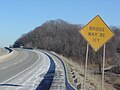 Icy road bridge
 -
 I-35W Bridge - April, 2006
 -
 Black ice river


Ad. Transform your health with W8MD Weight Loss, Sleep & MedSpa

Tired of being overweight?
Special offer:
Budget GLP-1 weight loss medications
- Semaglutide starting from $29.99/week and up with insurance for visit of $59.99 and up per week self pay.
- Tirzepatide starting from $45.00/week and up (dose dependent) or $69.99/week and up self pay
✔ Same-week appointments, evenings & weekends
Learn more:
- GLP-1 weight loss clinic NYC
- W8MD's NYC medical weight loss
- W8MD Philadelphia GLP-1 shots
- Philadelphia GLP-1 injections
- Affordable GLP-1 shots NYC
|
WikiMD Medical Encyclopedia |
Medical Disclaimer: WikiMD is for informational purposes only and is not a substitute for professional medical advice. Content may be inaccurate or outdated and should not be used for diagnosis or treatment. Always consult your healthcare provider for medical decisions. Verify information with trusted sources such as CDC.gov and NIH.gov. By using this site, you agree that WikiMD is not liable for any outcomes related to its content. See full disclaimer.
Credits:Most images are courtesy of Wikimedia commons, and templates, categories Wikipedia, licensed under CC BY SA or similar.
Translate this page: - East Asian
中文,
日本,
한국어,
South Asian
हिन्दी,
தமிழ்,
తెలుగు,
Urdu,
ಕನ್ನಡ,
Southeast Asian
Indonesian,
Vietnamese,
Thai,
မြန်မာဘာသာ,
বাংলা
European
español,
Deutsch,
français,
Greek,
português do Brasil,
polski,
română,
русский,
Nederlands,
norsk,
svenska,
suomi,
Italian
Middle Eastern & African
عربى,
Turkish,
Persian,
Hebrew,
Afrikaans,
isiZulu,
Kiswahili,
Other
Bulgarian,
Hungarian,
Czech,
Swedish,
മലയാളം,
मराठी,
ਪੰਜਾਬੀ,
ગુજરાતી,
Portuguese,
Ukrainian
