Economy of India
Economy of India
The Economy of India is characterized as a developing mixed economy. It is the world's sixth-largest economy by nominal GDP and the third-largest by purchasing power parity (PPP). The country ranks 139th in per capita GDP (nominal) with $2,134 and 122nd in per capita GDP (PPP) with $7,783 as of 2018.
History[edit]
The History of the Indian economy can be traced back to the Indus Valley Civilization. During the medieval era, India was the world's largest economy, accounting for a quarter of the world's GDP. The British Raj period saw a major shift in the economy, with a significant decline in GDP.
Sectors[edit]
The Indian economy is broadly classified into three sectors: Agriculture, Industry, and Services.
Agriculture[edit]
Agriculture in India is the predominant occupation and the largest sector, contributing significantly to the national GDP. It employs a majority of the country's workforce and fulfills the food and nutritional requirements of the nation.
Industry[edit]
The Industry in India includes a range of industries, such as textiles, telecommunications, chemicals, pharmaceuticals, biotechnology, food processing, steel, transport, and insurance.
Services[edit]
The Services sector in India has the largest share in the Indian GDP with it being the source of employment for 27% of the workforce.
Economic Reforms[edit]
The Economic reforms in India refer to the liberalization measures undertaken in 1991, which led to the opening up of the Indian economy for global trade and investment.
Challenges[edit]
Despite the high growth rate, the Indian economy faces several challenges, including poverty, corruption, inadequate public healthcare, and unemployment.
See also[edit]
References[edit]
External links[edit]
.svg) | This India-related article is a stub. You can help WikiMD by expanding the page. |
 | This article about the economy is a stub. You can help WikiMD by expanding the page. |
-
F7xZ48abwAAgNst
-
 Mauryan Coin
 -
 Silver Coin of Kumaragupta I
 -
 1 AD to 2003 AD Historical Trends in Global Distribution of GDP
 -
 1700 AD through 1950 AD per capita GDP of United Kingdom and India during the Colonial Era
 -
 Navi Mumbai Maharashtra
 -
 GDP per capita of India (1820 to present)
 -
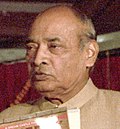 P. V. Narasimha Rao
 -
 Manmohan Singh
 -
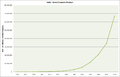 India GDP without labels


.png)


Medical Disclaimer: WikiMD is for informational purposes only and is not a substitute for professional medical advice. Content may be inaccurate or outdated and should not be used for diagnosis or treatment. Always consult your healthcare provider for medical decisions. Verify information with trusted sources such as CDC.gov and NIH.gov. By using this site, you agree that WikiMD is not liable for any outcomes related to its content. See full disclaimer.
Credits:Most images are courtesy of Wikimedia commons, and templates, categories Wikipedia, licensed under CC BY SA or similar.
Translate this page: - East Asian
中文,
日本,
한국어,
South Asian
हिन्दी,
தமிழ்,
తెలుగు,
Urdu,
ಕನ್ನಡ,
Southeast Asian
Indonesian,
Vietnamese,
Thai,
မြန်မာဘာသာ,
বাংলা
European
español,
Deutsch,
français,
Greek,
português do Brasil,
polski,
română,
русский,
Nederlands,
norsk,
svenska,
suomi,
Italian
Middle Eastern & African
عربى,
Turkish,
Persian,
Hebrew,
Afrikaans,
isiZulu,
Kiswahili,
Other
Bulgarian,
Hungarian,
Czech,
Swedish,
മലയാളം,
मराठी,
ਪੰਜਾਬੀ,
ગુજરાતી,
Portuguese,
Ukrainian

