Pseudonocardiaceae
Pseudonocardiaceae is a family of Actinobacteria, a phylum of bacteria. This family is characterized by its high G+C content in their DNA, and includes several genera that are significant in the field of biotechnology.
Taxonomy
The family Pseudonocardiaceae is part of the order Actinomycetales, which is the largest order within the phylum Actinobacteria. The family includes several genera, including Pseudonocardia, Actinokineospora, Saccharopolyspora, and Actinopolyspora.
Characteristics
Members of the Pseudonocardiaceae family are Gram-positive bacteria with high G+C content in their DNA. They are typically aerobic bacteria, and are found in a variety of environments, including soil, water, and even in extreme environments like salt pans and hot springs.
Biotechnology
Several genera within the Pseudonocardiaceae family are significant in biotechnology. For example, Pseudonocardia species are known to produce antibiotics, including nystatin and amphotericin B, which are used to treat fungal infections. Saccharopolyspora species are used in the production of erythromycin, an antibiotic used to treat a variety of bacterial infections.
See also
References
<references />

-
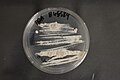 Pseudonocardia pini NRRL B-65534 (Type Strain)
.jpg)
Ad. Transform your health with W8MD Weight Loss, Sleep & MedSpa

Tired of being overweight?
Special offer:
Budget GLP-1 weight loss medications
- Semaglutide starting from $29.99/week and up with insurance for visit of $59.99 and up per week self pay.
- Tirzepatide starting from $45.00/week and up (dose dependent) or $69.99/week and up self pay
✔ Same-week appointments, evenings & weekends
Learn more:
- GLP-1 weight loss clinic NYC
- W8MD's NYC medical weight loss
- W8MD Philadelphia GLP-1 shots
- Philadelphia GLP-1 injections
- Affordable GLP-1 shots NYC
|
WikiMD Medical Encyclopedia |
Medical Disclaimer: WikiMD is for informational purposes only and is not a substitute for professional medical advice. Content may be inaccurate or outdated and should not be used for diagnosis or treatment. Always consult your healthcare provider for medical decisions. Verify information with trusted sources such as CDC.gov and NIH.gov. By using this site, you agree that WikiMD is not liable for any outcomes related to its content. See full disclaimer.
Credits:Most images are courtesy of Wikimedia commons, and templates, categories Wikipedia, licensed under CC BY SA or similar.
Translate this page: - East Asian
中文,
日本,
한국어,
South Asian
हिन्दी,
தமிழ்,
తెలుగు,
Urdu,
ಕನ್ನಡ,
Southeast Asian
Indonesian,
Vietnamese,
Thai,
မြန်မာဘာသာ,
বাংলা
European
español,
Deutsch,
français,
Greek,
português do Brasil,
polski,
română,
русский,
Nederlands,
norsk,
svenska,
suomi,
Italian
Middle Eastern & African
عربى,
Turkish,
Persian,
Hebrew,
Afrikaans,
isiZulu,
Kiswahili,
Other
Bulgarian,
Hungarian,
Czech,
Swedish,
മലയാളം,
मराठी,
ਪੰਜਾਬੀ,
ગુજરાતી,
Portuguese,
Ukrainian
