Cystathionine gamma-lyase
Cystathionine gamma-lyase (CSE) is an enzyme that plays a crucial role in the metabolism of sulfur-containing amino acids. It is encoded by the CTH gene and is primarily found in the liver, kidney, and brain tissues of mammals. CSE catalyzes the conversion of cystathionine to cysteine, which is an essential amino acid involved in various physiological processes.
Function[edit]
Cystathionine gamma-lyase is a pyridoxal 5'-phosphate (PLP)-dependent enzyme that belongs to the family of carbon-sulfur lyases. It plays a key role in the transsulfuration pathway, which is responsible for the synthesis of cysteine from methionine. This pathway is crucial for maintaining the balance of sulfur-containing amino acids in the body.
CSE is involved in the breakdown of cystathionine, an intermediate compound formed during the metabolism of methionine. By cleaving cystathionine, CSE generates cysteine, which can be further metabolized to produce glutathione, an important antioxidant. Additionally, cysteine serves as a precursor for the synthesis of taurine, coenzyme A, and other biologically active molecules.
Regulation[edit]
The activity of cystathionine gamma-lyase is tightly regulated to ensure proper sulfur amino acid metabolism. Several factors, including substrate availability, post-translational modifications, and gene expression, influence the activity of CSE.
One important regulator of CSE is hydrogen sulfide (H2S), a gasotransmitter that acts as a signaling molecule in various physiological processes. H2S can enhance the expression and activity of CSE, leading to increased cysteine production. Conversely, CSE activity can be inhibited by oxidative stress and certain drugs, which can disrupt sulfur amino acid metabolism.
Clinical Significance[edit]
Cystathionine gamma-lyase deficiency, also known as CSE deficiency, is a rare genetic disorder characterized by impaired cysteine synthesis. This condition can lead to the accumulation of cystathionine and homocysteine, resulting in a variety of symptoms, including intellectual disability, developmental delay, and cardiovascular abnormalities.
Furthermore, dysregulation of CSE has been implicated in various diseases. Studies have shown that altered CSE expression and activity are associated with conditions such as cardiovascular diseases, neurodegenerative disorders, and cancer. Understanding the role of CSE in these diseases may provide insights into potential therapeutic targets.

Cystathionine gamma-lyase gallery[edit]
-
 Cysteine biosynthesis
 -
 2nmp
2nmp -
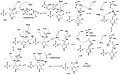 Cystathionase Mechanism III
 -
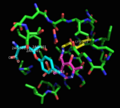 Cystathionase inhibited zoomed
 -
Propargylglycine


Ad. Transform your life with W8MD's
GLP-1 weight loss injections special from $29.99 with insurance
|
WikiMD Medical Encyclopedia |
Medical Disclaimer: WikiMD is for informational purposes only and is not a substitute for professional medical advice. Content may be inaccurate or outdated and should not be used for diagnosis or treatment. Always consult your healthcare provider for medical decisions. Verify information with trusted sources such as CDC.gov and NIH.gov. By using this site, you agree that WikiMD is not liable for any outcomes related to its content. See full disclaimer.
Credits:Most images are courtesy of Wikimedia commons, and templates, categories Wikipedia, licensed under CC BY SA or similar.
Translate this page: - East Asian
中文,
日本,
한국어,
South Asian
हिन्दी,
தமிழ்,
తెలుగు,
Urdu,
ಕನ್ನಡ,
Southeast Asian
Indonesian,
Vietnamese,
Thai,
မြန်မာဘာသာ,
বাংলা
European
español,
Deutsch,
français,
Greek,
português do Brasil,
polski,
română,
русский,
Nederlands,
norsk,
svenska,
suomi,
Italian
Middle Eastern & African
عربى,
Turkish,
Persian,
Hebrew,
Afrikaans,
isiZulu,
Kiswahili,
Other
Bulgarian,
Hungarian,
Czech,
Swedish,
മലയാളം,
मराठी,
ਪੰਜਾਬੀ,
ગુજરાતી,
Portuguese,
Ukrainian

