Bismuth(III) iodide
Bismuth(III) iodide is an inorganic compound with the chemical formula BiI3. This material is of interest both for its fundamental chemical properties and its applications in various technological and scientific fields. Bismuth(III) iodide is a dark, reddish-brown solid at room temperature, known for its low solubility in water and high density. It is part of a broader class of compounds known as halides, which are compounds formed between a halogen and another element or group.
Properties[edit]
Bismuth(III) iodide is characterized by its distinctive color and crystalline structure. It has a molecular weight of 589.69 g/mol and a density of approximately 5.778 g/cm3. The compound melts at about 408°C and sublimes upon heating, making it useful in certain high-temperature applications. Its low solubility in water and most organic solvents makes it relatively stable in various chemical environments.
Chemical Structure[edit]
The crystal structure of BiI3 is hexagonal, with bismuth atoms coordinated by six iodine atoms. This arrangement leads to the formation of a layered structure, where layers are held together by weak van der Waals forces. This structural characteristic is crucial for its application in materials science, especially in the development of novel semiconductor materials.
Synthesis[edit]
Bismuth(III) iodide can be synthesized through several methods, the most common being the direct combination of elemental bismuth and iodine in a 1:3 molar ratio. This reaction is typically carried out under controlled conditions to prevent the formation of unwanted by-products:
\[ \text{2 Bi} + \text{3 I}_2 \rightarrow \text{2 BiI}_3 \]
Another method involves the reaction of bismuth(III) oxide with hydroiodic acid, followed by careful evaporation of the solvent to yield pure BiI3 crystals.
Applications[edit]
Bismuth(III) iodide finds applications in several areas, including:
- Photovoltaic Devices: Due to its semiconducting properties and stability, BiI3 is being researched for use in thin-film solar cells. - Radiation Detection: Its high atomic number makes it an effective material for gamma-ray and X-ray detection systems. - Catalysis: BiI3 serves as a catalyst in certain organic synthesis reactions, leveraging its unique chemical properties to facilitate bond formation.
Safety and Handling[edit]
While bismuth(III) iodide is not considered highly toxic, it should be handled with care due to its potential to irritate the skin and eyes. Appropriate safety measures, including the use of gloves and eye protection, are recommended when working with this compound. In case of exposure, affected areas should be rinsed thoroughly with water.
See Also[edit]
- Bismuth compounds - Halide minerals - Semiconductor materials - Photovoltaic system
References[edit]
<references/>

Bismuth(III) iodide gallery[edit]
-
 Bismuth triiodide layer 3D balls
 -
 Bismuth triiodide layers stacking 3D balls
 -
 YBr3 structure
 -
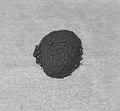 Bismuth(III) iodide


_iodide.jpg)
Ad. Transform your life with W8MD's
GLP-1 weight loss injections special from $29.99 with insurance
|
WikiMD Medical Encyclopedia |
Medical Disclaimer: WikiMD is for informational purposes only and is not a substitute for professional medical advice. Content may be inaccurate or outdated and should not be used for diagnosis or treatment. Always consult your healthcare provider for medical decisions. Verify information with trusted sources such as CDC.gov and NIH.gov. By using this site, you agree that WikiMD is not liable for any outcomes related to its content. See full disclaimer.
Credits:Most images are courtesy of Wikimedia commons, and templates, categories Wikipedia, licensed under CC BY SA or similar.
Translate this page: - East Asian
中文,
日本,
한국어,
South Asian
हिन्दी,
தமிழ்,
తెలుగు,
Urdu,
ಕನ್ನಡ,
Southeast Asian
Indonesian,
Vietnamese,
Thai,
မြန်မာဘာသာ,
বাংলা
European
español,
Deutsch,
français,
Greek,
português do Brasil,
polski,
română,
русский,
Nederlands,
norsk,
svenska,
suomi,
Italian
Middle Eastern & African
عربى,
Turkish,
Persian,
Hebrew,
Afrikaans,
isiZulu,
Kiswahili,
Other
Bulgarian,
Hungarian,
Czech,
Swedish,
മലയാളം,
मराठी,
ਪੰਜਾਬੀ,
ગુજરાતી,
Portuguese,
Ukrainian
