Bessemer process

Bessemer process is an industrial method for the mass production of steel from molten pig iron. The process was named after its inventor, Henry Bessemer, who took out a patent on the process in 1856. The Bessemer process was the first inexpensive industrial process for the mass production of steel from molten pig iron before the development of the open hearth furnace. The key principle is removal of impurities from the iron by oxidation with air being blown through the molten iron. The oxidation also raises the temperature of the iron mass and keeps it molten.
History[edit]
The origin of the Bessemer process is closely tied to the early developments in the production of iron and steel. Prior to the invention of the Bessemer process, steel was expensive and difficult to manufacture, limiting its use. Henry Bessemer's invention, which he patented in 1856, revolutionized the steel industry by significantly reducing the cost and time required to produce steel.
Process[edit]
The process involves the use of a large container called a Bessemer converter, which is made of steel and lined with a refractory material. The converter is filled with molten pig iron, and air is blown through the iron using a tuyere, a type of nozzle. The oxygen in the air reacts with the carbon in the iron, forming carbon dioxide and carbon monoxide, which escape into the atmosphere. This reaction raises the temperature of the iron, keeping it molten, and burns off impurities such as silicon, manganese, and phosphorus. The process continues until the desired level of carbon is achieved, at which point the steel is poured out into molds to solidify.
Advancements and Variations[edit]
The original Bessemer process had difficulty removing phosphorus from the pig iron, which made the steel brittle. This limitation was overcome by Sidney Gilchrist Thomas and Percy Gilchrist, who developed the Basic Bessemer process or Thomas process, which lined the converter with a basic material to remove phosphorus.
Impact[edit]
The Bessemer process had a profound impact on the steel industry and the broader industrial landscape. It made steel production faster, cheaper, and more efficient, leading to a significant increase in the availability and use of steel in construction, machinery, and transportation. The process played a crucial role in the industrialization of many countries and laid the foundation for the modern steel industry.
Decline[edit]
The Bessemer process began to decline in the early 20th century as newer steel-making processes, such as the open hearth furnace, electric arc furnace, and basic oxygen steelmaking, were developed. These processes offered better control over the chemical composition of steel and were more energy-efficient.
Legacy[edit]
Despite its decline, the Bessemer process is remembered as a key innovation in industrial history. It marked a significant step forward in the mass production of steel and contributed to the growth of the modern industrial economy.
This industrial process related article is a stub. You can help WikiMD by expanding it.
Bessemer process gallery[edit]
-
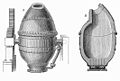 Bessemer converter
 -
 Bessemer 5180
 -
 William Kelly (inventor)
 -
 Schéma Bessemer métallurgie
 -
 Henry Bessemer (1813-1898)
 -
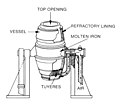 Bessemer Converter (PSF)
 -
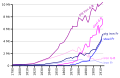 Production fonte fer acier France G-B
 -
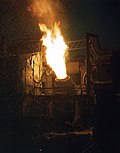 A scene in a steel mill, Republic Steel, Youngstown, Ohio


.jpg)

.jpg)
.jpg)


Ad. Transform your health with W8MD Weight Loss, Sleep & MedSpa

Tired of being overweight?
Special offer:
Budget GLP-1 weight loss medications
- Semaglutide starting from $29.99/week and up with insurance for visit of $59.99 and up per week self pay.
- Tirzepatide starting from $45.00/week and up (dose dependent) or $69.99/week and up self pay
✔ Same-week appointments, evenings & weekends
Learn more:
- GLP-1 weight loss clinic NYC
- W8MD's NYC medical weight loss
- W8MD Philadelphia GLP-1 shots
- Philadelphia GLP-1 injections
- Affordable GLP-1 shots NYC
|
WikiMD Medical Encyclopedia |
Medical Disclaimer: WikiMD is for informational purposes only and is not a substitute for professional medical advice. Content may be inaccurate or outdated and should not be used for diagnosis or treatment. Always consult your healthcare provider for medical decisions. Verify information with trusted sources such as CDC.gov and NIH.gov. By using this site, you agree that WikiMD is not liable for any outcomes related to its content. See full disclaimer.
Credits:Most images are courtesy of Wikimedia commons, and templates, categories Wikipedia, licensed under CC BY SA or similar.
Translate this page: - East Asian
中文,
日本,
한국어,
South Asian
हिन्दी,
தமிழ்,
తెలుగు,
Urdu,
ಕನ್ನಡ,
Southeast Asian
Indonesian,
Vietnamese,
Thai,
မြန်မာဘာသာ,
বাংলা
European
español,
Deutsch,
français,
Greek,
português do Brasil,
polski,
română,
русский,
Nederlands,
norsk,
svenska,
suomi,
Italian
Middle Eastern & African
عربى,
Turkish,
Persian,
Hebrew,
Afrikaans,
isiZulu,
Kiswahili,
Other
Bulgarian,
Hungarian,
Czech,
Swedish,
മലയാളം,
मराठी,
ਪੰਜਾਬੀ,
ગુજરાતી,
Portuguese,
Ukrainian
