Baited remote underwater video
Baited Remote Underwater Video (BRUV) is a method of underwater surveying that uses bait to attract marine life to a camera. This technique is commonly used in marine biology and oceanography to study the behavior and diversity of marine species.
Overview[edit]
Baited Remote Underwater Video systems consist of a camera, a frame to hold the camera, and a bait bag. The camera is typically a digital video camera, although other types of cameras can be used. The frame is usually made of metal or plastic and is designed to keep the camera stable on the ocean floor. The bait bag is filled with a type of food that is attractive to the species being studied.
BRUV systems are typically deployed from a boat and left on the ocean floor for a set period of time. During this time, the camera records any marine life that comes to investigate the bait. The footage is then analyzed to identify the species present and their behavior.
Applications[edit]
BRUV systems are used in a variety of research applications. They are particularly useful for studying species that are difficult to observe directly, such as sharks and rays. BRUVs can also be used to study the effects of environmental changes on marine communities, such as the impact of climate change or overfishing.
In addition to research, BRUV systems are also used in marine conservation efforts. For example, they can be used to monitor the effectiveness of marine protected areas and to identify areas of high biodiversity that may need protection.
Advantages and Limitations[edit]
One of the main advantages of BRUV systems is that they are non-invasive. Unlike other survey methods, such as trawling, BRUVs do not harm the marine life they are studying. They also allow for the study of species in their natural environment, providing more accurate data than laboratory studies.
However, BRUV systems also have some limitations. The presence of the bait can alter the behavior of the marine life being studied, potentially skewing the results. In addition, the bait may attract certain species more than others, leading to biased data.
See Also[edit]
This marine-related article is a stub. You can help WikiMD by expanding it.
-
 Divers inspecting a stereo BRUVS frame at Rheeder's Reef
 -
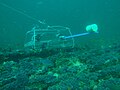 Stereo BRUVS in action at Rheeders Reef
 -
 Stereo BRUV prototype on trial at Rheeders' Reef, Tsitsikamma
 -
 Blue shark at Bremer Marine Park


Ad. Transform your health with W8MD Weight Loss, Sleep & MedSpa

Tired of being overweight?
Special offer:
Budget GLP-1 weight loss medications
- Semaglutide starting from $29.99/week and up with insurance for visit of $59.99 and up per week self pay.
- Tirzepatide starting from $45.00/week and up (dose dependent) or $69.99/week and up self pay
✔ Same-week appointments, evenings & weekends
Learn more:
- GLP-1 weight loss clinic NYC
- W8MD's NYC medical weight loss
- W8MD Philadelphia GLP-1 shots
- Philadelphia GLP-1 injections
- Affordable GLP-1 shots NYC
|
WikiMD Medical Encyclopedia |
Medical Disclaimer: WikiMD is for informational purposes only and is not a substitute for professional medical advice. Content may be inaccurate or outdated and should not be used for diagnosis or treatment. Always consult your healthcare provider for medical decisions. Verify information with trusted sources such as CDC.gov and NIH.gov. By using this site, you agree that WikiMD is not liable for any outcomes related to its content. See full disclaimer.
Credits:Most images are courtesy of Wikimedia commons, and templates, categories Wikipedia, licensed under CC BY SA or similar.
Translate this page: - East Asian
中文,
日本,
한국어,
South Asian
हिन्दी,
தமிழ்,
తెలుగు,
Urdu,
ಕನ್ನಡ,
Southeast Asian
Indonesian,
Vietnamese,
Thai,
မြန်မာဘာသာ,
বাংলা
European
español,
Deutsch,
français,
Greek,
português do Brasil,
polski,
română,
русский,
Nederlands,
norsk,
svenska,
suomi,
Italian
Middle Eastern & African
عربى,
Turkish,
Persian,
Hebrew,
Afrikaans,
isiZulu,
Kiswahili,
Other
Bulgarian,
Hungarian,
Czech,
Swedish,
മലയാളം,
मराठी,
ਪੰਜਾਬੀ,
ગુજરાતી,
Portuguese,
Ukrainian
