Franco-Prussian War
Franco-Prussian War
The Franco-Prussian War (19 July 1870 – 10 May 1871), also known as the Franco-German War, was a conflict between the Second French Empire of Napoleon III and the North German Confederation led by the Kingdom of Prussia. The war marked the end of French hegemony in continental Europe and resulted in the creation of a unified Germany.
Origins of the War[edit]
The origins of the Franco-Prussian War are rooted in the conflict and jealousy between Napoleon III and Otto von Bismarck, the Chancellor of the Kingdom of Prussia. The dispute was over the candidacy of a Hohenzollern prince to the Spanish throne, which was seen as a Prussian attempt to extend its influence.
Course of the War[edit]
The war began when the French declared war on Prussia on 19 July 1870. The Prussian forces were superior in numbers, better trained and better equipped. By September 1870, Paris was under siege, and the French government had fled to Bordeaux.
Aftermath of the War[edit]
The war ended with the signing of the Treaty of Frankfurt on 10 May 1871. The treaty stipulated that France had to pay a large indemnity and cede the border provinces of Alsace and Lorraine to Germany. The war had a profound impact on the balance of power in Europe and led to the conditions that brought about World War I.
See also[edit]
References[edit]
<references />

-
 Kaiserproklamation am 18 Januar 1871
 -
 Heinrich XVII Prinz Reuß bei Mars-la-Tour 1870
 -
 Siege of Paris
 -
 Das Lauenburgische Jäger-Bataillon Nr. 9 bei Gravelotte
 -
 Champigny Décembre 1870
 -
 Paris, 1871
 -
 Map-NDB
 -
 Deutsch-französischer Krieg 1870-71
 -
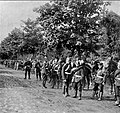 Troupes allemandes à Torcy en septembre 1870
 -
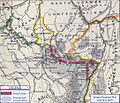 Franco Prussian War Frontier July 1870
.jpg)


.jpg)
_-_Paris,_1871.jpg)


Ad. Transform your life with W8MD's
GLP-1 weight loss injections special from $29.99 with insurance
|
WikiMD Medical Encyclopedia |
Medical Disclaimer: WikiMD is for informational purposes only and is not a substitute for professional medical advice. Content may be inaccurate or outdated and should not be used for diagnosis or treatment. Always consult your healthcare provider for medical decisions. Verify information with trusted sources such as CDC.gov and NIH.gov. By using this site, you agree that WikiMD is not liable for any outcomes related to its content. See full disclaimer.
Credits:Most images are courtesy of Wikimedia commons, and templates, categories Wikipedia, licensed under CC BY SA or similar.
Translate this page: - East Asian
中文,
日本,
한국어,
South Asian
हिन्दी,
தமிழ்,
తెలుగు,
Urdu,
ಕನ್ನಡ,
Southeast Asian
Indonesian,
Vietnamese,
Thai,
မြန်မာဘာသာ,
বাংলা
European
español,
Deutsch,
français,
Greek,
português do Brasil,
polski,
română,
русский,
Nederlands,
norsk,
svenska,
suomi,
Italian
Middle Eastern & African
عربى,
Turkish,
Persian,
Hebrew,
Afrikaans,
isiZulu,
Kiswahili,
Other
Bulgarian,
Hungarian,
Czech,
Swedish,
മലയാളം,
मराठी,
ਪੰਜਾਬੀ,
ગુજરાતી,
Portuguese,
Ukrainian
