Blowout preventer
Blowout Preventer (BOP) is a critical piece of equipment used in the oil and gas industry, particularly in drilling operations. Its primary function is to prevent blowouts, which are uncontrolled releases of crude oil or natural gas from a well. These events can be dangerous, leading to fires, explosions, and significant environmental damage. The BOP system achieves this by sealing, controlling, and monitoring the well to prevent the flow of fluids.
History[edit]
The development of the Blowout Preventer can be traced back to the early 20th century, with the first simple versions being used to control well pressure and prevent blowouts in oil fields. Over the years, the technology and complexity of BOP systems have evolved significantly, driven by the increasing depths of drilling operations and the need for enhanced safety measures.
Types of Blowout Preventers[edit]
There are two main types of Blowout Preventers: Annular Blowout Preventers and Ram Blowout Preventers.
Annular Blowout Preventer[edit]
The Annular BOP uses a rubber gasket to seal the annulus (the space around the drill pipe or casing). It can close around the drill string, completely sealing the wellbore, and is capable of operating under various pressures.
Ram Blowout Preventer[edit]
The Ram BOP, on the other hand, uses steel rams that can close around the drill pipe or seal the well completely. There are several types of rams, including pipe rams, blind rams, and shear rams, each designed for specific situations.
Operation[edit]
The operation of a Blowout Preventer is critical to drilling safety. It is typically controlled from the surface, but modern BOPs are also equipped with automatic control systems that can shut in the well without human intervention in case of sudden pressure surges. Regular testing and maintenance are essential to ensure the reliability of these systems.
Regulations and Standards[edit]
Following major oil spill incidents, such as the Deepwater Horizon oil spill, regulatory bodies have imposed stricter standards and regulations on the use and maintenance of BOPs. These regulations aim to enhance the safety of drilling operations and minimize the environmental impact of oil and gas extraction.
Challenges and Future Directions[edit]
Despite advancements in technology, the industry continues to face challenges with BOP reliability and performance, especially in deepwater and high-pressure, high-temperature environments. Ongoing research and development efforts focus on improving BOP design, materials, and control systems to enhance safety and efficiency in future drilling operations.

Blowout preventer[edit]
-
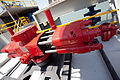 Blow Out Preventer
 -
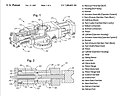 Cameron EVO BOP Patent
 -
 Hydril Annular BOP Patent App
 -
 Cameron EVO BOP Patent (Stack)
 -
 Lucas gusher
 -
 Cameron Ram-type Blowout Preventer (1922)
 -
 Blowout Preventer
 -
 Varco Schaffer Ram BOP Stack


.jpg)

.jpg)


Ad. Transform your health with W8MD Weight Loss, Sleep & MedSpa

Tired of being overweight?
Special offer:
Budget GLP-1 weight loss medications
- Semaglutide starting from $29.99/week and up with insurance for visit of $59.99 and up per week self pay.
- Tirzepatide starting from $45.00/week and up (dose dependent) or $69.99/week and up self pay
✔ Same-week appointments, evenings & weekends
Learn more:
- GLP-1 weight loss clinic NYC
- W8MD's NYC medical weight loss
- W8MD Philadelphia GLP-1 shots
- Philadelphia GLP-1 injections
- Affordable GLP-1 shots NYC
|
WikiMD Medical Encyclopedia |
Medical Disclaimer: WikiMD is for informational purposes only and is not a substitute for professional medical advice. Content may be inaccurate or outdated and should not be used for diagnosis or treatment. Always consult your healthcare provider for medical decisions. Verify information with trusted sources such as CDC.gov and NIH.gov. By using this site, you agree that WikiMD is not liable for any outcomes related to its content. See full disclaimer.
Credits:Most images are courtesy of Wikimedia commons, and templates, categories Wikipedia, licensed under CC BY SA or similar.
Translate this page: - East Asian
中文,
日本,
한국어,
South Asian
हिन्दी,
தமிழ்,
తెలుగు,
Urdu,
ಕನ್ನಡ,
Southeast Asian
Indonesian,
Vietnamese,
Thai,
မြန်မာဘာသာ,
বাংলা
European
español,
Deutsch,
français,
Greek,
português do Brasil,
polski,
română,
русский,
Nederlands,
norsk,
svenska,
suomi,
Italian
Middle Eastern & African
عربى,
Turkish,
Persian,
Hebrew,
Afrikaans,
isiZulu,
Kiswahili,
Other
Bulgarian,
Hungarian,
Czech,
Swedish,
മലയാളം,
मराठी,
ਪੰਜਾਬੀ,
ગુજરાતી,
Portuguese,
Ukrainian
