Steel square
Steel Square
The steel square is a versatile tool used in carpentry and woodworking. It consists of two arms: a longer arm, known as the "blade," and a shorter arm, known as the "tongue." The intersection of these arms forms a right angle, making the tool essential for a variety of tasks including measuring, marking, and ensuring the accuracy of angles and cuts.
History[edit]
The origins of the steel square can be traced back to ancient times, with evidence of its use in Roman and Egyptian construction. However, it was during the 19th century that the tool became standardized and widely used in the construction industry, particularly in the United States and Europe.
Types[edit]
There are several types of steel squares, each designed for specific applications. The most common include the framing square, the combination square, and the try square. The framing square is primarily used in the construction of roofs and staircases, while the combination square serves multiple purposes, including measuring angles, determining flatness, and marking cut lines. The try square is typically used for more precise work, such as cabinetry and joinery.
Usage[edit]
The steel square is an indispensable tool for carpenters and woodworkers. It is used to mark out cuts on timber, check the squareness of an edge, and lay out right angles. Additionally, the framing square can be used to calculate rafter lengths, roof pitches, and other complex measurements required in construction.
Reading a Steel Square[edit]
Understanding the graduations and markings on a steel square is crucial for its effective use. The blade and tongue are typically marked with a variety of scales, including inch measurements, rafter tables, and octagon scales. Learning to read these scales allows the user to perform complex calculations and measurements without the need for additional tools.
Maintenance[edit]
To ensure accuracy and longevity, it is important to maintain the steel square properly. This includes regular cleaning, avoiding rust, and storing the tool in a dry place. It is also advisable to periodically check the squareness of the tool, as drops or heavy use can cause it to become inaccurate.
In Popular Culture[edit]
The steel square has been referenced in literature and film, often symbolizing craftsmanship, precision, and the importance of a strong foundation. Its role in construction and woodworking underscores its significance in building not just structures, but also in shaping the environment and communities.
See Also[edit]
This construction related article is a stub. You can help WikiMD by expanding it.
-
 Steel Square
 -
 Stringer Revised
 -
 Common Rafter 12 Pitch A
 -
 Hip Jack and Common Rafter
 -
 Hip Rafter Side and Level Cut
 -
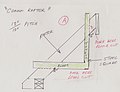 Common Rafter Layout
 -
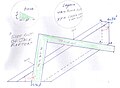 Side Cut Jack Rafter Revised
 -
 Plumbcuts New


Ad. Transform your health with W8MD Weight Loss, Sleep & MedSpa

Tired of being overweight?
Special offer:
Budget GLP-1 weight loss medications
- Semaglutide starting from $29.99/week and up with insurance for visit of $59.99 and up per week self pay.
- Tirzepatide starting from $45.00/week and up (dose dependent) or $69.99/week and up self pay
✔ Same-week appointments, evenings & weekends
Learn more:
- GLP-1 weight loss clinic NYC
- W8MD's NYC medical weight loss
- W8MD Philadelphia GLP-1 shots
- Philadelphia GLP-1 injections
- Affordable GLP-1 shots NYC
|
WikiMD Medical Encyclopedia |
Medical Disclaimer: WikiMD is for informational purposes only and is not a substitute for professional medical advice. Content may be inaccurate or outdated and should not be used for diagnosis or treatment. Always consult your healthcare provider for medical decisions. Verify information with trusted sources such as CDC.gov and NIH.gov. By using this site, you agree that WikiMD is not liable for any outcomes related to its content. See full disclaimer.
Credits:Most images are courtesy of Wikimedia commons, and templates, categories Wikipedia, licensed under CC BY SA or similar.
Translate this page: - East Asian
中文,
日本,
한국어,
South Asian
हिन्दी,
தமிழ்,
తెలుగు,
Urdu,
ಕನ್ನಡ,
Southeast Asian
Indonesian,
Vietnamese,
Thai,
မြန်မာဘာသာ,
বাংলা
European
español,
Deutsch,
français,
Greek,
português do Brasil,
polski,
română,
русский,
Nederlands,
norsk,
svenska,
suomi,
Italian
Middle Eastern & African
عربى,
Turkish,
Persian,
Hebrew,
Afrikaans,
isiZulu,
Kiswahili,
Other
Bulgarian,
Hungarian,
Czech,
Swedish,
മലയാളം,
मराठी,
ਪੰਜਾਬੀ,
ગુજરાતી,
Portuguese,
Ukrainian
