Red bean paste
Introduction[edit]
Red bean paste is a sweet, dark red paste made from adzuki beans. It is a common ingredient in many East Asian desserts and pastries. The paste is made by boiling the beans until they are soft, then mashing them into a paste and sweetening with sugar.
History[edit]
The use of adzuki beans in desserts dates back to ancient times in East Asia. The beans were originally used in medicinal concoctions due to their believed health benefits. Over time, they became a popular ingredient in desserts for their sweet, nutty flavor.
Preparation[edit]
To prepare red bean paste, the adzuki beans are first soaked in water overnight. They are then boiled until they become soft and begin to break apart. The beans are then drained and mashed into a paste. Sugar is added to the paste to sweeten it. The amount of sugar added can vary depending on personal preference.
Varieties[edit]
There are two main varieties of red bean paste: smooth and chunky. Smooth red bean paste, also known as "koshi-an", is made by passing the mashed beans through a sieve to remove the skins. Chunky red bean paste, or "tsubu-an", is made by leaving the bean skins in the paste for a more textured finish.
Uses[edit]
Red bean paste is used in a wide variety of East Asian desserts. It is a common filling for mooncakes, a traditional Chinese pastry eaten during the Mid-Autumn Festival. It is also used in mochi, a Japanese rice cake, and in bingsu, a Korean shaved ice dessert.
Health Benefits[edit]
Despite being a dessert ingredient, red bean paste has several health benefits. Adzuki beans are high in fiber and protein, and low in fat. They also contain several essential nutrients, including potassium, iron, and folic acid.
Conclusion[edit]
Red bean paste is a versatile ingredient that adds a unique, sweet flavor to many East Asian desserts. Its rich history and health benefits make it a staple in many traditional recipes.
See Also[edit]

-
 Red bean paste anko
 -
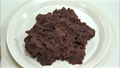 Red bean paste
 -
 Mooncake
 -
 Zongzi
 -
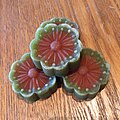 Red Bean Plum Blossom Cake
 -
 Red bean walnut rabbit bun
 -
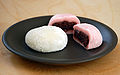 Daifuku
 -
 Anpan
Anpan


.jpg)
.jpg)


Ad. Transform your health with W8MD Weight Loss, Sleep & MedSpa

Tired of being overweight?
Special offer:
Budget GLP-1 weight loss medications
- Semaglutide starting from $29.99/week and up with insurance for visit of $59.99 and up per week self pay.
- Tirzepatide starting from $45.00/week and up (dose dependent) or $69.99/week and up self pay
✔ Same-week appointments, evenings & weekends
Learn more:
- GLP-1 weight loss clinic NYC
- W8MD's NYC medical weight loss
- W8MD Philadelphia GLP-1 shots
- Philadelphia GLP-1 injections
- Affordable GLP-1 shots NYC
|
WikiMD Medical Encyclopedia |
Medical Disclaimer: WikiMD is for informational purposes only and is not a substitute for professional medical advice. Content may be inaccurate or outdated and should not be used for diagnosis or treatment. Always consult your healthcare provider for medical decisions. Verify information with trusted sources such as CDC.gov and NIH.gov. By using this site, you agree that WikiMD is not liable for any outcomes related to its content. See full disclaimer.
Credits:Most images are courtesy of Wikimedia commons, and templates, categories Wikipedia, licensed under CC BY SA or similar.
Translate this page: - East Asian
中文,
日本,
한국어,
South Asian
हिन्दी,
தமிழ்,
తెలుగు,
Urdu,
ಕನ್ನಡ,
Southeast Asian
Indonesian,
Vietnamese,
Thai,
မြန်မာဘာသာ,
বাংলা
European
español,
Deutsch,
français,
Greek,
português do Brasil,
polski,
română,
русский,
Nederlands,
norsk,
svenska,
suomi,
Italian
Middle Eastern & African
عربى,
Turkish,
Persian,
Hebrew,
Afrikaans,
isiZulu,
Kiswahili,
Other
Bulgarian,
Hungarian,
Czech,
Swedish,
മലയാളം,
मराठी,
ਪੰਜਾਬੀ,
ગુજરાતી,
Portuguese,
Ukrainian
