Frenulum of the tongue
A fold of mucous membrane under the tongue
The frenulum of the tongue, also known as the lingual frenulum, is a small fold of mucous membrane that extends from the floor of the mouth to the midline of the underside of the tongue. It plays a crucial role in the movement and function of the tongue, affecting speech, swallowing, and oral hygiene.
Anatomy[edit]
The frenulum of the tongue is a thin, elastic band of tissue that connects the tongue to the floor of the mouth. It is located in the midline and is visible when the tongue is lifted. The frenulum is composed of connective tissue and is covered by a layer of mucous membrane. Its length and elasticity can vary significantly among individuals.
Function[edit]
The primary function of the lingual frenulum is to stabilize the tongue and limit its movement to some extent. This stabilization is important for various oral functions, including:
- Speech: The frenulum helps in the articulation of sounds by controlling the movement of the tongue.
- Swallowing: It aids in the proper positioning of the tongue during the swallowing process.
- Oral hygiene: By limiting excessive movement, it helps maintain the tongue's position, which is important for cleaning the oral cavity.
Clinical Significance[edit]
Ankyloglossia[edit]
Ankyloglossia, commonly known as "tongue-tie," is a condition where the lingual frenulum is unusually short, thick, or tight, restricting the tongue's range of motion. This can lead to difficulties in breastfeeding, speech articulation, and oral hygiene. Treatment may involve a surgical procedure called a frenotomy or frenuloplasty to release the frenulum.
Frenulum Tears[edit]
Injuries to the frenulum can occur due to trauma or accidental biting. Such tears are usually minor and heal quickly, but they can be painful and may require medical attention if severe.
Development[edit]
The frenulum of the tongue develops during the embryonic stage. It is formed from the tissue that connects the tongue to the floor of the mouth. As the fetus grows, the frenulum typically elongates and becomes more elastic, allowing for greater tongue mobility.
Variations[edit]
There is considerable variation in the size, shape, and elasticity of the lingual frenulum among individuals. Some people may have a very prominent frenulum, while others may have a barely noticeable one. These variations can affect oral functions to varying degrees.
Related pages[edit]
Frenulum of the tongue[edit]
-
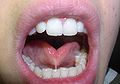 Frenulum linguae

Ad. Transform your life with W8MD's
GLP-1 weight loss injections special from $29.99 with insurance
|
WikiMD Medical Encyclopedia |
Medical Disclaimer: WikiMD is for informational purposes only and is not a substitute for professional medical advice. Content may be inaccurate or outdated and should not be used for diagnosis or treatment. Always consult your healthcare provider for medical decisions. Verify information with trusted sources such as CDC.gov and NIH.gov. By using this site, you agree that WikiMD is not liable for any outcomes related to its content. See full disclaimer.
Credits:Most images are courtesy of Wikimedia commons, and templates, categories Wikipedia, licensed under CC BY SA or similar.
Translate this page: - East Asian
中文,
日本,
한국어,
South Asian
हिन्दी,
தமிழ்,
తెలుగు,
Urdu,
ಕನ್ನಡ,
Southeast Asian
Indonesian,
Vietnamese,
Thai,
မြန်မာဘာသာ,
বাংলা
European
español,
Deutsch,
français,
Greek,
português do Brasil,
polski,
română,
русский,
Nederlands,
norsk,
svenska,
suomi,
Italian
Middle Eastern & African
عربى,
Turkish,
Persian,
Hebrew,
Afrikaans,
isiZulu,
Kiswahili,
Other
Bulgarian,
Hungarian,
Czech,
Swedish,
മലയാളം,
मराठी,
ਪੰਜਾਬੀ,
ગુજરાતી,
Portuguese,
Ukrainian
