SN-2
SN2 Reaction
The SN2 reaction (or bimolecular nucleophilic substitution reaction) is a type of reaction mechanism that is common in organic chemistry. In this mechanism, one bond is broken and one bond is formed synchronously, i.e., in one step. SN2 is a kind of nucleophilic substitution, or attack by a nucleophile on an electron-deficient part of another molecule.
Mechanism[edit]
The SN2 reaction mechanism involves the direct, simultaneous attack of a nucleophile on a substrate and expulsion of a leaving group. The mechanism is called 'SN2' because of its nature: 'S' stands for 'substitution', 'N' for 'nucleophilic', and '2' for 'bimolecular' (referring to the overall molecularity of the reaction).
The reaction occurs in a single step with simultaneous bond formation and bond breaking, leading to inversion of the stereochemical configuration. In the course of the reaction, the substrate passes through a transition state in which it is pentacoordinate and approximately trigonal bipyramidal. The nucleophile attacks from the side opposite to the leaving group.
Factors Affecting SN2 Reactions[edit]
Several factors can affect the rate and outcome of SN2 reactions, including the strength of the nucleophile, the solvent, the leaving group, and the substrate structure.
Nucleophile[edit]
In an SN2 reaction, the nucleophile plays a crucial role. A good nucleophile is one that is a strong base or has a negative charge. The nucleophilicity of a species is also affected by the solvent; polar aprotic solvents are better for SN2 reactions because they do not solvate nucleophiles, allowing them to react faster.
Solvent[edit]
The choice of solvent can greatly affect the rate of SN2 reactions. Polar aprotic solvents, such as acetone or DMSO, are generally the best choice for these reactions. These solvents can solvate the leaving group, increasing the rate of the reaction.
Leaving Group[edit]
A good leaving group is crucial for a successful SN2 reaction. The leaving group must be able to stabilize the extra electrons once it has left the molecule. Halides and tosylates are common leaving groups for SN2 reactions.
Substrate Structure[edit]
The structure of the substrate can also greatly affect the rate of SN2 reactions. The reaction rate is fastest with primary substrates and slowest with tertiary substrates due to steric hindrance.
Stereochemistry[edit]
SN2 reactions result in inversion of configuration at the carbon atom undergoing nucleophilic substitution. This is known as the Walden inversion. If the substrate is chiral, the SN2 reaction can produce an enantiomerically pure product.
See Also[edit]
This article is a Organic reaction-related stub. You can help WikiMD by expanding it!
SN-2[edit]
-
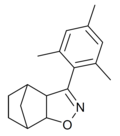 SN-2 structure

Ad. Transform your health with W8MD Weight Loss, Sleep & MedSpa

Tired of being overweight?
Special offer:
Budget GLP-1 weight loss medications
- Semaglutide starting from $29.99/week and up with insurance for visit of $59.99 and up per week self pay.
- Tirzepatide starting from $45.00/week and up (dose dependent) or $69.99/week and up self pay
✔ Same-week appointments, evenings & weekends
Learn more:
- GLP-1 weight loss clinic NYC
- W8MD's NYC medical weight loss
- W8MD Philadelphia GLP-1 shots
- Philadelphia GLP-1 injections
- Affordable GLP-1 shots NYC
|
WikiMD Medical Encyclopedia |
Medical Disclaimer: WikiMD is for informational purposes only and is not a substitute for professional medical advice. Content may be inaccurate or outdated and should not be used for diagnosis or treatment. Always consult your healthcare provider for medical decisions. Verify information with trusted sources such as CDC.gov and NIH.gov. By using this site, you agree that WikiMD is not liable for any outcomes related to its content. See full disclaimer.
Credits:Most images are courtesy of Wikimedia commons, and templates, categories Wikipedia, licensed under CC BY SA or similar.
Translate this page: - East Asian
中文,
日本,
한국어,
South Asian
हिन्दी,
தமிழ்,
తెలుగు,
Urdu,
ಕನ್ನಡ,
Southeast Asian
Indonesian,
Vietnamese,
Thai,
မြန်မာဘာသာ,
বাংলা
European
español,
Deutsch,
français,
Greek,
português do Brasil,
polski,
română,
русский,
Nederlands,
norsk,
svenska,
suomi,
Italian
Middle Eastern & African
عربى,
Turkish,
Persian,
Hebrew,
Afrikaans,
isiZulu,
Kiswahili,
Other
Bulgarian,
Hungarian,
Czech,
Swedish,
മലയാളം,
मराठी,
ਪੰਜਾਬੀ,
ગુજરાતી,
Portuguese,
Ukrainian
