Rose
Rose
The Rose is a type of flowering shrub. Its name comes from the Latin word Rosa. The flowers of the rose grow in many different colors, from the well-known red rose to yellow roses and sometimes white or purple roses. Roses belong to the family of plants called Rosaceae.
Description[edit]
Roses are best known for their large, usually red, double flowers and their strong, distinctive fragrance. But roses come in several thousand varieties (cultivars) available, many with double flowers with a high-centered shape. Each variety of rose has its own set of characteristics, from different sizes, colors, and fragrances to varying degrees of disease resistance and hardiness.
History[edit]
The cultivation of roses probably began in Asia around 5000 years ago. They have been part of human history ever since, with rose fossils discovered that date back millions of years. The Greeks, Romans, Persians and Chinese all have histories of using roses for medicinal purposes, decoration, and even food.
Cultivation[edit]
Roses are grown for their beauty and fragrance. They are used in landscapes, gardens and as cut flowers. They are also used in perfumes and in medicine. Roses are often bred for new and intriguing color combinations, and they can be either deciduous or evergreen.
Species and cultivars[edit]
There are over 100 species of roses. The majority of roses are deciduous but a few (particularly from Southeast Asia) are evergreen or nearly so. Many species, varieties and cultivars are grown for their beauty and fragrance.
Uses[edit]
Roses are used in landscapes, in gardens, and as cut flowers. They are also used in perfumes and in medicine. Roses are often used in literature and songs. There are also many cultural symbols and uses for roses.
See also[edit]
References[edit]
<references />
 | |
|---|---|
 |
 |
-
 Rosa rubiginosa 1
 -
 Rosa Precious platinum
 -
 Redoute - Rosa gallica purpuro-violacea magna
 -
 Bouquet de roses roses
 -
 Geraniol structure
 -
 Rosa rubiginosa hips
 -
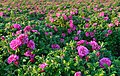 Rose fields Vampula 1
 -
 Gulaab Jamun (homemade!) bright
 -
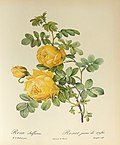 Rosa sulfurea 001
 -
 Plucking the Red and White Roses, by Henry Payne
 -
 Codex Manesse Rudolf von Neuenburg
 -
 Maria Amelia of Braganza


_bright.jpg)


Ad. Transform your health with W8MD Weight Loss, Sleep & MedSpa

Tired of being overweight?
Special offer:
Budget GLP-1 weight loss medications
- Semaglutide starting from $29.99/week and up with insurance for visit of $59.99 and up per week self pay.
- Tirzepatide starting from $45.00/week and up (dose dependent) or $69.99/week and up self pay
✔ Same-week appointments, evenings & weekends
Learn more:
- GLP-1 weight loss clinic NYC
- W8MD's NYC medical weight loss
- W8MD Philadelphia GLP-1 shots
- Philadelphia GLP-1 injections
- Affordable GLP-1 shots NYC
|
WikiMD Medical Encyclopedia |
Medical Disclaimer: WikiMD is for informational purposes only and is not a substitute for professional medical advice. Content may be inaccurate or outdated and should not be used for diagnosis or treatment. Always consult your healthcare provider for medical decisions. Verify information with trusted sources such as CDC.gov and NIH.gov. By using this site, you agree that WikiMD is not liable for any outcomes related to its content. See full disclaimer.
Credits:Most images are courtesy of Wikimedia commons, and templates, categories Wikipedia, licensed under CC BY SA or similar.
Translate this page: - East Asian
中文,
日本,
한국어,
South Asian
हिन्दी,
தமிழ்,
తెలుగు,
Urdu,
ಕನ್ನಡ,
Southeast Asian
Indonesian,
Vietnamese,
Thai,
မြန်မာဘာသာ,
বাংলা
European
español,
Deutsch,
français,
Greek,
português do Brasil,
polski,
română,
русский,
Nederlands,
norsk,
svenska,
suomi,
Italian
Middle Eastern & African
عربى,
Turkish,
Persian,
Hebrew,
Afrikaans,
isiZulu,
Kiswahili,
Other
Bulgarian,
Hungarian,
Czech,
Swedish,
മലയാളം,
मराठी,
ਪੰਜਾਬੀ,
ગુજરાતી,
Portuguese,
Ukrainian
