Septum transversum
Septum Transversum
The Septum Transversum is a thick mass of cranial mesenchymal tissue that plays a crucial role in the embryonic development of the thoracic and abdominal cavities. It forms a significant part of the diaphragm, the muscular sheet separating these two cavities. The development and function of the Septum Transversum are essential for understanding various congenital conditions related to the diaphragm and the organs it interacts with.
Development[edit]
The Septum Transversum originates early in the embryonic period, around the third week of gestation. It initially appears as a thick, crescent-shaped mass of tissue lying beneath the developing heart. As the embryo grows, the Septum Transversum descends to a position just above the liver, contributing to the formation of the central tendon of the diaphragm. This process is influenced by various genetic and molecular signals, including the action of homeobox (HOX) genes and the retinoic acid pathway.
During its descent, the Septum Transversum interacts with other developing structures, such as the pleuroperitoneal folds, dorsal mesentery, and esophageal mesentery. These interactions are crucial for the proper closure of the diaphragm and the separation of the thoracic and abdominal cavities.
Function[edit]
The primary function of the Septum Transversum is to contribute to the formation of the diaphragm. The diaphragm is essential for respiration, as it contracts and relaxes to allow the lungs to fill and empty of air. Additionally, the diaphragm maintains the pressure differences between the thoracic and abdominal cavities, which is crucial for the proper functioning of the abdominal organs.
Clinical Significance[edit]
Abnormal development of the Septum Transversum can lead to congenital diaphragmatic hernia (CDH), a condition where abdominal organs herniate into the thoracic cavity through defects in the diaphragm. This can severely affect lung development and function, requiring surgical intervention after birth. Understanding the embryological development of the Septum Transversum is crucial for diagnosing and managing CDH and other related conditions.
Related Structures[edit]
See Also[edit]

-
 Diaphragma embryo
 -
 Gray's Anatomy Plate 1088
 -
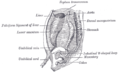 Gray's Anatomy Plate 984


Ad. Transform your health with W8MD Weight Loss, Sleep & MedSpa

Tired of being overweight?
Special offer:
Budget GLP-1 weight loss medications
- Semaglutide starting from $29.99/week and up with insurance for visit of $59.99 and up per week self pay.
- Tirzepatide starting from $45.00/week and up (dose dependent) or $69.99/week and up self pay
✔ Same-week appointments, evenings & weekends
Learn more:
- GLP-1 weight loss clinic NYC
- W8MD's NYC medical weight loss
- W8MD Philadelphia GLP-1 shots
- Philadelphia GLP-1 injections
- Affordable GLP-1 shots NYC
|
WikiMD Medical Encyclopedia |
Medical Disclaimer: WikiMD is for informational purposes only and is not a substitute for professional medical advice. Content may be inaccurate or outdated and should not be used for diagnosis or treatment. Always consult your healthcare provider for medical decisions. Verify information with trusted sources such as CDC.gov and NIH.gov. By using this site, you agree that WikiMD is not liable for any outcomes related to its content. See full disclaimer.
Credits:Most images are courtesy of Wikimedia commons, and templates, categories Wikipedia, licensed under CC BY SA or similar.
Translate this page: - East Asian
中文,
日本,
한국어,
South Asian
हिन्दी,
தமிழ்,
తెలుగు,
Urdu,
ಕನ್ನಡ,
Southeast Asian
Indonesian,
Vietnamese,
Thai,
မြန်မာဘာသာ,
বাংলা
European
español,
Deutsch,
français,
Greek,
português do Brasil,
polski,
română,
русский,
Nederlands,
norsk,
svenska,
suomi,
Italian
Middle Eastern & African
عربى,
Turkish,
Persian,
Hebrew,
Afrikaans,
isiZulu,
Kiswahili,
Other
Bulgarian,
Hungarian,
Czech,
Swedish,
മലയാളം,
मराठी,
ਪੰਜਾਬੀ,
ગુજરાતી,
Portuguese,
Ukrainian
