Anthropomorphism
Anthropomorphism is the attribution of human traits, emotions, or intentions to non-human entities, including animals, plants, inanimate objects, or natural phenomena. This concept is deeply rooted in human psychology and is a common phenomenon in various cultural and religious traditions around the world. Anthropomorphism can manifest in art, literature, mythology, and everyday language, reflecting the human tendency to relate to the world through a human-centric perspective.
Overview[edit]
Anthropomorphism comes from the Greek words ánthrōpos (human) and morphē (form), literally meaning "human form." It is a form of personification that specifically involves ascribing human characteristics to non-human beings or objects. This can range from attributing simple emotions and intentions to animals, as seen in many children's stories and animations, to the complex portrayal of gods in human form in various mythologies.
Historical and Cultural Aspects[edit]
Throughout history, anthropomorphism has been a prevalent feature in mythology, religion, and folklore. Ancient religions often depicted gods and spirits in human form, endowed with human emotions and behaviors. In Greek mythology, for example, gods interacted with humans, displayed human-like emotions, and even engaged in human activities. Similarly, in many indigenous cultures, natural elements and animals are often represented as having human characteristics, reflecting a worldview in which humans are intimately connected with the natural world.
Psychological Perspectives[edit]
From a psychological standpoint, anthropomorphism may stem from the human tendency to simplify and make sense of complex entities by relating them to oneself. This cognitive bias allows people to interact with their environment in a more familiar and understandable way. Anthropomorphism can also serve emotional and social functions, providing comfort, fostering empathy, and facilitating social connection. For instance, people often name their cars or boats, attributing them with personality and forming emotional attachments to them.
In Literature and Media[edit]
Anthropomorphism is a common literary and artistic device, especially prevalent in children's literature and animation. Characters like Winnie the Pooh, Mickey Mouse, and the animals of George Orwell's Animal Farm are examples of anthropomorphized animals that convey human emotions and social commentary. This device allows for the exploration of complex themes in a more accessible and engaging way.
Scientific and Technological Implications[edit]
In science and technology, anthropomorphism can influence how people interact with and perceive non-human agents, such as robots and artificial intelligence. Designing these agents with human-like features or behaviors can make them more relatable and easier to interact with. However, it also raises ethical and philosophical questions about the nature of intelligence, consciousness, and the relationship between humans and machines.
Criticism and Controversy[edit]
While anthropomorphism can be a useful and engaging tool, it is not without its critics. Some argue that it can lead to misunderstandings of animal behavior, projecting human emotions and motivations onto creatures that operate under a different set of instincts and social rules. In scientific research, anthropomorphism is often cautioned against, as it can lead to biased observations and interpretations.
Conclusion[edit]
Anthropomorphism is a multifaceted phenomenon that spans across cultural, psychological, and scientific domains. It reflects the human inclination to see the world through a human lens, for better or worse. As our understanding of non-human entities continues to evolve, so too will our use and interpretation of anthropomorphism.


This article is a psychology-related stub. You can help WikiMD by expanding it!

This article is a literature-related stub. You can help WikiMD by expanding it!


-
 The North Wind and the Sun - Wind
 -
 Personification of Music (St Cecilia)
 -
 Lion man
 -
 7th millennium BC sculptures at the Metropolitan Museum of Art, New York
 -
 Syrischer Maler von 1354
 -
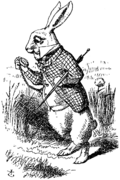 Down the Rabbit Hole
 -
 Butterfly meeting
 -
 Teenage Mutant Ninja Turtles
 -
 Arcimboldo Agua
 -
 Fatso at Olympic Park

_-_WGA08164.jpg)


.jpg)


Ad. Transform your health with W8MD Weight Loss, Sleep & MedSpa

Tired of being overweight?
Special offer:
Budget GLP-1 weight loss medications
- Semaglutide starting from $29.99/week and up with insurance for visit of $59.99 and up per week self pay.
- Tirzepatide starting from $45.00/week and up (dose dependent) or $69.99/week and up self pay
✔ Same-week appointments, evenings & weekends
Learn more:
- GLP-1 weight loss clinic NYC
- W8MD's NYC medical weight loss
- W8MD Philadelphia GLP-1 shots
- Philadelphia GLP-1 injections
- Affordable GLP-1 shots NYC
|
WikiMD Medical Encyclopedia |
Medical Disclaimer: WikiMD is for informational purposes only and is not a substitute for professional medical advice. Content may be inaccurate or outdated and should not be used for diagnosis or treatment. Always consult your healthcare provider for medical decisions. Verify information with trusted sources such as CDC.gov and NIH.gov. By using this site, you agree that WikiMD is not liable for any outcomes related to its content. See full disclaimer.
Credits:Most images are courtesy of Wikimedia commons, and templates, categories Wikipedia, licensed under CC BY SA or similar.
Translate this page: - East Asian
中文,
日本,
한국어,
South Asian
हिन्दी,
தமிழ்,
తెలుగు,
Urdu,
ಕನ್ನಡ,
Southeast Asian
Indonesian,
Vietnamese,
Thai,
မြန်မာဘာသာ,
বাংলা
European
español,
Deutsch,
français,
Greek,
português do Brasil,
polski,
română,
русский,
Nederlands,
norsk,
svenska,
suomi,
Italian
Middle Eastern & African
عربى,
Turkish,
Persian,
Hebrew,
Afrikaans,
isiZulu,
Kiswahili,
Other
Bulgarian,
Hungarian,
Czech,
Swedish,
മലയാളം,
मराठी,
ਪੰਜਾਬੀ,
ગુજરાતી,
Portuguese,
Ukrainian
