Decomposition
The process of decay in organic matter
Overview[edit]
Decomposition is the natural process by which organic substances are broken down into simpler organic or inorganic matter such as carbon dioxide, water, simple sugars, and mineral salts. This process is essential for the recycling of nutrients in the ecosystem and is carried out by a variety of organisms, including bacteria, fungi, and invertebrates.
Stages of Decomposition[edit]
Decomposition occurs in several stages, each characterized by different processes and organisms involved:
1. Autolysis[edit]
Autolysis, or self-digestion, is the first stage of decomposition. It begins immediately after death when the body's cells are deprived of oxygen. Enzymes within the cells break down cell components, leading to the release of fluids and gases. This stage is marked by the softening of tissues and the onset of rigor mortis.
2. Putrefaction[edit]
Putrefaction is the stage where microbial activity becomes prominent. Anaerobic bacteria proliferate, producing gases such as methane, hydrogen sulfide, and ammonia, which cause the characteristic odor of decay. The body becomes bloated due to gas accumulation, and the skin may take on a greenish hue.
3. Active Decay[edit]
During active decay, the body loses mass rapidly as tissues are broken down by bacteria and other decomposers. Maggots and other insects play a significant role in this stage, consuming soft tissues and accelerating the breakdown process. Fluids released from the body enrich the surrounding soil, promoting further microbial activity.
4. Advanced Decay[edit]
In advanced decay, most of the soft tissues have been decomposed, leaving behind bones, cartilage, and hair. The rate of decomposition slows significantly, and the remaining organic material is gradually broken down by fungi and other organisms.
5. Dry/Skeletal Stage[edit]
The final stage of decomposition is characterized by the presence of only dry remains, such as bones and hair. These materials are resistant to decay and may persist in the environment for years. Over time, bones may be broken down by physical and chemical processes, contributing minerals back to the soil.
Factors Affecting Decomposition[edit]
Several factors influence the rate and nature of decomposition:
- Temperature: Higher temperatures generally increase the rate of decomposition by promoting microbial activity.
- Moisture: Adequate moisture is necessary for microbial growth, but excessive water can slow decomposition by creating anaerobic conditions.
- Oxygen Availability: Aerobic conditions favor rapid decomposition, while anaerobic conditions slow the process.
- pH Levels: Extreme pH levels can inhibit microbial activity, affecting the rate of decomposition.
- Presence of Decomposers: The diversity and abundance of decomposers, such as bacteria, fungi, and insects, play a crucial role in the decomposition process.
Ecological Importance[edit]
Decomposition is a vital ecological process that recycles nutrients, making them available for uptake by plants and other organisms. It helps maintain soil fertility and supports the growth of new life. Decomposers play a critical role in breaking down organic matter, ensuring the flow of energy through the food web.
Related Pages[edit]
-
 Strawberries time-lapse
 -
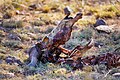 Decomposing African buffalo skull in the Serengeti National Park
 -
 Rotten apple under the tree
 -
 Berge naturreservat omkullfallet liten tall
 -
 Ants cleaning dead snake
 -
 Decomposition stages
 -
 Decaying Peach
 -
 A punnet of rotten peaches
_Photo_by_Giles_Laurent.jpg)


Ad. Transform your health with W8MD Weight Loss, Sleep & MedSpa

Tired of being overweight?
Special offer:
Budget GLP-1 weight loss medications
- Semaglutide starting from $29.99/week and up with insurance for visit of $59.99 and up per week self pay.
- Tirzepatide starting from $45.00/week and up (dose dependent) or $69.99/week and up self pay
✔ Same-week appointments, evenings & weekends
Learn more:
- GLP-1 weight loss clinic NYC
- W8MD's NYC medical weight loss
- W8MD Philadelphia GLP-1 shots
- Philadelphia GLP-1 injections
- Affordable GLP-1 shots NYC
|
WikiMD Medical Encyclopedia |
Medical Disclaimer: WikiMD is for informational purposes only and is not a substitute for professional medical advice. Content may be inaccurate or outdated and should not be used for diagnosis or treatment. Always consult your healthcare provider for medical decisions. Verify information with trusted sources such as CDC.gov and NIH.gov. By using this site, you agree that WikiMD is not liable for any outcomes related to its content. See full disclaimer.
Credits:Most images are courtesy of Wikimedia commons, and templates, categories Wikipedia, licensed under CC BY SA or similar.
Translate this page: - East Asian
中文,
日本,
한국어,
South Asian
हिन्दी,
தமிழ்,
తెలుగు,
Urdu,
ಕನ್ನಡ,
Southeast Asian
Indonesian,
Vietnamese,
Thai,
မြန်မာဘာသာ,
বাংলা
European
español,
Deutsch,
français,
Greek,
português do Brasil,
polski,
română,
русский,
Nederlands,
norsk,
svenska,
suomi,
Italian
Middle Eastern & African
عربى,
Turkish,
Persian,
Hebrew,
Afrikaans,
isiZulu,
Kiswahili,
Other
Bulgarian,
Hungarian,
Czech,
Swedish,
മലയാളം,
मराठी,
ਪੰਜਾਬੀ,
ગુજરાતી,
Portuguese,
Ukrainian
