Midsummer
Midsummer is a traditional holiday celebrated in many cultures around the world, typically around the time of the summer solstice. The holiday is often associated with the themes of fertility, love, and celebration of the sun.
Origins and history[edit]
The origins of Midsummer are believed to date back to pre-Christian times, when many cultures celebrated the longest day of the year as a time of great significance. The holiday was often associated with the sun god, and was seen as a time of increased fertility and abundance. In many cultures, Midsummer was a time for feasting, dancing, and other forms of celebration.
Celebrations around the world[edit]
Midsummer is celebrated in many different ways around the world. In Scandinavia, for example, it is one of the most important holidays of the year. Celebrations often include bonfires, dancing around a maypole, and feasting on traditional foods. In other parts of the world, such as the United Kingdom, Midsummer is often associated with the tradition of gathering herbs and flowers, which are believed to have magical properties.
Modern celebrations[edit]
In modern times, Midsummer is still celebrated in many parts of the world. In some countries, it is a public holiday, while in others it is a more informal celebration. Despite the differences in how it is celebrated, the themes of fertility, love, and celebration of the sun remain central to the holiday.
See also[edit]
 | |
|---|---|
 |
 |
-
 Mittsommerfest in Norwegen, Insel Tysnes
 -
 Midsummer eve bonfire by Nikolai Astrup
 -
 Kastelholm Midsommar
 -
 Midsummer celebration
 -
 Nestinar firewalking in Bulgaria
 -
 Cidade cenográfica do São João de Campina Grande, Paraíba, Brasil
 -
 Midsummer Eve bonfire on Skagen's beach by P.S. Krøyer
 -
 Keemu harbor
 -
 Seurasaari Midsummer celebration
 -
 The Feast of Saint John
 -
 Johannisfeuer
 -
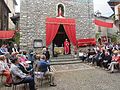 Wikimania 2016, Esino Lario, Italy


.jpg)


Ad. Transform your health with W8MD Weight Loss, Sleep & MedSpa

Tired of being overweight?
Special offer:
Budget GLP-1 weight loss medications
- Semaglutide starting from $29.99/week and up with insurance for visit of $59.99 and up per week self pay.
- Tirzepatide starting from $45.00/week and up (dose dependent) or $69.99/week and up self pay
✔ Same-week appointments, evenings & weekends
Learn more:
- GLP-1 weight loss clinic NYC
- W8MD's NYC medical weight loss
- W8MD Philadelphia GLP-1 shots
- Philadelphia GLP-1 injections
- Affordable GLP-1 shots NYC
|
WikiMD Medical Encyclopedia |
Medical Disclaimer: WikiMD is for informational purposes only and is not a substitute for professional medical advice. Content may be inaccurate or outdated and should not be used for diagnosis or treatment. Always consult your healthcare provider for medical decisions. Verify information with trusted sources such as CDC.gov and NIH.gov. By using this site, you agree that WikiMD is not liable for any outcomes related to its content. See full disclaimer.
Credits:Most images are courtesy of Wikimedia commons, and templates, categories Wikipedia, licensed under CC BY SA or similar.
Translate this page: - East Asian
中文,
日本,
한국어,
South Asian
हिन्दी,
தமிழ்,
తెలుగు,
Urdu,
ಕನ್ನಡ,
Southeast Asian
Indonesian,
Vietnamese,
Thai,
မြန်မာဘာသာ,
বাংলা
European
español,
Deutsch,
français,
Greek,
português do Brasil,
polski,
română,
русский,
Nederlands,
norsk,
svenska,
suomi,
Italian
Middle Eastern & African
عربى,
Turkish,
Persian,
Hebrew,
Afrikaans,
isiZulu,
Kiswahili,
Other
Bulgarian,
Hungarian,
Czech,
Swedish,
മലയാളം,
मराठी,
ਪੰਜਾਬੀ,
ગુજરાતી,
Portuguese,
Ukrainian
