Erasmus
Desiderius Erasmus Roterodamus, better known as Erasmus of Rotterdam or simply Erasmus, (c. 28 October 1466 – 12 July 1536) was a Dutch Christian humanist, Catholic theologian, educationalist, satirist, and philosopher. His extensive body of work, which includes translations, books, essays, prayers, and letters, has made him one of the most influential figures of the Northern Renaissance and a pivotal figure in Dutch and Western cultural history.
Early Life[edit]
Erasmus was born in Rotterdam, Netherlands, around 1466. Orphaned at an early age, he was sent to one of the best Latin schools in the Netherlands, setting the stage for his lifelong passion for learning and education.
Career[edit]
Erasmus's intellectual journey took him across Europe, where he became acquainted with many of the era's leading thinkers. His works often criticized the abuses within the Church, advocating for reform and emphasizing a return to the original texts of the Scriptures through textual criticism.
Contributions and Influence[edit]
Erasmus's contributions to theology, education, and literature were profound:
- The Praise of Folly: One of his most famous works, this satirical attack on the practices of the Church and society, remains a classic of Renaissance literature.
- Greek New Testament: Erasmus's Greek text of the New Testament was a milestone in biblical scholarship, facilitating a shift towards modern biblical studies and translations.
- Colloquies: A collection of dialogues on religious, moral, educational, and social issues, reflecting his ideals of a rational and humane Christianity.
- Adagia: A collection of Greek and Latin proverbs, which was widely popular and showcased his classical scholarship.
Educational Reforms[edit]
Erasmus advocated for education that emphasized classical learning and moral instruction over rote memorization. He believed in the cultivation of a virtuous, well-rounded individual through the study of the humanities.
Theological Views[edit]
Erasmus sought a middle ground between emerging Protestant movements and traditional Catholic doctrine, advocating for reform within the Church. His emphasis on free will and moral choice placed him in direct opposition to Martin Luther's doctrine of predestination, leading to a famous theological debate.
Legacy[edit]
Erasmus's influence on the Renaissance and Reformation was immense. His call for reform and emphasis on human agency and rationality contributed significantly to shaping modern Christian thought and European intellectual history.
Despite his criticisms of the Church, Erasmus remained a committed Catholic throughout his life. His works continued to be influential long after his death, impacting theologians, philosophers, and educators across Europe.
See Also[edit]
- Erasmus syndrome
- Renaissance humanism
- Reformation
- History of the Catholic Church
- Classical education
| This article is a stub. You can help WikiMD by registering to expand it. |
-
 Holbein Erasmus
 -
 Rotterdam standbeeld Erasmus
 -
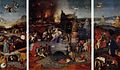 Triptych of Temptation of St Anthony
 -
 Erasmus buste
 -
 Hans Holbein d. J. Erasmus Louvre
 -
 Book printed by Aldus Manutius Horace
 -
 Sir Thomas More by Hans Holbein the Younger
 -
 Portret van Peter Gilles
 -
 Field of the Cloth of Gold
 -
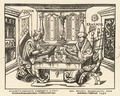 Cognatus Erasmus
 -
 Pop Adrian VI
 -
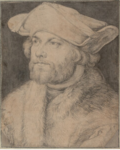 Damiao de Gois Albertina


.jpg)


Ad. Transform your life with W8MD's
GLP-1 weight loss injections special from $29.99 with insurance
|
WikiMD Medical Encyclopedia |
Medical Disclaimer: WikiMD is for informational purposes only and is not a substitute for professional medical advice. Content may be inaccurate or outdated and should not be used for diagnosis or treatment. Always consult your healthcare provider for medical decisions. Verify information with trusted sources such as CDC.gov and NIH.gov. By using this site, you agree that WikiMD is not liable for any outcomes related to its content. See full disclaimer.
Credits:Most images are courtesy of Wikimedia commons, and templates, categories Wikipedia, licensed under CC BY SA or similar.
Translate this page: - East Asian
中文,
日本,
한국어,
South Asian
हिन्दी,
தமிழ்,
తెలుగు,
Urdu,
ಕನ್ನಡ,
Southeast Asian
Indonesian,
Vietnamese,
Thai,
မြန်မာဘာသာ,
বাংলা
European
español,
Deutsch,
français,
Greek,
português do Brasil,
polski,
română,
русский,
Nederlands,
norsk,
svenska,
suomi,
Italian
Middle Eastern & African
عربى,
Turkish,
Persian,
Hebrew,
Afrikaans,
isiZulu,
Kiswahili,
Other
Bulgarian,
Hungarian,
Czech,
Swedish,
മലയാളം,
मराठी,
ਪੰਜਾਬੀ,
ગુજરાતી,
Portuguese,
Ukrainian
