Background radiation
Background radiation refers to the ionizing radiation present in the environment on Earth at all times. This radiation is emitted from both natural and artificial sources. The natural sources include cosmic rays, terrestrial sources, and internal sources. Artificial sources include nuclear power plants, medical procedures, and consumer products.
Sources of Background Radiation[edit]
Cosmic Rays[edit]
Cosmic rays are high-energy particles originating from outer space that interact with the Earth's atmosphere to create secondary radiation, including X-rays, muons, protons, alpha particles, pions, electrons, and neutrons. The intensity of cosmic rays varies based on altitude and geomagnetic latitude.
Terrestrial Sources[edit]
Terrestrial radiation originates from radioactive materials, such as uranium, thorium, and radon in the ground. The amount of terrestrial radiation varies by location.
Internal Sources[edit]
Internal radiation comes from radioactive substances in the human body. For example, the human body contains small amounts of the radioactive isotopes potassium-40 and carbon-14.
Artificial Sources[edit]
Artificial sources of background radiation include nuclear power plants, medical procedures, and consumer products. For example, coal power plants release trace amounts of radioactive substances into the atmosphere.
Health Effects of Background Radiation[edit]
Background radiation is typically low-level and not harmful to human health. However, prolonged or intense exposure to background radiation can cause health effects such as cancer and genetic damage.
Measurement of Background Radiation[edit]
Background radiation is measured in units of radioactivity (becquerels) or absorbed dose (grays or sieverts). The average annual dose per person from background radiation is about 2-3 millisieverts.
See Also[edit]
This radiation related article is a stub. You can help WikiMD by expanding it.
Background_radiation[edit]
-
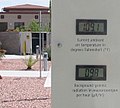 Atomic Testing Museum weather display
 -
 Cloud chambers played an important role of particle detectors
 -
 Sievert sigle
 -
 Kozloduy Nuclear Power Plant - Background radiation displays
 -
 US fallout exposure
 -
 Radiocarbon bomb spike
 -
 G radiation-level scale 01


Ad. Transform your health with W8MD Weight Loss, Sleep & MedSpa

Tired of being overweight?
Special offer:
Budget GLP-1 weight loss medications
- Semaglutide starting from $29.99/week and up with insurance for visit of $59.99 and up per week self pay.
- Tirzepatide starting from $45.00/week and up (dose dependent) or $69.99/week and up self pay
✔ Same-week appointments, evenings & weekends
Learn more:
- GLP-1 weight loss clinic NYC
- W8MD's NYC medical weight loss
- W8MD Philadelphia GLP-1 shots
- Philadelphia GLP-1 injections
- Affordable GLP-1 shots NYC
|
WikiMD Medical Encyclopedia |
Medical Disclaimer: WikiMD is for informational purposes only and is not a substitute for professional medical advice. Content may be inaccurate or outdated and should not be used for diagnosis or treatment. Always consult your healthcare provider for medical decisions. Verify information with trusted sources such as CDC.gov and NIH.gov. By using this site, you agree that WikiMD is not liable for any outcomes related to its content. See full disclaimer.
Credits:Most images are courtesy of Wikimedia commons, and templates, categories Wikipedia, licensed under CC BY SA or similar.
Translate this page: - East Asian
中文,
日本,
한국어,
South Asian
हिन्दी,
தமிழ்,
తెలుగు,
Urdu,
ಕನ್ನಡ,
Southeast Asian
Indonesian,
Vietnamese,
Thai,
မြန်မာဘာသာ,
বাংলা
European
español,
Deutsch,
français,
Greek,
português do Brasil,
polski,
română,
русский,
Nederlands,
norsk,
svenska,
suomi,
Italian
Middle Eastern & African
عربى,
Turkish,
Persian,
Hebrew,
Afrikaans,
isiZulu,
Kiswahili,
Other
Bulgarian,
Hungarian,
Czech,
Swedish,
മലയാളം,
मराठी,
ਪੰਜਾਬੀ,
ગુજરાતી,
Portuguese,
Ukrainian
