Muscat

_(14577292147)_(cropped).jpg)


Muscat is the capital and largest city of Oman. It stands as a port on the Gulf of Oman and is surrounded by mountains and desert. With a history dating back to antiquity, Muscat's influence and importance have fluctuated over the centuries, being controlled at various times by the Persians, the Portuguese, and the Ottomans before coming under the firm control of Oman.
History[edit]
Muscat's history is a rich tapestry that reflects the various cultures and peoples that have influenced the city. The area is known to have been inhabited since at least the 2nd millennium BCE. It was an important trading port between the west and the east from the 1st century CE, trading in frankincense, myrrh, and other valuable goods. In the 16th century, Muscat gained prominence on the international stage when it came under Portuguese control. The Portuguese fortified the city, remnants of which can still be seen today. However, by the 18th century, the Omani Empire had expelled the Portuguese and established Muscat as a major trading hub in the Indian Ocean.
Geography[edit]
Muscat is located on the northeast coast of Oman, bordered by the Gulf of Oman and the rugged Hajar Mountains. The city's terrain is characterized by rocky hills and a fringing coral reef. Muscat's climate is hot and arid, with temperatures in the summer often reaching above 40°C (104°F).
Economy[edit]
The economy of Muscat, like much of Oman, has traditionally been rooted in trade. In recent decades, the city has seen significant growth and diversification of its economy with developments in tourism, shipping, and especially the oil industry. Muscat's port, Port Sultan Qaboos, is one of the main commercial ports in Oman and plays a critical role in the country's import and export activities.
Culture[edit]
Muscat reflects a blend of traditional Islamic cultural values and modernity. The city is home to several museums, including the National Museum of Oman and the Sultan's Armed Forces Museum, which showcase the country's history and cultural heritage. The Royal Opera House Muscat, opened in 2011, highlights the city's commitment to cultural arts and international performances.
Tourism[edit]
Tourism in Muscat has grown significantly, with the city offering a mix of historical sites, modern entertainment, and natural beauty. Key attractions include the Sultan Qaboos Grand Mosque, a stunning example of contemporary Islamic architecture; the Al Jalali and Al Mirani forts, which guard the entrance to Muscat Bay; and the Muttrah Souq, one of the oldest marketplaces in the Arab world.
Transport[edit]
Muscat is served by the Muscat International Airport, the main international gateway to Oman. The city also has a well-developed road network, including the Muscat Expressway, which enhances connectivity within the city and with other parts of Oman.
Education[edit]
The city is a center for education in Oman, hosting several universities and higher education institutions, including Sultan Qaboos University, the first public university in Oman, and the University of Nizwa.
Healthcare[edit]
Muscat offers comprehensive healthcare services with numerous hospitals and clinics providing care. The Royal Hospital in Muscat is one of the leading healthcare facilities in the country.

-
 Sultan Qaboos Street in Muscat
 -
 Al Alam Palace
 -
Sultan Qaboos Grand Mosque
-
 Opera House Muscat
 -
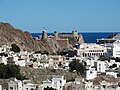 Old City of Muscat
 -
 Nábřeží Matry
 -
 MASCATE António Bocarro
 -
 The Persian Problem (1903)
 -
 Muscat Harbor
 -
 WH1-Effo080a
 -
 Road towards Qantab, Muscat
 -
 Muscat SPOT 1089


Ad. Transform your health with W8MD Weight Loss, Sleep & MedSpa

Tired of being overweight?
Special offer:
Budget GLP-1 weight loss medications
- Semaglutide starting from $29.99/week and up with insurance for visit of $59.99 and up per week self pay.
- Tirzepatide starting from $45.00/week and up (dose dependent) or $69.99/week and up self pay
✔ Same-week appointments, evenings & weekends
Learn more:
- GLP-1 weight loss clinic NYC
- W8MD's NYC medical weight loss
- W8MD Philadelphia GLP-1 shots
- Philadelphia GLP-1 injections
- Affordable GLP-1 shots NYC
|
WikiMD Medical Encyclopedia |
Medical Disclaimer: WikiMD is for informational purposes only and is not a substitute for professional medical advice. Content may be inaccurate or outdated and should not be used for diagnosis or treatment. Always consult your healthcare provider for medical decisions. Verify information with trusted sources such as CDC.gov and NIH.gov. By using this site, you agree that WikiMD is not liable for any outcomes related to its content. See full disclaimer.
Credits:Most images are courtesy of Wikimedia commons, and templates, categories Wikipedia, licensed under CC BY SA or similar.
Translate this page: - East Asian
中文,
日本,
한국어,
South Asian
हिन्दी,
தமிழ்,
తెలుగు,
Urdu,
ಕನ್ನಡ,
Southeast Asian
Indonesian,
Vietnamese,
Thai,
မြန်မာဘာသာ,
বাংলা
European
español,
Deutsch,
français,
Greek,
português do Brasil,
polski,
română,
русский,
Nederlands,
norsk,
svenska,
suomi,
Italian
Middle Eastern & African
عربى,
Turkish,
Persian,
Hebrew,
Afrikaans,
isiZulu,
Kiswahili,
Other
Bulgarian,
Hungarian,
Czech,
Swedish,
മലയാളം,
मराठी,
ਪੰਜਾਬੀ,
ગુજરાતી,
Portuguese,
Ukrainian

