Lebanon
Lebanon, officially known as the Lebanese Republic, is a country located in Western Asia, bordered by Syria to the north and east, Israel to the south, and the Mediterranean Sea to the west. Its capital and largest city is Beirut. Lebanon's location at the crossroads of the Mediterranean Basin and the Arabian hinterlands has contributed to its rich history and shaped a cultural identity of religious and ethnic diversity. Despite its small size, Lebanon is renowned for its ancient history, cultural heritage, and as a symbol of pluralism in the Middle East.
Geography[edit]
Lebanon is characterized by its varied topography, including mountains, fertile valleys, and a narrow coastal plain. The Mount Lebanon range runs parallel to the Mediterranean coast and is the backbone of the country's geography. The Bekaa Valley, a fertile valley between the Mount Lebanon range and the Anti-Lebanon mountains, is crucial for agriculture. Lebanon's climate is Mediterranean, featuring hot, dry summers and cool, wet winters, which contributes to the country's biodiversity.
History[edit]
Lebanon's history dates back thousands of years, with evidence of ancient civilizations, including the Phoenicians, who were known for their seafaring and trade. The area that is now Lebanon was part of the Roman Empire, and later, the Byzantine Empire. It was also influenced by the Islamic Caliphates, the Crusaders, the Ottoman Empire, and the French Mandate before gaining independence in 1943. Lebanon's recent history has been marked by periods of political instability, civil conflict, and efforts towards recovery and reconstruction.
Demographics[edit]
Lebanon is home to a diverse population that includes various ethnic groups and religious sects. The major religious groups include Maronite Christians, Shi'a Muslims, Sunni Muslims, and Druze, among others. This diversity has played a significant role in the country's politics and social fabric, but has also led to tension and conflict. The official language is Arabic, with French and English also widely spoken.
Economy[edit]
Lebanon's economy is service-oriented, with banking, tourism, and trade playing significant roles. The country was known for its banking sector, which attracted investors due to its banking secrecy laws. However, economic challenges, including debt, unemployment, and infrastructure issues, have affected Lebanon's financial stability. The Lebanese pound is the official currency.
Culture[edit]
Lebanon boasts a rich cultural heritage, reflecting its history of interaction with various civilizations. Lebanese cuisine is renowned worldwide, featuring dishes such as tabbouleh, hummus, and kibbeh. The country is also known for its literature, music, and festivals, which celebrate Lebanese identity and heritage.
Healthcare[edit]
The healthcare system in Lebanon is a mix of public and private services. It has been considered relatively advanced in the region, but faces challenges such as accessibility, affordability, and the impact of recent economic crises and political instability on health services.
Education[edit]
Lebanon has a long tradition of education, with a literacy rate among the highest in the region. The country hosts several prestigious universities, including the American University of Beirut and the Lebanese American University. Education is highly valued, and there is a strong emphasis on bilingual or trilingual education, with Arabic, French, and English being the main languages of instruction.
Challenges[edit]
Lebanon faces numerous challenges, including political instability, economic crises, and the impact of regional conflicts. The Syrian civil war has led to an influx of refugees, placing additional strain on Lebanon's resources. Environmental issues, such as pollution and water management, are also significant concerns.
| This article is a stub. You can help WikiMD by registering to expand it. |
-
Lebanon
-
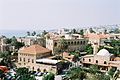 Byblos, Lebanon
 -
 Phoenician Trade
 -
 Siege of Tripoli (1289)
 -
 Fakhredine Palace, Deir Al-Qamar
 -
 Map of Lebanon (1860-1861)
 -
 French Mandate for Syria and Lebanon
 -
 Lebanon's Independence Day, 1943
 -
 Camille Chamoun visiting Brazil, 1954
 -
 Green Line, Beirut 1982
 -
 Blue Line
 -
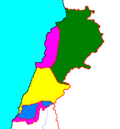 Lebanon Civil War Map, 1983


.jpg)


Ad. Transform your health with W8MD Weight Loss, Sleep & MedSpa

Tired of being overweight?
Special offer:
Budget GLP-1 weight loss medications
- Semaglutide starting from $29.99/week and up with insurance for visit of $59.99 and up per week self pay.
- Tirzepatide starting from $45.00/week and up (dose dependent) or $69.99/week and up self pay
✔ Same-week appointments, evenings & weekends
Learn more:
- GLP-1 weight loss clinic NYC
- W8MD's NYC medical weight loss
- W8MD Philadelphia GLP-1 shots
- Philadelphia GLP-1 injections
- Affordable GLP-1 shots NYC
|
WikiMD Medical Encyclopedia |
Medical Disclaimer: WikiMD is for informational purposes only and is not a substitute for professional medical advice. Content may be inaccurate or outdated and should not be used for diagnosis or treatment. Always consult your healthcare provider for medical decisions. Verify information with trusted sources such as CDC.gov and NIH.gov. By using this site, you agree that WikiMD is not liable for any outcomes related to its content. See full disclaimer.
Credits:Most images are courtesy of Wikimedia commons, and templates, categories Wikipedia, licensed under CC BY SA or similar.
Translate this page: - East Asian
中文,
日本,
한국어,
South Asian
हिन्दी,
தமிழ்,
తెలుగు,
Urdu,
ಕನ್ನಡ,
Southeast Asian
Indonesian,
Vietnamese,
Thai,
မြန်မာဘာသာ,
বাংলা
European
español,
Deutsch,
français,
Greek,
português do Brasil,
polski,
română,
русский,
Nederlands,
norsk,
svenska,
suomi,
Italian
Middle Eastern & African
عربى,
Turkish,
Persian,
Hebrew,
Afrikaans,
isiZulu,
Kiswahili,
Other
Bulgarian,
Hungarian,
Czech,
Swedish,
മലയാളം,
मराठी,
ਪੰਜਾਬੀ,
ગુજરાતી,
Portuguese,
Ukrainian
