Firefly


Fireflies or lightning bugs are beetles in the family Lampyridae. They are known for their use of bioluminescence during twilight to attract mates or prey. This bioluminescence is produced by a chemical reaction that occurs in specialized light-emitting organs, usually on a firefly's lower abdomen. The ability to produce light is found in both male and female fireflies, and in some species, even the larvae and eggs are bioluminescent.
Description[edit]
Fireflies have soft bodies and tend to be small, with most species measuring between 5 to 25 millimeters in length. The color of fireflies can vary significantly, but many have a reddish or brownish hue. Their bioluminescence is a form of chemiluminescence, where light is produced as a result of a chemical reaction. In fireflies, this reaction involves the enzyme luciferase acting on the substrate luciferin, in the presence of oxygen, magnesium ions, and ATP (adenosine triphosphate).
Life Cycle[edit]
The life cycle of a firefly includes four stages: egg, larva, pupa, and adult. The duration of each stage can vary greatly depending on the species and environmental conditions. Firefly larvae are often referred to as glowworms, especially in species where the adults do not produce light. The larvae are predatory, feeding on snails, slugs, and other small invertebrates. After several molts, the larvae pupate, emerging as adults ready to reproduce. Adult fireflies live only a few weeks, during which their main goal is to find a mate.
Bioluminescence[edit]
The bioluminescence of fireflies is a highly efficient light, with nearly 100% of the energy used in the chemical reaction being emitted as light. This light can be yellow, green, or orange in color, depending on the species. The pattern of flashing varies greatly, serving as a means of communication between individuals, particularly in the context of mating. Some species synchronize their flashes, creating a spectacular display of coordinated blinking across large groups.
Ecology and Behavior[edit]
Fireflies are found in a variety of habitats, including marshes, forests, fields, and gardens, usually near bodies of water. They are most commonly seen on warm, humid nights from spring to fall, depending on the geographic location. Fireflies are beneficial insects, as their larvae consume pests such as snails and slugs. However, their populations are threatened by habitat loss, pesticide use, and light pollution, which interferes with their ability to find mates.
Conservation[edit]
Efforts to conserve firefly populations focus on reducing light pollution, protecting habitats, and limiting pesticide use. Public awareness campaigns encourage homeowners and communities to turn off unnecessary outdoor lighting and to create firefly-friendly environments by maintaining natural vegetation near water sources.
Cultural Significance[edit]
Fireflies have been a subject of fascination and inspiration in various cultures around the world, symbolizing hope, guidance, and the beauty of nature. They are featured in literature, art, and folklore, often representing the presence of the magical or the ethereal.

-
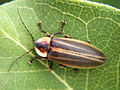 Firefly
 -
 Firefly

_mating.gif)
Ad. Transform your health with W8MD Weight Loss, Sleep & MedSpa

Tired of being overweight?
Special offer:
Budget GLP-1 weight loss medications
- Semaglutide starting from $29.99/week and up with insurance for visit of $59.99 and up per week self pay.
- Tirzepatide starting from $45.00/week and up (dose dependent) or $69.99/week and up self pay
✔ Same-week appointments, evenings & weekends
Learn more:
- GLP-1 weight loss clinic NYC
- W8MD's NYC medical weight loss
- W8MD Philadelphia GLP-1 shots
- Philadelphia GLP-1 injections
- Affordable GLP-1 shots NYC
|
WikiMD Medical Encyclopedia |
Medical Disclaimer: WikiMD is for informational purposes only and is not a substitute for professional medical advice. Content may be inaccurate or outdated and should not be used for diagnosis or treatment. Always consult your healthcare provider for medical decisions. Verify information with trusted sources such as CDC.gov and NIH.gov. By using this site, you agree that WikiMD is not liable for any outcomes related to its content. See full disclaimer.
Credits:Most images are courtesy of Wikimedia commons, and templates, categories Wikipedia, licensed under CC BY SA or similar.
Translate this page: - East Asian
中文,
日本,
한국어,
South Asian
हिन्दी,
தமிழ்,
తెలుగు,
Urdu,
ಕನ್ನಡ,
Southeast Asian
Indonesian,
Vietnamese,
Thai,
မြန်မာဘာသာ,
বাংলা
European
español,
Deutsch,
français,
Greek,
português do Brasil,
polski,
română,
русский,
Nederlands,
norsk,
svenska,
suomi,
Italian
Middle Eastern & African
عربى,
Turkish,
Persian,
Hebrew,
Afrikaans,
isiZulu,
Kiswahili,
Other
Bulgarian,
Hungarian,
Czech,
Swedish,
മലയാളം,
मराठी,
ਪੰਜਾਬੀ,
ગુજરાતી,
Portuguese,
Ukrainian
