Alpine Rhine
-
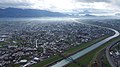 Alpine Rhine
 -
 Map of the Rhine
 -
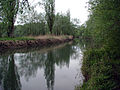 Old Rhine at Höchst
 -
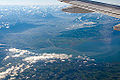 Alpine Rhine
 -
 Alpine Rhine
 -
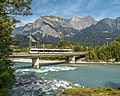 Railway bridge over the Alpine Rhine


_at_ART_BODENSEE.jpg)

Alpine Rhine[edit]
The Alpine Rhine is a section of the Rhine River that flows through the Alps in Switzerland and Liechtenstein. It is a significant geographical feature in the region, known for its scenic beauty and its role in the hydrology of the Alpine region.
Geography[edit]
The Alpine Rhine begins at the confluence of the Vorderrhein and Hinterrhein near the town of Reichenau in the Canton of Graubünden. From there, it flows northward, forming the border between Switzerland and Liechtenstein, and later between Switzerland and Austria. The river continues its course until it reaches Lake Constance, where it becomes the High Rhine.
Course[edit]
The Alpine Rhine flows through a narrow valley, which is flanked by the Swiss Alps to the west and the Austrian Alps to the east. The river's course is characterized by a series of meanders and braided channels, especially in its upper reaches. As it progresses northward, the valley widens, and the river becomes more regulated.
Tributaries[edit]
The Alpine Rhine receives water from several tributaries, including the Ill and the Landquart. These tributaries contribute to the river's flow and are important for the local hydrology.
Hydrology[edit]
The Alpine Rhine is fed by glacial meltwater and precipitation from the surrounding mountains. Its flow varies seasonally, with higher water levels in the spring and summer due to snowmelt. The river is subject to flooding, which has historically impacted the surrounding regions.
Flood Control[edit]
Efforts to control flooding along the Alpine Rhine have been ongoing since the 19th century. The river has been channelized and embankments have been constructed to protect the surrounding land. These measures have reduced the risk of flooding but have also altered the natural dynamics of the river.
Ecology[edit]
The Alpine Rhine supports a diverse range of flora and fauna. The river and its surrounding wetlands provide habitat for numerous species of fish, birds, and other wildlife. Conservation efforts are in place to protect these ecosystems, particularly in areas where human activity has impacted the natural environment.
Human Impact[edit]
The Alpine Rhine has been an important resource for human settlement and activity for centuries. It provides water for agriculture, industry, and domestic use. The river is also a popular destination for recreation, including fishing, boating, and hiking along its banks.
Settlements[edit]
Several towns and cities are located along the Alpine Rhine, including Chur, Vaduz, and Buchs. These settlements have historically relied on the river for transportation and trade.
Related pages[edit]
Ad. Transform your health with W8MD Weight Loss, Sleep & MedSpa

Tired of being overweight?
Get started with evidence based, physician-supervised
affordable GLP-1 weight loss injections
Now available in New York City and Philadelphia:
- Semaglutide starting from $59.99/week and up
- Tirzepatide starting from $69.99/week and up (dose dependent)
✔ Evidence-based medical weight loss ✔ Insurance-friendly visits available ✔ Same-week appointments, evenings & weekends
Learn more:
Start your transformation today with W8MD weight loss centers.
|
WikiMD Medical Encyclopedia |
Medical Disclaimer: WikiMD is for informational purposes only and is not a substitute for professional medical advice. Content may be inaccurate or outdated and should not be used for diagnosis or treatment. Always consult your healthcare provider for medical decisions. Verify information with trusted sources such as CDC.gov and NIH.gov. By using this site, you agree that WikiMD is not liable for any outcomes related to its content. See full disclaimer.
Credits:Most images are courtesy of Wikimedia commons, and templates, categories Wikipedia, licensed under CC BY SA or similar.
Translate this page: - East Asian
中文,
日本,
한국어,
South Asian
हिन्दी,
தமிழ்,
తెలుగు,
Urdu,
ಕನ್ನಡ,
Southeast Asian
Indonesian,
Vietnamese,
Thai,
မြန်မာဘာသာ,
বাংলা
European
español,
Deutsch,
français,
Greek,
português do Brasil,
polski,
română,
русский,
Nederlands,
norsk,
svenska,
suomi,
Italian
Middle Eastern & African
عربى,
Turkish,
Persian,
Hebrew,
Afrikaans,
isiZulu,
Kiswahili,
Other
Bulgarian,
Hungarian,
Czech,
Swedish,
മലയാളം,
मराठी,
ਪੰਜਾਬੀ,
ગુજરાતી,
Portuguese,
Ukrainian
