Indigenous people of New Guinea
Indigenous Peoples of New Guinea
New Guinea, the world's second-largest island, is home to a mosaic of indigenous peoples with a diversity that reflects one of the most linguistically varied regions on Earth. The island, divided politically between Papua New Guinea in the east and Indonesia's provinces of Papua and West Papua in the west, hosts communities that have maintained a wide array of social, cultural, and economic practices for thousands of years.
History[edit]
The history of human habitation in New Guinea is believed to date back at least 40,000 years, with the first inhabitants thought to have arrived from the Asian continent via land bridges and short sea crossings. Over millennia, these communities developed highly diverse cultures, languages, and societies. European contact began in the 16th century, leading to a period of exploration, missionary activities, and eventual colonization by the Dutch in the west, and the Germans and British in the east.
Culture[edit]
The cultures of New Guinea's indigenous peoples are as diverse as the island's geography, which ranges from coastal and island communities to highland valleys. Traditional societies vary widely in social organization, language, and cultural practices. Many communities rely on subsistence farming, hunting, and fishing, with sweet potato being a staple crop in the highlands, while sago palm is more common in lowland and coastal areas.
Cultural expressions through music, dance, and elaborate rituals play a significant role in social life and are often linked to ancestral beliefs and the environment. Notable are the elaborate costumes and masks used in ceremonies, such as the famous Asaro Mudmen or the Sing-sing festivals.
Languages[edit]
New Guinea is recognized as one of the most linguistically diverse areas in the world, with over 1,000 languages spoken across the island. These languages are classified into two major families: Austronesian languages, found mainly along the coasts and on offshore islands, and non-Austronesian or Papuan languages, predominant in the interior and highlands. The linguistic diversity reflects the communities' long histories of isolation and independent development.
Challenges[edit]
Indigenous peoples in New Guinea face numerous challenges, including pressures from modernization, land dispossession due to mining and logging activities, and the impacts of climate change. Additionally, political conflicts, particularly in the Indonesian provinces, have led to human rights concerns and displacement.
Efforts to protect indigenous rights, cultures, and territories are ongoing, involving local, national, and international organizations. The recognition of indigenous knowledge and practices is increasingly seen as vital to addressing environmental and social issues in New Guinea and globally.
See Also[edit]

-
 Indigenous people of New Guinea
 -
 Children in Papua New Guinea
 -
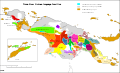 Map of New Guinea
 -
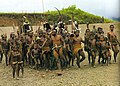 Jally Cultural Society
 -
 Indigenous people of New Guinea
 -
 Indigenous people of New Guinea
 -
 Phylogenetic structure of Eastern Eurasians
 -
 Population settlement in Insular Southeast Asia
 -
 Genetic variation of worldwide populations


Ad. Transform your health with W8MD Weight Loss, Sleep & MedSpa

Tired of being overweight?
Special offer:
Budget GLP-1 weight loss medications
- Semaglutide starting from $29.99/week and up with insurance for visit of $59.99 and up per week self pay.
- Tirzepatide starting from $45.00/week and up (dose dependent) or $69.99/week and up self pay
✔ Same-week appointments, evenings & weekends
Learn more:
- GLP-1 weight loss clinic NYC
- W8MD's NYC medical weight loss
- W8MD Philadelphia GLP-1 shots
- Philadelphia GLP-1 injections
- Affordable GLP-1 shots NYC
|
WikiMD Medical Encyclopedia |
Medical Disclaimer: WikiMD is for informational purposes only and is not a substitute for professional medical advice. Content may be inaccurate or outdated and should not be used for diagnosis or treatment. Always consult your healthcare provider for medical decisions. Verify information with trusted sources such as CDC.gov and NIH.gov. By using this site, you agree that WikiMD is not liable for any outcomes related to its content. See full disclaimer.
Credits:Most images are courtesy of Wikimedia commons, and templates, categories Wikipedia, licensed under CC BY SA or similar.
Translate this page: - East Asian
中文,
日本,
한국어,
South Asian
हिन्दी,
தமிழ்,
తెలుగు,
Urdu,
ಕನ್ನಡ,
Southeast Asian
Indonesian,
Vietnamese,
Thai,
မြန်မာဘာသာ,
বাংলা
European
español,
Deutsch,
français,
Greek,
português do Brasil,
polski,
română,
русский,
Nederlands,
norsk,
svenska,
suomi,
Italian
Middle Eastern & African
عربى,
Turkish,
Persian,
Hebrew,
Afrikaans,
isiZulu,
Kiswahili,
Other
Bulgarian,
Hungarian,
Czech,
Swedish,
മലയാളം,
मराठी,
ਪੰਜਾਬੀ,
ગુજરાતી,
Portuguese,
Ukrainian
