Protein
Protein is a fundamental class of biomolecules present in all living organisms. Proteins are composed of one or more long chains of amino acid residues. They play a critical role in virtually all biological processes, including cell structure and function, enzyme catalysis, cell signaling, and immune response. The shape and structure of a protein determine its function. Proteins can be classified based on their function, structure, and solubility.
Structure
Proteins are made up of amino acids linked together by peptide bonds in a linear chain. This chain folds into a three-dimensional structure, which is essential for its function. The structure of proteins can be described at four levels:
- Primary structure - the sequence of amino acids in the polypeptide chain.
- Secondary structure - local structures formed by hydrogen bonding within the polypeptide chain, such as α-helices and β-sheets.
- Tertiary structure - the overall three-dimensional structure of a single protein molecule.
- Quaternary structure - the structure formed by several protein molecules (polypeptide chains), usually called protein subunits, which function as a single protein complex.
Function
Proteins perform a vast array of functions within organisms. Some of the key functions include:
- Enzymatic activity - Many proteins act as enzymes, speeding up chemical reactions without being consumed in the process.
- Structural support - Proteins like collagen, keratin, and elastin provide structural support to cells and tissues.
- Transport and storage - Proteins such as hemoglobin transport oxygen in the blood, while others store essential molecules for later use.
- Signal transduction - Proteins are involved in transmitting signals within and between cells.
- Immune response - Antibodies are proteins that bind to specific foreign particles, such as viruses and bacteria, to help protect the body.
- Cell adhesion - Proteins are involved in binding cells together and to the extracellular matrix.
Synthesis and Degradation
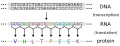
Protein synthesis, or translation, occurs in the ribosomes of cells, where genetic information encoded in messenger RNA (mRNA) is translated into a specific sequence of amino acids. The process of protein synthesis is highly regulated and involves several steps, including initiation, elongation, and termination. After synthesis, proteins can undergo post-translational modifications, which can affect their function and activity.
Proteins are constantly being degraded and synthesized. Protein degradation involves breaking down proteins into their constituent amino acids, a process that is essential for regulating protein function and freeing amino acids for the synthesis of new proteins.
Nutritional Aspects
Dietary proteins are an essential part of human nutrition, providing the amino acids needed for the synthesis of body proteins. Essential amino acids cannot be synthesized by the body and must be obtained from the diet. Animal sources of protein, such as meat, fish, eggs, and dairy, are considered complete proteins because they contain all the essential amino acids. Plant sources of protein can be combined to provide all the essential amino acids.
Diseases Related to Proteins
Protein misfolding and aggregation are associated with a range of diseases, including Alzheimer's disease, Parkinson's disease, and Huntington's disease. These conditions are often referred to as proteinopathies or conformational diseases. In addition, deficiencies in or mutations of specific proteins can lead to diseases such as sickle cell anemia (a mutation in the hemoglobin protein) and cystic fibrosis (a defect in the CFTR protein).
| This article is a stub. You can help WikiMD by registering to expand it. |
-
 Protein
 -
 Protein
 -
 Protein
 -
 Protein
 -
 Protein
 -
 Protein
 -
 Protein
 -
 Protein
 -
 Protein
 -
 Protein
 -
 Protein
 -
 Protein


Ad. Transform your health with W8MD Weight Loss, Sleep & MedSpa

Tired of being overweight?
Special offer:
Budget GLP-1 weight loss medications
- Semaglutide starting from $29.99/week and up with insurance for visit of $59.99 and up per week self pay.
- Tirzepatide starting from $45.00/week and up (dose dependent) or $69.99/week and up self pay
✔ Same-week appointments, evenings & weekends
Learn more:
- GLP-1 weight loss clinic NYC
- W8MD's NYC medical weight loss
- W8MD Philadelphia GLP-1 shots
- Philadelphia GLP-1 injections
- Affordable GLP-1 shots NYC
- Budget GLP-1 shots
|
WikiMD Medical Encyclopedia |
Medical Disclaimer: WikiMD is for informational purposes only and is not a substitute for professional medical advice. Content may be inaccurate or outdated and should not be used for diagnosis or treatment. Always consult your healthcare provider for medical decisions. Verify information with trusted sources such as CDC.gov and NIH.gov. By using this site, you agree that WikiMD is not liable for any outcomes related to its content. See full disclaimer.
Credits:Most images are courtesy of Wikimedia commons, and templates, categories Wikipedia, licensed under CC BY SA or similar.
Translate this page: - East Asian
中文,
日本,
한국어,
South Asian
हिन्दी,
தமிழ்,
తెలుగు,
Urdu,
ಕನ್ನಡ,
Southeast Asian
Indonesian,
Vietnamese,
Thai,
မြန်မာဘာသာ,
বাংলা
European
español,
Deutsch,
français,
Greek,
português do Brasil,
polski,
română,
русский,
Nederlands,
norsk,
svenska,
suomi,
Italian
Middle Eastern & African
عربى,
Turkish,
Persian,
Hebrew,
Afrikaans,
isiZulu,
Kiswahili,
Other
Bulgarian,
Hungarian,
Czech,
Swedish,
മലയാളം,
मराठी,
ਪੰਜਾਬੀ,
ગુજરાતી,
Portuguese,
Ukrainian
