Artificial gravity
Artificial Gravity
Artificial gravity is the creation of an inertial force that mimics the effects of a gravitational force, usually by rotation. It is primarily used in spaceflight to counteract the adverse effects of prolonged weightlessness on the human body.
Principles of Artificial Gravity
Artificial gravity can be generated through several methods, but the most common is through centrifugal force. When a spacecraft or space station rotates, the centrifugal force pushes objects inside towards the outer edge, creating a sensation similar to gravity. This is akin to the feeling of being pushed outward when a car takes a sharp turn.
Rotational Dynamics
The effectiveness of artificial gravity depends on the radius of rotation and the angular velocity. The formula for artificial gravity (g) is given by:
- g = __r
where _ is the angular velocity and r is the radius of the rotation. A larger radius allows for a slower rotation rate to achieve the same level of artificial gravity, which is more comfortable for humans.
Design Considerations
Designing a spacecraft with artificial gravity involves balancing the size of the rotating section with the structural integrity and energy requirements. A larger rotating section can provide a more Earth-like gravity experience but requires more materials and energy to maintain.
Effects on the Human Body
Prolonged exposure to microgravity can lead to muscle atrophy, bone density loss, and fluid redistribution in the body. Artificial gravity can mitigate these effects by providing a constant force on the body, similar to Earth's gravity.
Muscle and Bone Health
Artificial gravity helps maintain muscle and bone health by providing resistance against which muscles can work. This resistance is crucial for maintaining muscle mass and bone density, which are significantly reduced in microgravity environments.
Vestibular System
The human vestibular system, responsible for balance and spatial orientation, can be affected by artificial gravity. Rapid rotation can cause dizziness and disorientation, so the rotation rate must be carefully controlled to minimize these effects.
Applications in Spaceflight
Artificial gravity is a key consideration for long-duration space missions, such as those to Mars or other distant destinations. It can improve the health and well-being of astronauts, making it a critical component of future space exploration.
Spacecraft Design
Several spacecraft designs have been proposed to incorporate artificial gravity, including rotating habitats and tethered systems. These designs aim to create a sustainable environment for astronauts during long missions.
Current Research
Research is ongoing to determine the optimal levels of artificial gravity needed to maintain human health in space. Studies are also exploring the psychological benefits of artificial gravity, as it can provide a more familiar environment for astronauts.
Related Pages
Gallery
-
 Structure of Ara h 1

-
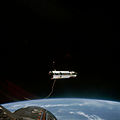 The Agena Target Docking Vehicle
 -
 Nautilus-X ISS Demo
 -
 Artificial Gravity Space Station
 -
 Artificial Gravity
 -
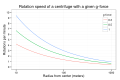 Rotation Speed of Centrifuge
 -
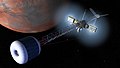 Artificial Gravity
 -
 NASA Mars Artificial Gravity 1989
 -
 Artificial Gravity


Ad. Transform your health with W8MD Weight Loss, Sleep & MedSpa

Tired of being overweight?
Special offer:
Budget GLP-1 weight loss medications
- Semaglutide starting from $29.99/week and up with insurance for visit of $59.99 and up per week self pay.
- Tirzepatide starting from $45.00/week and up (dose dependent) or $69.99/week and up self pay
✔ Same-week appointments, evenings & weekends ✔ Tele visits available with certain limitations Learn more:
- GLP-1 weight loss clinic NYC
- W8MD's NYC medical weight loss
- W8MD Philadelphia GLP-1 shots
- Philadelphia GLP-1 injections
- Affordable GLP-1 shots NYC
- Budget GLP-1 shots
|
WikiMD Medical Encyclopedia |
Medical Disclaimer: WikiMD is for informational purposes only and is not a substitute for professional medical advice. Content may be inaccurate or outdated and should not be used for diagnosis or treatment. Always consult your healthcare provider for medical decisions. Verify information with trusted sources such as CDC.gov and NIH.gov. By using this site, you agree that WikiMD is not liable for any outcomes related to its content. See full disclaimer.
Credits:Most images are courtesy of Wikimedia commons, and templates, categories Wikipedia, licensed under CC BY SA or similar.
Translate this page: - East Asian
中文,
日本,
한국어,
South Asian
हिन्दी,
தமிழ்,
తెలుగు,
Urdu,
ಕನ್ನಡ,
Southeast Asian
Indonesian,
Vietnamese,
Thai,
မြန်မာဘာသာ,
বাংলা
European
español,
Deutsch,
français,
Greek,
português do Brasil,
polski,
română,
русский,
Nederlands,
norsk,
svenska,
suomi,
Italian
Middle Eastern & African
عربى,
Turkish,
Persian,
Hebrew,
Afrikaans,
isiZulu,
Kiswahili,
Other
Bulgarian,
Hungarian,
Czech,
Swedish,
മലയാളം,
मराठी,
ਪੰਜਾਬੀ,
ગુજરાતી,
Portuguese,
Ukrainian
