Mass casualty incident
Mass casualty incident (MCI), also known as a multiple-casualty incident or multiple-casualty situation, is a term used to describe an event in which the medical resources available are overwhelmed by the number and severity of casualties. This can occur in situations such as natural disasters, terrorist attacks, industrial accidents, or large-scale transportation accidents. The primary goal during an MCI is to prioritize victims based on the severity of their injuries to maximize the number of survivors.
Definition[edit]
An MCI is defined not just by the absolute number of casualties, but by the capacity of the local healthcare system to provide care. An event that overwhelms a small, rural hospital might not constitute an MCI in a large city with multiple trauma centers. The common thread in all MCIs is the need for rapid triage and treatment beyond the normal capacity of the first responders and medical facilities.
Triage[edit]
Triage is the process of determining the priority of patients' treatments based on the severity of their condition. During an MCI, triage is critical and often follows specific protocols, such as the START (Simple Triage and Rapid Treatment) or the SALT (Sort, Assess, Lifesaving Interventions, Treatment/Transport) triage methods. These systems help responders quickly categorize patients into groups (e.g., immediate, delayed, minor, deceased) to ensure that resources are allocated efficiently and effectively.
Response[edit]
The response to an MCI involves multiple agencies and disciplines, including Emergency Medical Services (EMS), fire departments, law enforcement, public health departments, and sometimes military units. Coordination among these entities is crucial and is often facilitated by an incident command system (ICS) or a similar framework. This ensures a structured and efficient approach to scene management, resource allocation, and inter-agency communication.
Challenges[edit]
One of the primary challenges in managing an MCI is communication. Ensuring that accurate information is shared among all responding agencies and with the public is critical but can be difficult in chaotic environments. Additionally, the availability of resources such as blood, medical supplies, and hospital beds can quickly become a limiting factor in the response effort.
Preparedness[edit]
Preparedness for MCIs involves regular training exercises, the development of mutual aid agreements between neighboring jurisdictions, and the establishment of emergency operations plans. Hospitals and healthcare systems also conduct drills to prepare their staff for the surge in patients that accompanies an MCI.
Psychological Impact[edit]
MCIs can have a significant psychological impact on survivors, families of victims, and responders. Mental health support and services are an important component of the response to help those affected cope with the trauma and loss.
Legal and Ethical Considerations[edit]
The chaotic nature of MCIs can raise complex legal and ethical issues, particularly regarding triage decisions and the allocation of scarce resources. Healthcare providers may be required to make difficult decisions under extreme pressure, which can have legal and ethical implications.

-
 Hospital Emergency Response Training for Mass Casualty Incidents
 -
 Toronto police on scene
 -
 York Region EMS ambulance bus
 -
 Toronto Fire Services Air Light
 -
 Mass casualty incident
 -
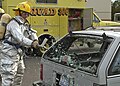 Mass Casualties Drill aboard Naval Air Station Oceana
 -
 Mass casualty incident
_for_Mass_Casualty_Incidents.jpg)


_Greg_Tetro_breaks_the_rear_glass_of_an_automobile_to_res.jpg)

Ad. Transform your life with W8MD's
GLP-1 weight loss injections special from $29.99


W8MD Medical Weight Loss, Sleep and Medspa offers physician-supervised medical weight loss programs: NYC medical weight loss Philadelphia medical weight loss
Affordable GLP-1 Weight Loss ShotsAffordable GLP-1 Weight Loss Shots
Budget GLP-1 injections NYC (insurance & self-pay options) Popular treatments:
- Semaglutide starting from $29.99/week
- Tirzepatide starting from $45.00/week
✔ Most insurances accepted for visits ✔ Prior authorization support when eligible
Start your physician weight loss NYC journey today:
📍 NYC: Brooklyn weight loss center 📍 Philadelphia: Philadelphia weight loss center
📞 Call: 718-946-5500 (NYC) | 215-676-2334 (Philadelphia)
Tags: Affordable GLP1 weight loss NYC, Wegovy NYC, Zepbound NYC, Philadelphia medical weight loss


|
WikiMD Medical Encyclopedia |
Medical Disclaimer: WikiMD is not a substitute for professional medical advice. The information on WikiMD is provided as an information resource only, may be incorrect, outdated or misleading, and is not to be used or relied on for any diagnostic or treatment purposes. Please consult your health care provider before making any healthcare decisions or for guidance about a specific medical condition. WikiMD expressly disclaims responsibility, and shall have no liability, for any damages, loss, injury, or liability whatsoever suffered as a result of your reliance on the information contained in this site. By visiting this site you agree to the foregoing terms and conditions, which may from time to time be changed or supplemented by WikiMD. If you do not agree to the foregoing terms and conditions, you should not enter or use this site. See full disclaimer.
Credits:Most images are courtesy of Wikimedia commons, and templates, categories Wikipedia, licensed under CC BY SA or similar.
Translate this page: - East Asian
中文,
日本,
한국어,
South Asian
हिन्दी,
தமிழ்,
తెలుగు,
Urdu,
ಕನ್ನಡ,
Southeast Asian
Indonesian,
Vietnamese,
Thai,
မြန်မာဘာသာ,
বাংলা
European
español,
Deutsch,
français,
Greek,
português do Brasil,
polski,
română,
русский,
Nederlands,
norsk,
svenska,
suomi,
Italian
Middle Eastern & African
عربى,
Turkish,
Persian,
Hebrew,
Afrikaans,
isiZulu,
Kiswahili,
Other
Bulgarian,
Hungarian,
Czech,
Swedish,
മലയാളം,
मराठी,
ਪੰਜਾਬੀ,
ગુજરાતી,
Portuguese,
Ukrainian
