Lamium purpureum
Lamium purpureum, also known as Purple Deadnettle, is a flowering plant in the family Lamiaceae. It is native to Europe and Asia, and is also found in North America and New Zealand as an introduced species.
Description[edit]
Lamium purpureum is an annual herbaceous plant with a height of 10 to 30 cm. The leaves are opposite, rounded to heart-shaped, and have a red-purple tinge. The flowers are red-purple, and are produced in whorls on the upper part of the stem.
Distribution and habitat[edit]
Lamium purpureum is native to Europe and Asia, and has been introduced to North America and New Zealand. It is commonly found in disturbed sites and waste areas, and can also grow in a variety of habitats including lawns, gardens, roadsides, and fields.
Uses[edit]
Lamium purpureum has been used in traditional medicine for its astringent and diuretic properties. It has also been used as a culinary herb, and the young leaves can be eaten raw or cooked.
Cultivation[edit]
Lamium purpureum is a hardy plant that can grow in a variety of soil types, but prefers well-drained soil. It can grow in both full sun and partial shade.
See also[edit]

This flora-related article is a stub. You can help WikiMD by expanding it.
-
 Illustration of Lamium purpureum
 -
 Leaf diagram of Lamium purpureum
 -
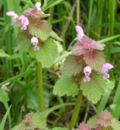 Close-up of Red Dead-nettle
 -
 Lamium purpureum in the spring
 -
 Lamium purpureum in Ohio, United States
 -
 Red Dead-nettle in Calhoun, Georgia, USA
 -
 Field of Red Dead-nettle

.svg)


_in_Ohio,_United_States.jpg)

.jpg)
Ad. Transform your health with W8MD Weight Loss, Sleep & MedSpa

Tired of being overweight?
Get started with evidence based, physician-supervised
affordable GLP-1 weight loss injections
Now available in New York City and Philadelphia:
- Semaglutide starting from $59.99/week and up
- Tirzepatide starting from $69.99/week and up (dose dependent)
✔ Evidence-based medical weight loss ✔ Insurance-friendly visits available ✔ Same-week appointments, evenings & weekends
Learn more:
Start your transformation today with W8MD weight loss centers.
|
WikiMD Medical Encyclopedia |
Medical Disclaimer: WikiMD is for informational purposes only and is not a substitute for professional medical advice. Content may be inaccurate or outdated and should not be used for diagnosis or treatment. Always consult your healthcare provider for medical decisions. Verify information with trusted sources such as CDC.gov and NIH.gov. By using this site, you agree that WikiMD is not liable for any outcomes related to its content. See full disclaimer.
Credits:Most images are courtesy of Wikimedia commons, and templates, categories Wikipedia, licensed under CC BY SA or similar.
Translate this page: - East Asian
中文,
日本,
한국어,
South Asian
हिन्दी,
தமிழ்,
తెలుగు,
Urdu,
ಕನ್ನಡ,
Southeast Asian
Indonesian,
Vietnamese,
Thai,
မြန်မာဘာသာ,
বাংলা
European
español,
Deutsch,
français,
Greek,
português do Brasil,
polski,
română,
русский,
Nederlands,
norsk,
svenska,
suomi,
Italian
Middle Eastern & African
عربى,
Turkish,
Persian,
Hebrew,
Afrikaans,
isiZulu,
Kiswahili,
Other
Bulgarian,
Hungarian,
Czech,
Swedish,
മലയാളം,
मराठी,
ਪੰਜਾਬੀ,
ગુજરાતી,
Portuguese,
Ukrainian
