Traditional Korean medicine
Traditional Korean Medicine[edit]

Traditional Korean medicine (TKM) is a holistic and integrative approach to health and healing that has been practiced in Korea for thousands of years. It encompasses a variety of practices, including herbal medicine, acupuncture, moxibustion, and cupping therapy. TKM is deeply rooted in the philosophy of balancing the body's energies, known as qi (_), and maintaining harmony between the body and the environment.
History[edit]
The origins of traditional Korean medicine can be traced back to ancient times, with influences from Traditional Chinese Medicine (TCM) and indigenous Korean practices. One of the most significant texts in TKM is the Dongui Bogam (____), compiled by the royal physician Heo Jun in the early 17th century. This comprehensive medical encyclopedia has been recognized by UNESCO for its historical and cultural significance.
Practices[edit]
Herbal Medicine[edit]
Herbal medicine is a cornerstone of TKM, utilizing a wide range of plants, minerals, and animal products to create remedies tailored to individual patients. These remedies are often prescribed in the form of teas, powders, or pills.
.jpg)
Acupuncture and Moxibustion[edit]
Acupuncture involves the insertion of fine needles into specific points on the body to regulate the flow of qi and alleviate various ailments. Moxibustion, on the other hand, involves the burning of moxa (dried mugwort) on or near the skin to warm and invigorate the flow of qi.
Cupping Therapy[edit]
Cupping therapy is a practice where cups are placed on the skin to create suction, believed to promote blood flow and healing.
Modern Developments[edit]
In contemporary Korea, traditional medicine is practiced alongside Western medicine, with many hospitals offering integrative treatments. The Korean government supports the development and standardization of TKM, and it is taught in universities across the country.
Cultural Significance[edit]
Traditional Korean medicine is not only a medical practice but also a cultural heritage that reflects the Korean way of understanding health and disease. It is celebrated in various cultural events and exhibitions, such as the Sancheong Traditional Medicine Expo.
.jpg)
Related Pages[edit]
References[edit]
- Kim, H. J. (2010). The History and Development of Traditional Korean Medicine. Seoul: Korean Medical Association.
- Lee, S. Y. (2015). Herbal Medicine in Korea: Past and Present. Journal of Korean Medicine, 12(3), 45-67.
- Park, J. H. (2018). Acupuncture and Moxibustion in Korea. Korean Journal of Acupuncture, 25(1), 10-20.
-
 A Korean acupuncturist inserting a needle into a leg
 -
Traditional Korean medicine
-
 Dongui Bogam
 -
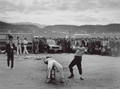 Medicine hawker 1976
 -
 Hanyak (traditional Korean medicine)
 -
 Doctor's Office, South Korean folk village
 -
 Diorama of Man Preparing Medicines at the National Folk Museum of Korea
 -
 Korea Sancheong Traditional Medicine EXPO
.JPG)


Ad. Transform your health with W8MD Weight Loss, Sleep & MedSpa

Tired of being overweight?
Get started with evidence based, physician-supervised
affordable GLP-1 weight loss injections
Now available in New York City and Philadelphia:
- Semaglutide starting from $59.99/week and up
- Tirzepatide starting from $69.99/week and up (dose dependent)
✔ Evidence-based medical weight loss ✔ Insurance-friendly visits available ✔ Same-week appointments, evenings & weekends
Learn more:
Start your transformation today with W8MD weight loss centers.
|
WikiMD Medical Encyclopedia |
Medical Disclaimer: WikiMD is for informational purposes only and is not a substitute for professional medical advice. Content may be inaccurate or outdated and should not be used for diagnosis or treatment. Always consult your healthcare provider for medical decisions. Verify information with trusted sources such as CDC.gov and NIH.gov. By using this site, you agree that WikiMD is not liable for any outcomes related to its content. See full disclaimer.
Credits:Most images are courtesy of Wikimedia commons, and templates, categories Wikipedia, licensed under CC BY SA or similar.
Translate this page: - East Asian
中文,
日本,
한국어,
South Asian
हिन्दी,
தமிழ்,
తెలుగు,
Urdu,
ಕನ್ನಡ,
Southeast Asian
Indonesian,
Vietnamese,
Thai,
မြန်မာဘာသာ,
বাংলা
European
español,
Deutsch,
français,
Greek,
português do Brasil,
polski,
română,
русский,
Nederlands,
norsk,
svenska,
suomi,
Italian
Middle Eastern & African
عربى,
Turkish,
Persian,
Hebrew,
Afrikaans,
isiZulu,
Kiswahili,
Other
Bulgarian,
Hungarian,
Czech,
Swedish,
മലയാളം,
मराठी,
ਪੰਜਾਬੀ,
ગુજરાતી,
Portuguese,
Ukrainian

.jpg)