Kitchen knife
Kitchen knife is a type of knife specifically designed for use in food preparation. While much of this work can be accomplished with a few general-purpose knives – notably a large chef's knife, a tough cleaver, and a small paring knife – there are also many specialized knives that are designed for specific tasks. Kitchen knives can be made from several different materials.
Types of Kitchen Knives[edit]
There are many different types of kitchen knives, each with its own specific use and purpose. Some of the most common types include:
- Chef's Knife: This is the most frequently used knife in the kitchen, with a wide range of uses from slicing and chopping to dicing and mincing.
- Paring Knife: A small knife used for precise tasks such as peeling and trimming.
- Bread Knife: A long knife with a serrated edge, used for cutting bread without crushing it.
- Cleaver: A large, heavy knife used for tasks such as chopping meat or hard vegetables.
- Carving Knife: A long, thin knife used for slicing meat.
- Boning Knife: A knife with a thin, flexible blade used for removing the bones from meat and fish.
Materials[edit]
Kitchen knives can be made from a variety of materials, each with its own advantages and disadvantages. Some of the most common materials include:
- Stainless Steel: This is the most common material used in kitchen knives. It is resistant to rust and corrosion, and is easy to maintain.
- Carbon Steel: Knives made from carbon steel are generally sharper than those made from stainless steel, but they are more prone to rust and stains.
- Ceramic: Ceramic knives are extremely sharp and hold their edge for a long time, but they can be brittle and may break if dropped.
Maintenance[edit]
Proper maintenance of a kitchen knife includes regular sharpening, as well as cleaning and storage to prevent damage and extend the life of the knife. It is also important to use a suitable cutting board to prevent damage to the knife's edge.
Safety[edit]
Safety is a major concern when using kitchen knives. Proper handling, use, and storage of knives can help to prevent accidents and injuries.


-
 Kitchen knife
 -
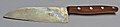 Kitchen knife
 -
 Kitchen knife
 -
 Kitchen knife
 -
 Kitchen knife
 -
 Kitchen knife
 -
 Kitchen knife
 -
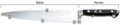 Kitchen knife
 -
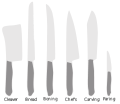 Kitchen knife
 -
 Kitchen knife
 -
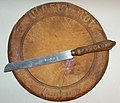 Kitchen knife
 -
Kitchen knife


Ad. Transform your health with W8MD Weight Loss, Sleep & MedSpa

Tired of being overweight?
Special offer:
Budget GLP-1 weight loss medications
- Semaglutide starting from $29.99/week and up with insurance for visit of $59.99 and up per week self pay.
- Tirzepatide starting from $45.00/week and up (dose dependent) or $69.99/week and up self pay
✔ Same-week appointments, evenings & weekends
Learn more:
- GLP-1 weight loss clinic NYC
- W8MD's NYC medical weight loss
- W8MD Philadelphia GLP-1 shots
- Philadelphia GLP-1 injections
- Affordable GLP-1 shots NYC
|
WikiMD Medical Encyclopedia |
Medical Disclaimer: WikiMD is for informational purposes only and is not a substitute for professional medical advice. Content may be inaccurate or outdated and should not be used for diagnosis or treatment. Always consult your healthcare provider for medical decisions. Verify information with trusted sources such as CDC.gov and NIH.gov. By using this site, you agree that WikiMD is not liable for any outcomes related to its content. See full disclaimer.
Credits:Most images are courtesy of Wikimedia commons, and templates, categories Wikipedia, licensed under CC BY SA or similar.
Translate this page: - East Asian
中文,
日本,
한국어,
South Asian
हिन्दी,
தமிழ்,
తెలుగు,
Urdu,
ಕನ್ನಡ,
Southeast Asian
Indonesian,
Vietnamese,
Thai,
မြန်မာဘာသာ,
বাংলা
European
español,
Deutsch,
français,
Greek,
português do Brasil,
polski,
română,
русский,
Nederlands,
norsk,
svenska,
suomi,
Italian
Middle Eastern & African
عربى,
Turkish,
Persian,
Hebrew,
Afrikaans,
isiZulu,
Kiswahili,
Other
Bulgarian,
Hungarian,
Czech,
Swedish,
മലയാളം,
मराठी,
ਪੰਜਾਬੀ,
ગુજરાતી,
Portuguese,
Ukrainian
