Metropolitan Free Hospital
Metropolitan Free Hospital
The Metropolitan Free Hospital, established in the mid-19th century, was a pivotal institution in the history of healthcare in London, England. It was founded on the principles of providing medical care to those who could not afford to pay, embodying the ethos of free healthcare for the poor and indigent. This article delves into the history, contributions, and legacy of the Metropolitan Free Hospital, highlighting its significance in the evolution of public health services.
History[edit]
The Metropolitan Free Hospital was inaugurated in 1841, amidst a period when London's population was burgeoning, and the need for accessible healthcare was increasingly critical. The hospital was a response to the dire healthcare conditions faced by the city's impoverished population. Unlike other hospitals of the time, it did not require patients to bring a letter of recommendation to receive treatment, making healthcare accessible to all, irrespective of their social or economic status.
Location and Facilities[edit]
Initially located in the East End of London, the hospital moved to several locations throughout its history to accommodate the growing demand for its services. Its facilities were modest in the beginning, but expansions and donations allowed for the addition of specialized wards, outpatient services, and advanced medical equipment over the years.
Contributions[edit]
The Metropolitan Free Hospital played a crucial role in several key medical advancements and public health initiatives. It was among the first in the city to establish an outpatient department, recognizing the importance of preventive care and early intervention. The hospital also contributed to the training of medical professionals, offering educational opportunities that emphasized practical experience and compassionate care.
Legacy[edit]
The legacy of the Metropolitan Free Hospital is evident in its lasting impact on healthcare policies and practices. It was a forerunner in the movement towards free healthcare, influencing the development of the National Health Service (NHS) in the UK. The ethos and practices of the Metropolitan Free Hospital paved the way for modern healthcare systems that prioritize accessibility and equity.
Closure[edit]
The Metropolitan Free Hospital closed its doors in the late 20th century, merging with other institutions to form larger healthcare facilities. Despite its closure, the hospital's mission and values continue to inspire healthcare initiatives and reforms.
See Also[edit]
External Links[edit]
- [Official NHS website](https://www.nhs.uk/)
- [History of the NHS](https://www.nhs.uk/about-the-nhs/nhs-history/)

-
 Metropolitan Free Hospital on Kingsland Road
 -
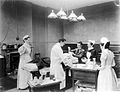 Metropolitan Hospital, Kingsland Road
 -
 A view of the 'Sir Paul Pindar's Head', Bishopsgate; on its left is the Metropolitan Free Hospital


.jpg)
Ad. Transform your life with W8MD's
GLP-1 weight loss injections special from $29.99 with insurance
|
WikiMD Medical Encyclopedia |
Medical Disclaimer: WikiMD is for informational purposes only and is not a substitute for professional medical advice. Content may be inaccurate or outdated and should not be used for diagnosis or treatment. Always consult your healthcare provider for medical decisions. Verify information with trusted sources such as CDC.gov and NIH.gov. By using this site, you agree that WikiMD is not liable for any outcomes related to its content. See full disclaimer.
Credits:Most images are courtesy of Wikimedia commons, and templates, categories Wikipedia, licensed under CC BY SA or similar.
Translate this page: - East Asian
中文,
日本,
한국어,
South Asian
हिन्दी,
தமிழ்,
తెలుగు,
Urdu,
ಕನ್ನಡ,
Southeast Asian
Indonesian,
Vietnamese,
Thai,
မြန်မာဘာသာ,
বাংলা
European
español,
Deutsch,
français,
Greek,
português do Brasil,
polski,
română,
русский,
Nederlands,
norsk,
svenska,
suomi,
Italian
Middle Eastern & African
عربى,
Turkish,
Persian,
Hebrew,
Afrikaans,
isiZulu,
Kiswahili,
Other
Bulgarian,
Hungarian,
Czech,
Swedish,
മലയാളം,
मराठी,
ਪੰਜਾਬੀ,
ગુજરાતી,
Portuguese,
Ukrainian
