The Agnew Clinic
The Agnew Clinic is a painting by American artist Thomas Eakins, completed in 1889. It is one of Eakins' most renowned works and is considered a significant contribution to the field of medical art. The painting depicts Dr. David Hayes Agnew, a prominent surgeon of the time, performing a mastectomy in a medical amphitheater.
Background[edit]
Thomas Eakins was a realist painter, photographer, sculptor, and fine arts educator. He is widely acknowledged as one of the most important artists in American art history. Eakins' works focused on the human figure and were marked by a desire for realism, the use of scientific perspective, and the depiction of the human body with frankness.
David Hayes Agnew was a renowned surgeon and professor at the University of Pennsylvania. He was known for his expertise in the field of surgery and his ability to teach complex medical procedures to his students. The Agnew Clinic was commissioned by Agnew's students as a retirement gift.
Description[edit]
The Agnew Clinic depicts a mastectomy operation being performed by Dr. Agnew in a medical amphitheater. The painting is notable for its realistic depiction of the surgical procedure and the environment in which it takes place. Eakins' attention to detail is evident in the accurate representation of the surgical instruments, the positioning of the medical staff, and the patient herself.
Reception and Legacy[edit]
The Agnew Clinic was initially met with mixed reviews due to its graphic nature and the unconventional portrayal of the female body. However, it has since been recognized as a masterpiece of medical art and a testament to Eakins' skill and dedication to realism.
The painting is currently housed in the University of Pennsylvania's art collection and continues to be a subject of study for both art and medical students. It serves as a historical record of medical practices in the late 19th century and a symbol of the intersection between art and science.
See Also[edit]
|
<img src="//upload.wikimedia.org/wikipedia/commons/thumb/a/ac/VisualEditor_-_Icon_-_Brush.svg/40px-VisualEditor_-_Icon_-_Brush.svg.png" alt="Stub icon" width="40" height="40" /> |

-
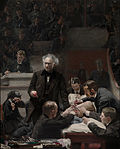 Portrait of Dr. Samuel D. Gross (The Gross Clinic)
 -
 David Hayes Agnew
 -
 The Agnew Clinic
 -
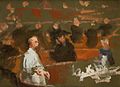 Sketch for The Agnew Clinic
 -
 Thomas Eakins, painted plaster with lead palette by Samuel Murray, 1907
_-_Google_Art_Project.jpg)


Ad. Transform your life with W8MD's
GLP-1 weight loss injections special from $29.99 with insurance
|
WikiMD Medical Encyclopedia |
Medical Disclaimer: WikiMD is for informational purposes only and is not a substitute for professional medical advice. Content may be inaccurate or outdated and should not be used for diagnosis or treatment. Always consult your healthcare provider for medical decisions. Verify information with trusted sources such as CDC.gov and NIH.gov. By using this site, you agree that WikiMD is not liable for any outcomes related to its content. See full disclaimer.
Credits:Most images are courtesy of Wikimedia commons, and templates, categories Wikipedia, licensed under CC BY SA or similar.
Translate this page: - East Asian
中文,
日本,
한국어,
South Asian
हिन्दी,
தமிழ்,
తెలుగు,
Urdu,
ಕನ್ನಡ,
Southeast Asian
Indonesian,
Vietnamese,
Thai,
မြန်မာဘာသာ,
বাংলা
European
español,
Deutsch,
français,
Greek,
português do Brasil,
polski,
română,
русский,
Nederlands,
norsk,
svenska,
suomi,
Italian
Middle Eastern & African
عربى,
Turkish,
Persian,
Hebrew,
Afrikaans,
isiZulu,
Kiswahili,
Other
Bulgarian,
Hungarian,
Czech,
Swedish,
മലയാളം,
मराठी,
ਪੰਜਾਬੀ,
ગુજરાતી,
Portuguese,
Ukrainian
