Moscow–Washington hotline
Moscow–Washington hotline is a system that allows direct communication between the leaders of the United States and Russia, originally established between the United States and the Soviet Union during the Cold War. This system was created to quickly communicate in times of crisis to prevent nuclear war. The hotline became operational on August 30, 1963, and has been updated several times with newer technologies since its inception.
Background[edit]
The need for the Moscow–Washington hotline became apparent after the Cuban Missile Crisis in 1962, when the world came to the brink of nuclear war. The crisis highlighted the need for quick, reliable communication between the two superpowers. Before the hotline, messages had to be transmitted through conventional means, which could delay decision-making during emergencies.
Technology[edit]
Initially, the hotline was not a telephone line but a teletype communication link, and later it was upgraded to a facsimile machine in the 1980s. In 2008, it was again upgraded to a secure computer link over which messages are exchanged via email. This evolution reflects the advancements in communication technology over the years. The primary goal has always been to ensure that messages can be sent and received as quickly as possible to reduce the risk of misunderstandings that could lead to escalation.
Usage[edit]
The hotline is intended for use during crises that pose a risk of nuclear conflict or other major conflicts that require direct communication between the leaders of the United States and Russia. It has been used several times since its establishment. However, the exact details of messages exchanged are often kept confidential.
Significance[edit]
The establishment of the Moscow–Washington hotline was a significant step in the effort to prevent nuclear war during the Cold War. It symbolizes the understanding that despite deep political and ideological differences, direct communication is essential to avoid misunderstandings that could lead to catastrophic consequences.
See Also[edit]
References[edit]
<references/>
This communication related article is a stub. You can help WikiMD by expanding it.
-
 Moscow Kremlin
 -
 The Pentagon
 -
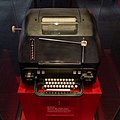 ITT Intelex Teletype
 -
 T63-SU12-TP NCM
 -
 Hotline sign in Finland
 -
 Jimmy Carter Library and Museum
 -
 SAC Museum Red Phone
.jpg)


Ad. Transform your health with W8MD Weight Loss, Sleep & MedSpa

Tired of being overweight?
Special offer:
Budget GLP-1 weight loss medications
- Semaglutide starting from $29.99/week and up with insurance for visit of $59.99 and up per week self pay.
- Tirzepatide starting from $45.00/week and up (dose dependent) or $69.99/week and up self pay
✔ Same-week appointments, evenings & weekends
Learn more:
- GLP-1 weight loss clinic NYC
- W8MD's NYC medical weight loss
- W8MD Philadelphia GLP-1 shots
- Philadelphia GLP-1 injections
- Affordable GLP-1 shots NYC
|
WikiMD Medical Encyclopedia |
Medical Disclaimer: WikiMD is for informational purposes only and is not a substitute for professional medical advice. Content may be inaccurate or outdated and should not be used for diagnosis or treatment. Always consult your healthcare provider for medical decisions. Verify information with trusted sources such as CDC.gov and NIH.gov. By using this site, you agree that WikiMD is not liable for any outcomes related to its content. See full disclaimer.
Credits:Most images are courtesy of Wikimedia commons, and templates, categories Wikipedia, licensed under CC BY SA or similar.
Translate this page: - East Asian
中文,
日本,
한국어,
South Asian
हिन्दी,
தமிழ்,
తెలుగు,
Urdu,
ಕನ್ನಡ,
Southeast Asian
Indonesian,
Vietnamese,
Thai,
မြန်မာဘာသာ,
বাংলা
European
español,
Deutsch,
français,
Greek,
português do Brasil,
polski,
română,
русский,
Nederlands,
norsk,
svenska,
suomi,
Italian
Middle Eastern & African
عربى,
Turkish,
Persian,
Hebrew,
Afrikaans,
isiZulu,
Kiswahili,
Other
Bulgarian,
Hungarian,
Czech,
Swedish,
മലയാളം,
मराठी,
ਪੰਜਾਬੀ,
ગુજરાતી,
Portuguese,
Ukrainian
