Skewer
Skewer is a long, thin, pointed rod used for holding pieces of food together during cooking. The term is derived from the Middle English word skew, meaning "to pierce or penetrate". Skewers are typically made from metal or wood, and are a common tool in various cooking methods, including grilling, roasting, and broiling.
History[edit]
The use of skewers in cooking dates back to prehistoric times, when early humans would use sharpened sticks to cook food over an open fire. This method of cooking was prevalent in many ancient cultures, including the Ancient Greeks, who were known for their love of skewered meats, known as souvlaki.
Types of Skewers[edit]
There are several types of skewers used in different culinary traditions around the world. Some of the most common include:
- Metal Skewers: These are durable and reusable, often used in grilling and broiling. They are typically made from stainless steel or other heat-resistant metals.
- Wooden Skewers: These are disposable and often used for smaller pieces of food or for serving. They must be soaked in water before use to prevent them from burning.
- Bamboo Skewers: A type of wooden skewer, bamboo skewers are popular in Asian cuisines, particularly for making satay.
- Flat Skewers: These have a flat shape that prevents food from spinning around when it's being turned. They are often used for grilling kebabs.
Uses[edit]
Skewers are used in a variety of cooking methods and dishes. They are most commonly used in grilling, where they hold pieces of meat, vegetables, or seafood together while they cook. Skewers are also used in baking, particularly for testing the doneness of cakes and breads. In addition, skewers are used in the presentation of food, particularly in dishes like kebabs, satay, and souvlaki.
Safety[edit]
When using skewers, it's important to handle them safely to prevent injury. This includes using heat-resistant gloves when handling hot skewers, and ensuring that wooden skewers are properly soaked to prevent them from catching fire.

-
 Wooden skewers
 -
 Akrotiri terracotta firedogs with zoomorphic finials
 -
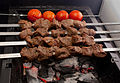 Chenjeh
 -
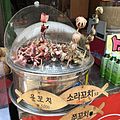 Seafood skewers
 -
 Skewered food at Shida Night Market in Taipei
 -
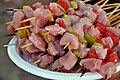 Brochette de dinde sur une assiette près de Jijel


Ad. Transform your health with W8MD Weight Loss, Sleep & MedSpa

Tired of being overweight?
Special offer:
Budget GLP-1 weight loss medications
- Semaglutide starting from $29.99/week and up with insurance for visit of $59.99 and up per week self pay.
- Tirzepatide starting from $45.00/week and up (dose dependent) or $69.99/week and up self pay
✔ Same-week appointments, evenings & weekends
Learn more:
- GLP-1 weight loss clinic NYC
- W8MD's NYC medical weight loss
- W8MD Philadelphia GLP-1 shots
- Philadelphia GLP-1 injections
- Affordable GLP-1 shots NYC
|
WikiMD Medical Encyclopedia |
Medical Disclaimer: WikiMD is for informational purposes only and is not a substitute for professional medical advice. Content may be inaccurate or outdated and should not be used for diagnosis or treatment. Always consult your healthcare provider for medical decisions. Verify information with trusted sources such as CDC.gov and NIH.gov. By using this site, you agree that WikiMD is not liable for any outcomes related to its content. See full disclaimer.
Credits:Most images are courtesy of Wikimedia commons, and templates, categories Wikipedia, licensed under CC BY SA or similar.
Translate this page: - East Asian
中文,
日本,
한국어,
South Asian
हिन्दी,
தமிழ்,
తెలుగు,
Urdu,
ಕನ್ನಡ,
Southeast Asian
Indonesian,
Vietnamese,
Thai,
မြန်မာဘာသာ,
বাংলা
European
español,
Deutsch,
français,
Greek,
português do Brasil,
polski,
română,
русский,
Nederlands,
norsk,
svenska,
suomi,
Italian
Middle Eastern & African
عربى,
Turkish,
Persian,
Hebrew,
Afrikaans,
isiZulu,
Kiswahili,
Other
Bulgarian,
Hungarian,
Czech,
Swedish,
മലയാളം,
मराठी,
ਪੰਜਾਬੀ,
ગુજરાતી,
Portuguese,
Ukrainian
