Nicotine marketing
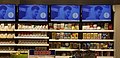
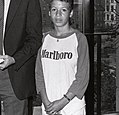
Nicotine marketing is the marketing of nicotine-containing products or use. Traditionally, the tobacco industry markets cigarette smoking, but it is increasingly marketing other products, such as e-cigarettes. Products are marketed through social media, stealth marketing, mass media, and sponsorship (particularly of sporting events). Expenditures on nicotine marketing are in the tens of billions a year; in the US alone, spending was over US$1 million per hour in 2006; in 2003, per-capita marketing spending was $290 per adult smoker, or $45 per inhabitant. Nicotine marketing is increasingly regulated; some forms of nicotine advertising are banned in many countries. The World Health Organization recommends a complete tobacco advertising ban.
History
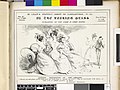
The first known advertisement in the USA was for the snuff and tobacco products of P. Lorillard and Company and was placed in the New York daily paper in 1789. Advertising was an emerging concept, and tobacco-related advertisements were not seen as any different from those for other products: their negative impact on health was unknown at the time. Local and regional newspapers were used because of the small-scale production and transportation of these goods. The first real brand name to become known on a bigger scale in the USA was "Bull Durham" which emerged in 1868, with the advertising placing the emphasis on how easy it was "to roll your own".
Tactics
Mass media
Before the 1950s, advertising was conducted over a wide range of media. A wide range of media has been used for advertising nicotine products, including: television, radio, print, film, billboards, posters, public transport, and the internet.
Sponsorship
Sponsorship of sporting and cultural events is used to create indirect advertising. Sponsored events are often brand-named with company names.
Stealth marketing
In the 1990s, the industry introduced "stealth marketing", where the use of brands and brand elements presents a commercial message, but the viewer is often not aware of the persuasive intent.
Regulation
The World Health Organization (WHO) recommends a complete tobacco advertising ban. Many countries have implemented or are implementing advertising bans, and often also sponsorships, particularly of sporting events.
See also
| Marketing |
|---|
|
|
-
 Nicotine marketing
 -
 Nicotine marketing
 -
 Nicotine marketing
 -
 Nicotine marketing
 -
Nicotine marketing
-
 Nicotine marketing
 -
 Nicotine marketing
 -
 Nicotine marketing
 -
 Nicotine marketing
 -
 Nicotine marketing
 -
 Nicotine marketing
 -
 Nicotine marketing


.jpg)


_2.jpg)

.jpg)
.jpg)

Ad. Transform your life with W8MD's
GLP-1 weight loss injections special from $29.99 with insurance
|
WikiMD Medical Encyclopedia |
Medical Disclaimer: WikiMD is for informational purposes only and is not a substitute for professional medical advice. Content may be inaccurate or outdated and should not be used for diagnosis or treatment. Always consult your healthcare provider for medical decisions. Verify information with trusted sources such as CDC.gov and NIH.gov. By using this site, you agree that WikiMD is not liable for any outcomes related to its content. See full disclaimer.
Credits:Most images are courtesy of Wikimedia commons, and templates, categories Wikipedia, licensed under CC BY SA or similar.
Translate this page: - East Asian
中文,
日本,
한국어,
South Asian
हिन्दी,
தமிழ்,
తెలుగు,
Urdu,
ಕನ್ನಡ,
Southeast Asian
Indonesian,
Vietnamese,
Thai,
မြန်မာဘာသာ,
বাংলা
European
español,
Deutsch,
français,
Greek,
português do Brasil,
polski,
română,
русский,
Nederlands,
norsk,
svenska,
suomi,
Italian
Middle Eastern & African
عربى,
Turkish,
Persian,
Hebrew,
Afrikaans,
isiZulu,
Kiswahili,
Other
Bulgarian,
Hungarian,
Czech,
Swedish,
മലയാളം,
मराठी,
ਪੰਜਾਬੀ,
ગુજરાતી,
Portuguese,
Ukrainian

