Corylus cornuta
Corylus cornuta, commonly known as beaked hazelnut or beaked filbert, is a species of deciduous shrub in the birch family Betulaceae. It is native to North America, where it is found in Canada and the United States. The plant is notable for its unique fruit, which is encased in a long, tubular involucre that resembles a beak, hence the name "beaked hazelnut".
Description[edit]
Corylus cornuta is a large shrub that can grow up to 2-4 meters in height. It has rounded leaves with double-serrated edges and a pointed tip. The leaves are dark green on the upper surface and paler below. The shrub produces male and female flowers on the same plant (monoecious). The male flowers are yellowish-brown catkins that appear in early spring, while the female flowers are small and largely hidden in the buds, with only the bright red styles visible.
The fruit of Corylus cornuta is a nut, which is surrounded by a hard shell and enclosed in a unique, elongated involucre that extends well beyond the nut, forming a structure that resembles a beak. The nuts are edible and are a source of food for various wildlife species, as well as being harvested by humans for consumption.
Habitat and Distribution[edit]
Corylus cornuta is widely distributed across Canada and the northern United States. It prefers moist, well-drained soils and is commonly found in woodlands, forest edges, and open fields. The plant is tolerant of a range of light conditions, from full sun to partial shade.
Ecological Role[edit]
The beaked hazelnut plays a significant role in its ecosystem. It provides food for a variety of animals, including squirrels, deer, and birds, which rely on the nuts as a source of nutrition. Additionally, the shrub offers shelter and nesting sites for various species. Its presence in the understory of forests and woodlands contributes to biodiversity and habitat complexity.
Uses[edit]
Historically, Corylus cornuta has been valued for its edible nuts, which can be eaten raw or used in cooking and baking. The nuts are rich in protein, fats, and other nutrients, making them a valuable food source. Beyond its culinary uses, the plant has been used in traditional medicine by indigenous peoples for various ailments. In landscaping, Corylus cornuta is appreciated for its ornamental qualities, including its attractive foliage, flowers, and unique fruit.
Conservation[edit]
While Corylus cornuta is not currently listed as endangered or threatened, its habitat is subject to pressures from development, agriculture, and forestry practices. Conservation efforts focus on preserving natural habitats and promoting sustainable management practices to ensure the long-term survival of this species and its ecological role.

Corylus_cornuta[edit]
-
 Corylus cornuta
 -
 Corylus cornuta catkin
 -
 Corylus cornuta female flower
 -
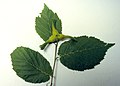 Corylus cornuta wings
 -
 Corylus cornuta fruit
 -
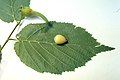 Corylus cornuta nut


.jpg)

Ad. Transform your life with W8MD's
GLP-1 weight loss injections special from $29.99


W8MD Medical Weight Loss, Sleep and Medspa offers physician-supervised medical weight loss programs: NYC medical weight loss Philadelphia medical weight loss
Affordable GLP-1 Weight Loss ShotsAffordable GLP-1 Weight Loss Shots
Budget GLP-1 injections NYC (insurance & self-pay options) Popular treatments:
- Semaglutide starting from $29.99/week
- Tirzepatide starting from $45.00/week
✔ Most insurances accepted for visits ✔ Prior authorization support when eligible
Start your physician weight loss NYC journey today:
📍 NYC: Brooklyn weight loss center 📍 Philadelphia: Philadelphia weight loss center
📞 Call: 718-946-5500 (NYC) | 215-676-2334 (Philadelphia)
Tags: Affordable GLP1 weight loss NYC, Wegovy NYC, Zepbound NYC, Philadelphia medical weight loss


|
WikiMD Medical Encyclopedia |
Medical Disclaimer: WikiMD is not a substitute for professional medical advice. The information on WikiMD is provided as an information resource only, may be incorrect, outdated or misleading, and is not to be used or relied on for any diagnostic or treatment purposes. Please consult your health care provider before making any healthcare decisions or for guidance about a specific medical condition. WikiMD expressly disclaims responsibility, and shall have no liability, for any damages, loss, injury, or liability whatsoever suffered as a result of your reliance on the information contained in this site. By visiting this site you agree to the foregoing terms and conditions, which may from time to time be changed or supplemented by WikiMD. If you do not agree to the foregoing terms and conditions, you should not enter or use this site. See full disclaimer.
Credits:Most images are courtesy of Wikimedia commons, and templates, categories Wikipedia, licensed under CC BY SA or similar.
Translate this page: - East Asian
中文,
日本,
한국어,
South Asian
हिन्दी,
தமிழ்,
తెలుగు,
Urdu,
ಕನ್ನಡ,
Southeast Asian
Indonesian,
Vietnamese,
Thai,
မြန်မာဘာသာ,
বাংলা
European
español,
Deutsch,
français,
Greek,
português do Brasil,
polski,
română,
русский,
Nederlands,
norsk,
svenska,
suomi,
Italian
Middle Eastern & African
عربى,
Turkish,
Persian,
Hebrew,
Afrikaans,
isiZulu,
Kiswahili,
Other
Bulgarian,
Hungarian,
Czech,
Swedish,
മലയാളം,
मराठी,
ਪੰਜਾਬੀ,
ગુજરાતી,
Portuguese,
Ukrainian

