Pudding

| |
| A variety of puddings | |
| Alternative names | |
| Type | |
| Course | Dessert |
| Place of origin | Various |
| Region or state | |
| Associated national cuisine | |
| Created by | |
| Invented | |
| Cooking time | minutes to minutes |
| Serving temperature | Varies |
| Main ingredients | Milk, sugar, butter, flour |
| Ingredients generally used | |
| Variations | Chocolate, vanilla, tapioca, rice pudding |
| Food energy | kcal |
| Nutritional value | Protein: g, Fat: g, Carbohydrate: g |
| Glycemic index | |
| Similar dishes | |
| Other information | |
| Website | [ Official website] |
Pudding is a type of food that can be either a dessert or a savory dish. The term "pudding" is believed to come from the French word "boudin", originally from the Latin "botellus", meaning "small sausage", referring to encased meats used in Medieval European puddings. In modern times, the term has come to denote a wide range of dishes, from sweet, rich desserts to savory steamed dishes made with meat or fish.
History
The history of pudding is diverse, with its origins dating back to the Middle Ages. Initially, puddings were primarily savory dishes made with meat, blood, and grains, and were boiled in animal stomachs or intestines. Over time, the concept of pudding evolved, especially in Britain, to include sweet and savory dishes, often steamed or boiled. The 19th century saw the advent of dessert puddings made with milk, sugar, and flavors like chocolate or vanilla, resembling what most people today consider pudding.
Types
Pudding can be divided into two main categories: sweet and savory.
Sweet Puddings
Sweet puddings are typically served as desserts and include varieties such as:
- Chocolate pudding, made with milk, sugar, and cocoa.
- Vanilla pudding, flavored primarily with vanilla.
- Rice pudding, made from rice mixed with water or milk and other ingredients such as cinnamon and raisins.
- Tapioca pudding, made with tapioca pearls.
Savory Puddings
Savory puddings are less common but include dishes such as:
- Black pudding, a type of blood sausage.
- Yorkshire pudding, made from a batter of eggs, flour, and milk or water, traditionally served with roast beef.
- Suet pudding, made with suet (animal fat) and flour, often containing meat or fruits.
Preparation
The preparation of pudding varies widely depending on the type. Sweet puddings are often made by combining milk or cream with sugar, flavorings, and a thickening agent such as cornstarch or eggs, then cooking the mixture until it thickens. Savory puddings, on the other hand, may involve mixing meat, vegetables, or other ingredients with a batter or dough and then steaming or baking the mixture.
Cultural Significance
Pudding holds a significant place in various cultures. In the United Kingdom, pudding is an essential part of traditional meals, with dishes like Christmas pudding and steak and kidney pudding being staples. In the United States, pudding typically refers to sweet, creamy desserts similar to what is known as custard in other parts of the English-speaking world.
See also

-
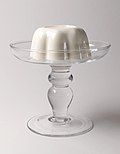 Blanc-manger on glass platter
 -
 Haggis
 -
 Pudding with raspberries and whipped cream
 -
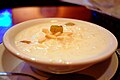 Kheer
Kheer -
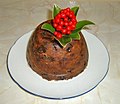 Christmas pudding
 -
 Chocolate pudding


Ad. Transform your life with W8MD's Budget GLP-1 injections from $49.99


W8MD offers a medical weight loss program to lose weight in Philadelphia. Our physician-supervised medical weight loss provides:
- Weight loss injections in NYC (generic and brand names):
- Zepbound / Mounjaro, Wegovy / Ozempic, Saxenda
- Most insurances accepted or discounted self-pay rates. We will obtain insurance prior authorizations if needed.
- Generic GLP1 weight loss injections from $49.99 for the starting dose of Semaglutide and $65.00 for Tirzepatide.
- Also offer prescription weight loss medications including Phentermine, Qsymia, Diethylpropion, Contrave etc.
NYC weight loss doctor appointmentsNYC weight loss doctor appointments
Start your NYC weight loss journey today at our NYC medical weight loss and Philadelphia medical weight loss clinics.
- Call 718-946-5500 to lose weight in NYC or for medical weight loss in Philadelphia 215-676-2334.
- Tags:NYC medical weight loss, Philadelphia lose weight Zepbound NYC, Budget GLP1 weight loss injections, Wegovy Philadelphia, Wegovy NYC, Philadelphia medical weight loss, Brookly weight loss and Wegovy NYC


|
WikiMD's Wellness Encyclopedia |
| Let Food Be Thy Medicine Medicine Thy Food - Hippocrates |
Medical Disclaimer: WikiMD is not a substitute for professional medical advice. The information on WikiMD is provided as an information resource only, may be incorrect, outdated or misleading, and is not to be used or relied on for any diagnostic or treatment purposes. Please consult your health care provider before making any healthcare decisions or for guidance about a specific medical condition. WikiMD expressly disclaims responsibility, and shall have no liability, for any damages, loss, injury, or liability whatsoever suffered as a result of your reliance on the information contained in this site. By visiting this site you agree to the foregoing terms and conditions, which may from time to time be changed or supplemented by WikiMD. If you do not agree to the foregoing terms and conditions, you should not enter or use this site. See full disclaimer.
Credits:Most images are courtesy of Wikimedia commons, and templates, categories Wikipedia, licensed under CC BY SA or similar.
Translate this page: - East Asian
中文,
日本,
한국어,
South Asian
हिन्दी,
தமிழ்,
తెలుగు,
Urdu,
ಕನ್ನಡ,
Southeast Asian
Indonesian,
Vietnamese,
Thai,
မြန်မာဘာသာ,
বাংলা
European
español,
Deutsch,
français,
Greek,
português do Brasil,
polski,
română,
русский,
Nederlands,
norsk,
svenska,
suomi,
Italian
Middle Eastern & African
عربى,
Turkish,
Persian,
Hebrew,
Afrikaans,
isiZulu,
Kiswahili,
Other
Bulgarian,
Hungarian,
Czech,
Swedish,
മലയാളം,
मराठी,
ਪੰਜਾਬੀ,
ગુજરાતી,
Portuguese,
Ukrainian

